


Processing negative autobiographical memories in a foreign language
- PMID: 37260968
- PMCID: PMC10227500
- DOI: 10.3389/fpsyg.2023.1133915
Processing negative autobiographical memories in a foreign language
Abstract
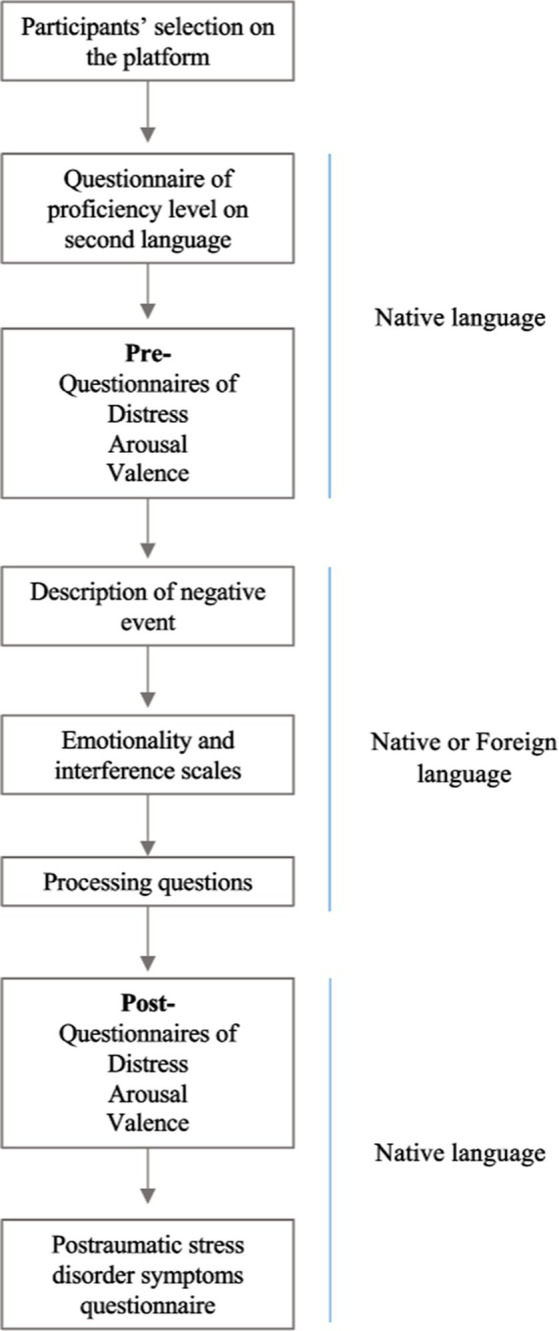
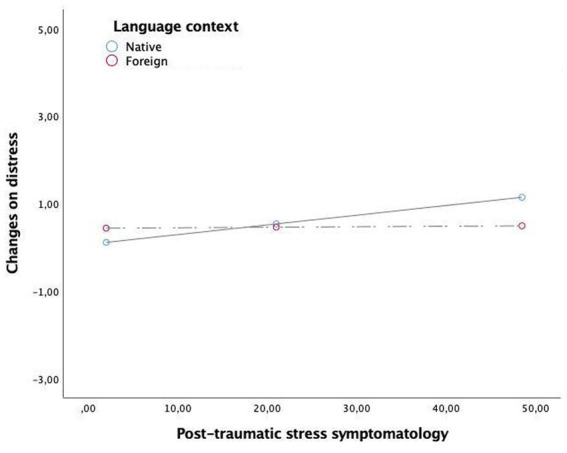
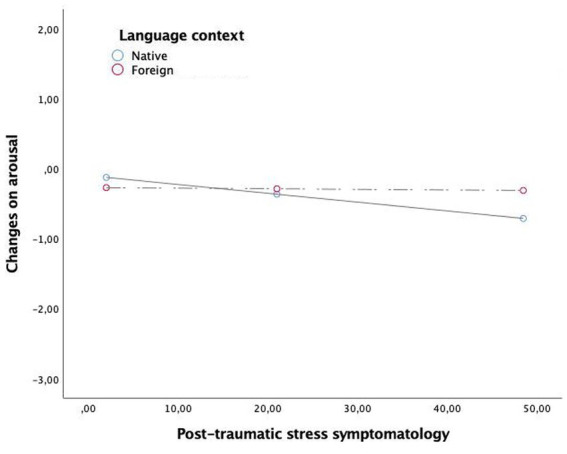
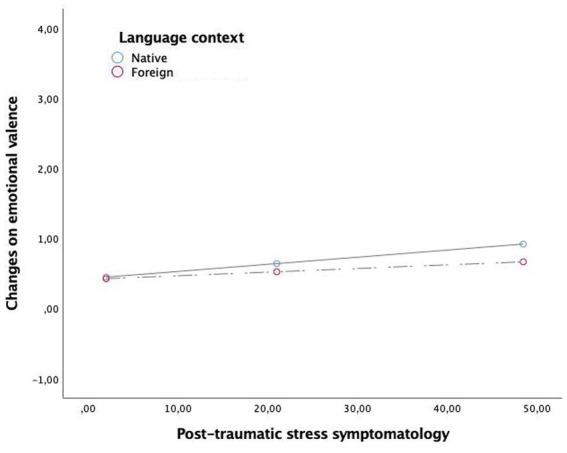
The use of a foreign language has been introduced in the clinical setting as a form of emotional distance to help deal with negative experiences. However, the evidence of foreign language reducing emotionality during processing negative events is still scarce. This study aims to test whether the description and processing of a traumatic or highly emotional event in a foreign language could modulate the strength of the connection between traumatic symptomatology and emotional reaction. For this purpose, a sample of 128 healthy participants completed a series of questionnaires via an online platform. Firstly, their levels of distress, arousal and valence were assessed in their native language. Secondly, they were assigned to either the native language or the foreign language group and described a negative childhood event in the assigned language (English or Spanish), followed by five questions for processing the event. Next, their emotionality was assessed again in their native language. Finally, a questionnaire of traumatic stress symptoms and an avoidance scale were completed. Results showed that the relationship between traumatic symptomatology and emotionality was moderated by the language of processing the negative event. Specifically, traumatic symptomatology was more strongly associated with distress and arousal change when the processing task was performed in the native language. These findings suggest the influence of a foreign language on emotional reactivity when a negative experience is processed, which could be an essential tool in the treatment of disorders related to stress and trauma.
Keywords: autobiographical memories; bilingualism; emotion; foreign language; moderation.
Copyright © 2023 Ortigosa-Beltrán, Jaén and García-Palacios.
Conflict of interest statement
The authors declare that the research was conducted in the absence of any commercial or financial relationships that could be construed as a potential conflict of interest.
Figures
References
-
- Altarriba J., Basnight-Brown D. M. (2011). The representation of emotion vs. emotion-laden words in English and Spanish in the affective Simon task. Int. J. Biling. 15, 310–328. doi: 10.1177/1367006910379261 - DOI
-
- Anooshian L. J., Hertel P. T. (1994). Emotionality in free recall: language specificity in bilingual memory. Cognit. Emot. 8, 503–514. doi: 10.1080/02699939408408956 - DOI
LinkOut - more resources
Full Text Sources
