Health Insurance Coverage and Postpartum Outcomes in the US: A Systematic Review
- PMID: 37266938
- PMCID: PMC10238947
- DOI: 10.1001/jamanetworkopen.2023.16536
Health Insurance Coverage and Postpartum Outcomes in the US: A Systematic Review
Abstract
Importance: Approximately half of postpartum individuals in the US do not receive any routine postpartum health care. Currently, federal Medicaid coverage for pregnant individuals lapses after the last day of the month in which the 60th postpartum day occurs, which limits longer-term postpartum care.
Objective: To assess whether health insurance coverage extension or improvements in access to health care are associated with postpartum health care utilization and maternal outcomes within 1 year post partum.
Evidence review: Medline, Embase, CENTRAL, CINAHL, and ClinicalTrials.gov were searched for US-based studies from inception to November 16, 2022. The reference lists of relevant systematic reviews were scanned for potentially eligible studies. Risk of bias was assessed using questions from the Cochrane Risk of Bias tool and the Risk of Bias in Nonrandomized Studies of Interventions tool. Strength of evidence (SoE) was assessed using the Agency for Healthcare Research and Quality Methods Guide.
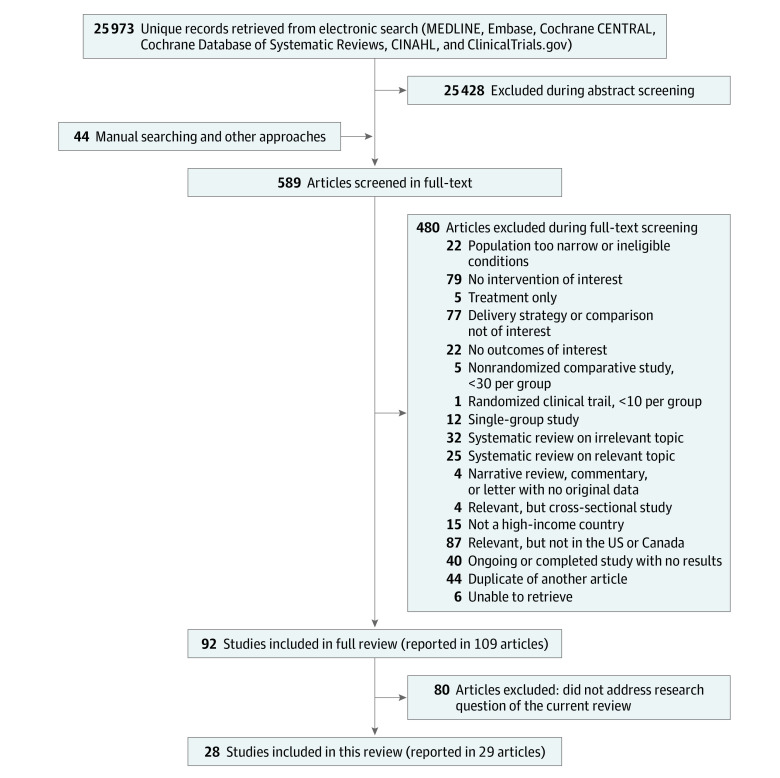
Findings: A total of 25 973 citations were screened and 28 mostly moderate-risk-of-bias nonrandomized studies were included (3 423 781 participants) that addressed insurance type (4 studies), policy changes that made insurance more comprehensive (13 studies), policy changes that made insurance less comprehensive (2 studies), and Medicaid expansion (9 studies). Findings with moderate SoE suggested that more comprehensive association was likely associated with greater attendance at postpartum visits. Findings with low SoE indicated a possible association between more comprehensive insurance and fewer preventable readmissions and emergency department visits.
Conclusions and relevance: The findings of this systematic review suggest that evidence evaluating insurance coverage and postpartum visit attendance and unplanned care utilization is, at best, of moderate SoE. Future research should evaluate clinical outcomes associated with more comprehensive insurance coverage.
Conflict of interest statement
Figures
Comment in
-
Defining Goals and Investing in Data to Improve Postpartum Health and Health Equity.JAMA Netw Open. 2023 Jun 1;6(6):e2316542. doi: 10.1001/jamanetworkopen.2023.16542. JAMA Netw Open. 2023. PMID: 37266944 No abstract available.
References
-
- Centers for Disease Control and Prevention National Center for Health Statistics . Maternal mortality rates in the United States. 2022. Accessed October 25, 2022. https://www.cdc.gov/nchs/data/hestat/maternal-mortality/2020/maternal-mo...
-
- Trost S, Beauregard J, Chandra G, et al. Pregnancy-related deaths: data from maternal mortality review committees in 36 US States, 2017–2019. Centers for Disease Control and Prevention . Accessed January 14, 2023. https://www.cdc.gov/reproductivehealth/maternal-mortality/erase-mm/data-...
-
- Hardeman RR, Kheyfets A, Mantha AB, et al. Developing tools to report racism in maternal health for the CDC Maternal Mortality Review Information Application (MMRIA): findings from the MMRIA racism and discrimination working group. Matern Child Health J. 2022;26(4):661-669. doi: 10.1007/s10995-021-03284-3 - DOI - PubMed
Publication types
MeSH terms
Grants and funding
LinkOut - more resources
Full Text Sources
Medical