


Recreational water exposures and illness outcomes at a freshwater beach in Toronto, Canada: A prospective cohort pilot study
- PMID: 37267237
- PMCID: PMC10237503
- DOI: 10.1371/journal.pone.0286584
Recreational water exposures and illness outcomes at a freshwater beach in Toronto, Canada: A prospective cohort pilot study
Abstract
Background: Swimming and other recreational water activities in surface waters are popular in Canada during the summer. However, these activities can also increase the risk of recreational water illness. While routine monitoring of beach water quality is conducted by local authorities each summer, little research is available in Canada about beach exposures and illness risks.
Methods: We conducted a pilot of a prospective cohort study at a popular beach in Toronto, Ontario, Canada, in 2022 to determine characteristics of beachgoers, common water and sand exposures, the incidence of recreational water illness, and the feasibility for a larger, national cohort study. We enrolled beachgoers on-site and surveyed about their exposures at the beach and conducted a follow-up survey 7 days following their beach visit to ascertain acute gastrointestinal, respiratory, skin, ear, and eye illness outcomes. We descriptively tabulated and summarized the collected data.
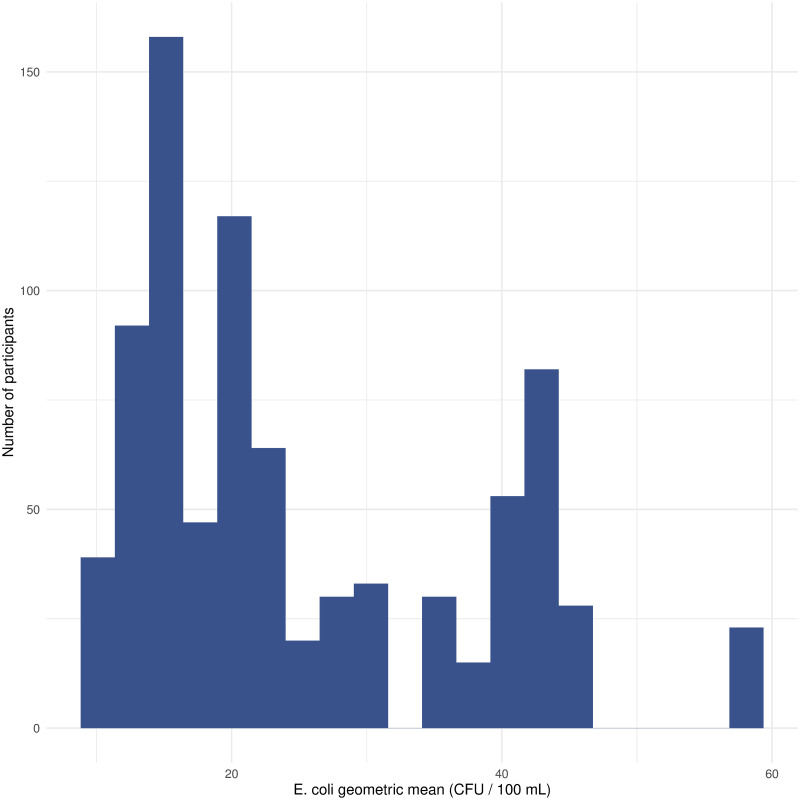
Results: We enrolled 649 households, consisting of 831 beachgoers. Water contact activities were reported by 56% of beachgoers, with swimming being the most common activity (44% of participants). Similarly, 56% of beachgoers reported digging in the sand or burying themselves in the sand. Children (≤14 years) and teenagers (15-19 years) were most likely to report engaging in water contact activities and swallowing water, while children were most likely to report sand contact activities and getting sand in their mouth. Boys and men were more likely than women and girls to report swallowing water (15.2% vs. 9.4%). Water and sand exposures also differed by household education level and participant ethno-racial identity. E. coli levels in beach water were consistently low (median = 20 CFU/100 mL, range = 10-58). The incidence of illness outcomes was very low (0.3-2.8%) among the 287 participants that completed the follow-up survey.
Conclusions: The identified beach exposure patterns can inform future risk assessments and communication strategies. Excellent water quality was observed at the studied beach, likely contributing to the low incidence of illnesses. A larger, national cohort study is needed in Canada to examine risks of illness at beaches at higher risk of fecal contamination.
Copyright: © 2023 Young et al. This is an open access article distributed under the terms of the Creative Commons Attribution License, which permits unrestricted use, distribution, and reproduction in any medium, provided the original author and source are credited.
Conflict of interest statement
The authors have declared that no competing interests exist.
Figures
Similar articles
-
Burden of recreational water illness due to exposure to cyanobacteria and their toxins in freshwater beaches in Canada: protocol of a prospective cohort study.BMJ Open. 2024 Jun 12;14(6):e085406. doi: 10.1136/bmjopen-2024-085406. BMJ Open. 2024. PMID: 38866574 Free PMC article.
-
Canadian beach cohort study: protocol of a prospective study to assess the burden of recreational water illness.BMC Public Health. 2024 Sep 13;24(1):2502. doi: 10.1186/s12889-024-19889-6. BMC Public Health. 2024. PMID: 39272049 Free PMC article.
-
Comparison of the occurrence and survival of fecal indicator bacteria in recreational sand between urban beach, playground and sandbox settings in Toronto, Ontario.Sci Total Environ. 2016 Jan 15;541:520-527. doi: 10.1016/j.scitotenv.2015.09.088. Epub 2015 Sep 29. Sci Total Environ. 2016. PMID: 26432162
-
Strategies for Monitoring Microbial Life in Beach Sand for Protection of Public Health.Int J Environ Res Public Health. 2023 May 3;20(9):5710. doi: 10.3390/ijerph20095710. Int J Environ Res Public Health. 2023. PMID: 37174228 Free PMC article. Review.
-
Pathogen Loading From Canada Geese Faeces in Freshwater: Potential Risks to Human Health Through Recreational Water Exposure.Zoonoses Public Health. 2016 May;63(3):177-90. doi: 10.1111/zph.12227. Epub 2015 Sep 28. Zoonoses Public Health. 2016. PMID: 26414207 Review.
Cited by
-
Assessment of Bacteria Contaminants in Different Zones and Point Sources of Sandy Beaches in Accra, Ghana.Microbiol Insights. 2023 Sep 8;16:11786361231195152. doi: 10.1177/11786361231195152. eCollection 2023. Microbiol Insights. 2023. PMID: 37693208 Free PMC article.
-
Quantitative microbial risk assessment of acute gastrointestinal illness attributable to freshwater recreation in Ontario.Can J Public Health. 2024 Dec 10. doi: 10.17269/s41997-024-00969-4. Online ahead of print. Can J Public Health. 2024. PMID: 39658778
-
Burden of recreational water illness due to exposure to cyanobacteria and their toxins in freshwater beaches in Canada: protocol of a prospective cohort study.BMJ Open. 2024 Jun 12;14(6):e085406. doi: 10.1136/bmjopen-2024-085406. BMJ Open. 2024. PMID: 38866574 Free PMC article.
-
Canadian beach cohort study: protocol of a prospective study to assess the burden of recreational water illness.BMC Public Health. 2024 Sep 13;24(1):2502. doi: 10.1186/s12889-024-19889-6. BMC Public Health. 2024. PMID: 39272049 Free PMC article.
References
-
- Statistics Canada. Participation in outdoor activities in the past 12 months by age group, sex, current employment status, and perceived health, Canada, provinces and regions. 2020. https://www150.statcan.gc.ca/t1/tbl1/en/tv.action?pid=4510003001
Publication types
MeSH terms
Substances
LinkOut - more resources
Full Text Sources
