School-age outcomes of children after perinatal brain injury: a systematic review and meta-analysis
- PMID: 37270200
- PMCID: PMC10255042
- DOI: 10.1136/bmjpo-2022-001810
School-age outcomes of children after perinatal brain injury: a systematic review and meta-analysis
Abstract
Background: Over 3000 children suffer a perinatal brain injury in England every year according to national surveillance. The childhood outcomes of infants with perinatal brain injury are however unknown.
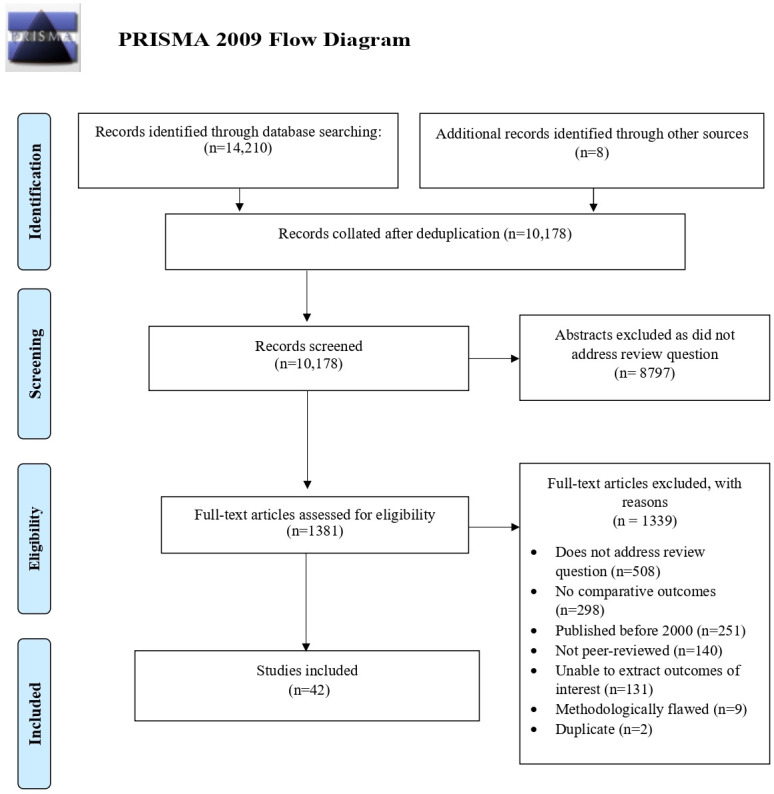
Methods: A systematic review and meta-analyses were undertaken of studies published between 2000 and September 2021 exploring school-aged neurodevelopmental outcomes of children after perinatal brain injury compared with those without perinatal brain injury. The primary outcome was neurodevelopmental impairment, which included cognitive, motor, speech and language, behavioural, hearing or visual impairment after 5 years of age.
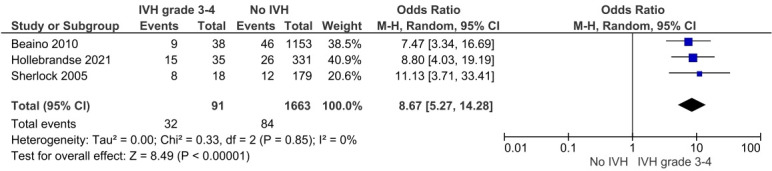
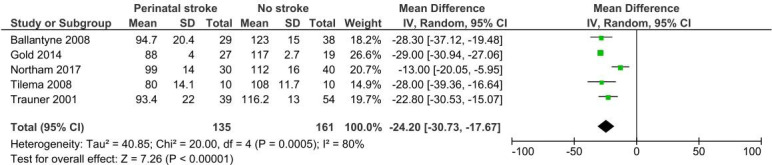
Results: This review included 42 studies. Preterm infants with intraventricular haemorrhage (IVH) grades 3-4 were found to have a threefold greater risk of moderate-to-severe neurodevelopmental impairment at school age OR 3.69 (95% CI 1.7 to 7.98) compared with preterm infants without IVH. Infants with perinatal stroke had an increased incidence of hemiplegia 61% (95% CI 39.2% to 82.9%) and an increased risk of cognitive impairment (difference in full scale IQ -24.2 (95% CI -30.73 to -17.67) . Perinatal stroke was also associated with poorer academic performance; and lower mean receptive -20.88 (95% CI -36.66 to -5.11) and expressive language scores -20.25 (95% CI -34.36 to -6.13) on the Clinical Evaluation of Language Fundamentals (CELF) assessment. Studies reported an increased risk of persisting neurodevelopmental impairment at school age after neonatal meningitis. Cognitive impairment and special educational needs were highlighted after moderate-to-severe hypoxic-ischaemic encephalopathy. However, there were limited comparative studies providing school-aged outcome data across neurodevelopmental domains and few provided adjusted data. Findings were further limited by the heterogeneity of studies.
Conclusions: Longitudinal population studies exploring childhood outcomes after perinatal brain injury are urgently needed to better enable clinicians to prepare affected families, and to facilitate targeted developmental support to help affected children reach their full potential.
Keywords: Epidemiology; Neonatology.
© Author(s) (or their employer(s)) 2023. Re-use permitted under CC BY. Published by BMJ.
Conflict of interest statement
Competing interests: CG is funded by the UK Medical Research Council (MRC) through a Transition Support Award. In the past 5 years, he has received support from Chiesi Pharmaceuticals to attend an educational conference and has been investigator on received research grants from the Medical Research Council, National Institute of Health Research, Canadian Institute of Health Research, Department of Health in England, Mason Medical Research Foundation, Westminster Medical School Research Trust and Chiesi Pharmaceuticals. CB is funded by the UK National Institute of Health Research (NIHR) Advanced Fellowship Award.
Figures

References
-
- Department of Health & Social CareSocial Care . New ambition to halve rate of stillbirths and infant deaths. 2015. Available: https://www.gov.uk/government/news/new-ambition-to-halve-rate-of-stillbi...
Publication types
MeSH terms
Grants and funding
LinkOut - more resources
Full Text Sources
Medical