


Value-Based Purchasing Design And Effect: A Systematic Review And Analysis
- PMID: 37276480
- PMCID: PMC11026120
- DOI: 10.1377/hlthaff.2022.01455
Value-Based Purchasing Design And Effect: A Systematic Review And Analysis
Abstract
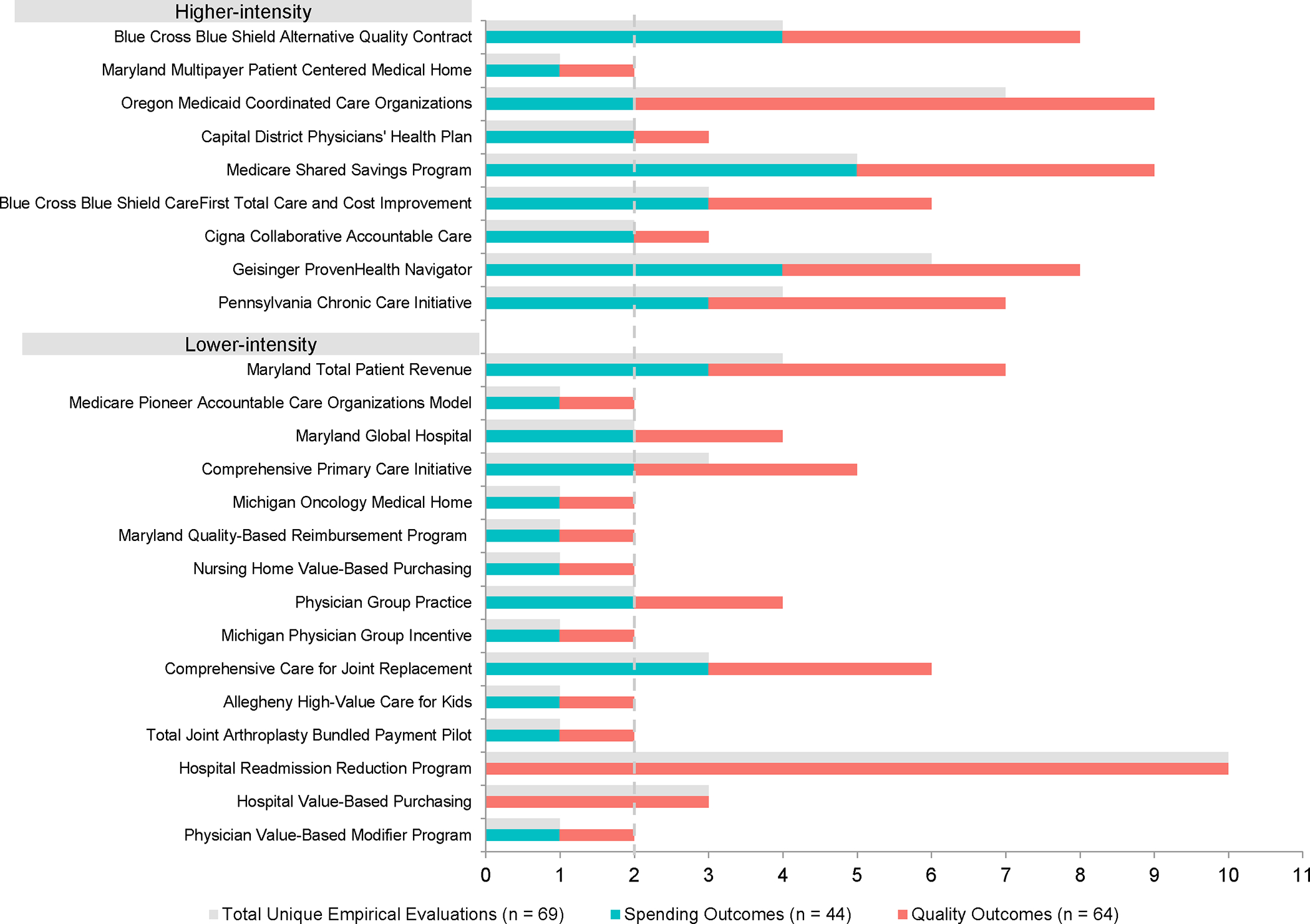
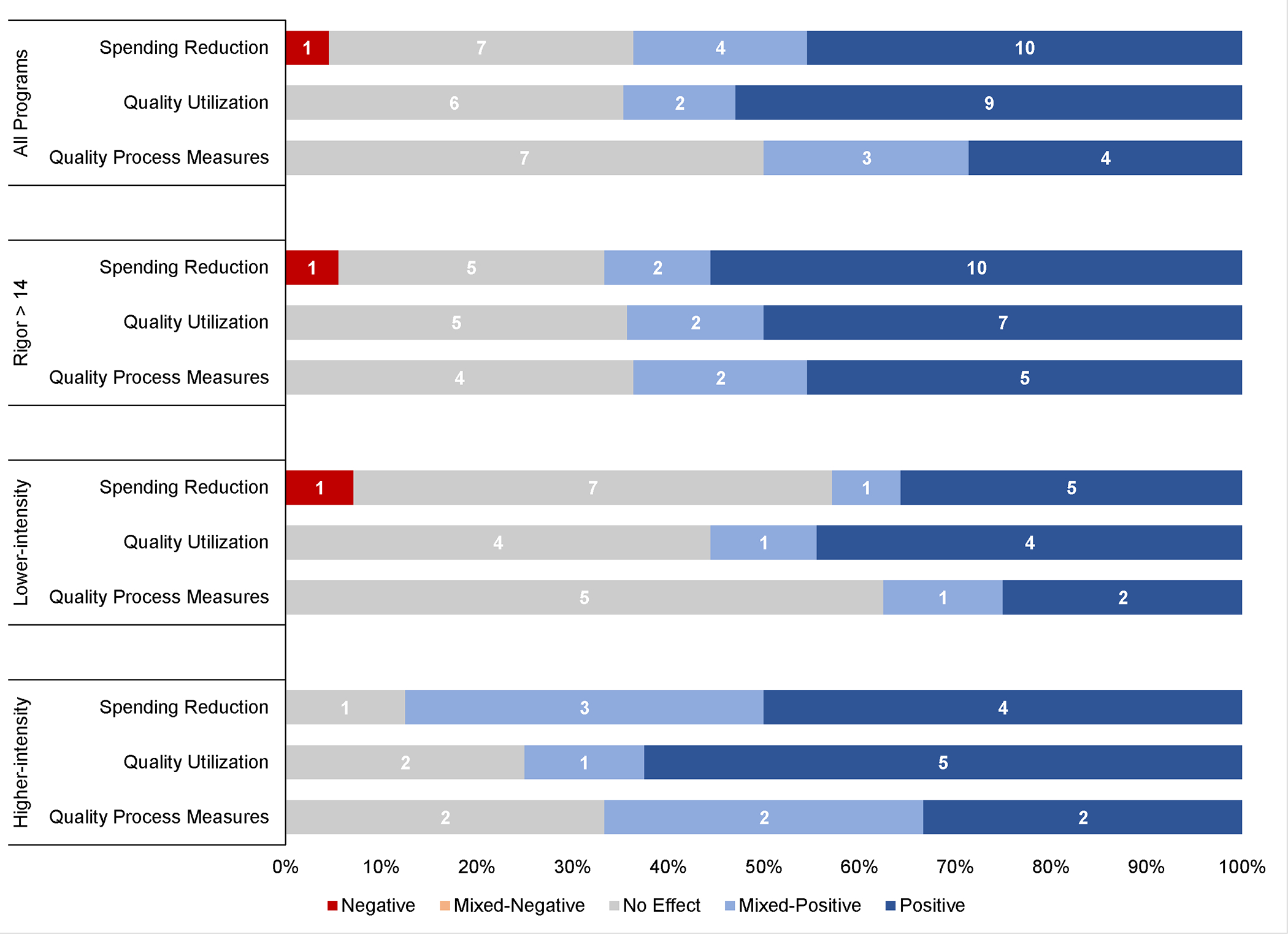
During the past two decades in the United States, all major payer types-commercial, Medicare, Medicaid, and multipayer coalitions-have introduced value-based purchasing (VBP) contracts to reward providers for improving health care quality while reducing spending. This systematic review qualitatively characterized the financial and nonfinancial features of VBP programs and examined how such features combine to create a level of program intensity that relates to desired quality and spending outcomes. Higher-intensity VBP programs are more frequently associated with desired quality processes, utilization measures, and spending reductions than lower-intensity programs. Thus, although there may be reasons for payers and providers to opt for lower-intensity programs (for example, to increase voluntary participation), these choices apparently have consequences for spending and quality outcomes.
Figures
References
-
- Rosenthal M, Frank R, Li Z, Epstein A. Early experience with pay-for-performance: from concept to practice. JAMA. 2005;294(14):1788–93. - PubMed
-
- Chien AT, Rosenthal MB. A 3D model for value-based care: the next frontier in financial incentives and relationship support. [Internet]. UnitedHealth Group. 2020. [cited 2022 Nov 1]. Available from: https://newsroom.uhc.com/content/dam/newsroom/Harvard%20Report_FINAL_092...
-
- Lemak CH, Nahra T, Cohen GR, Erb ND, Paustian ML, Share D, et al. Michigan’s fee-for-value physician incentive program reduces spending and improves quality in primary care. Health Aff. 2015;34(4):645–52. - PubMed
Publication types
MeSH terms
Grants and funding
LinkOut - more resources
Full Text Sources
Medical
Miscellaneous
