


Radiochemistry for positron emission tomography
- PMID: 37277339
- PMCID: PMC10241151
- DOI: 10.1038/s41467-023-36377-4
Radiochemistry for positron emission tomography
Abstract
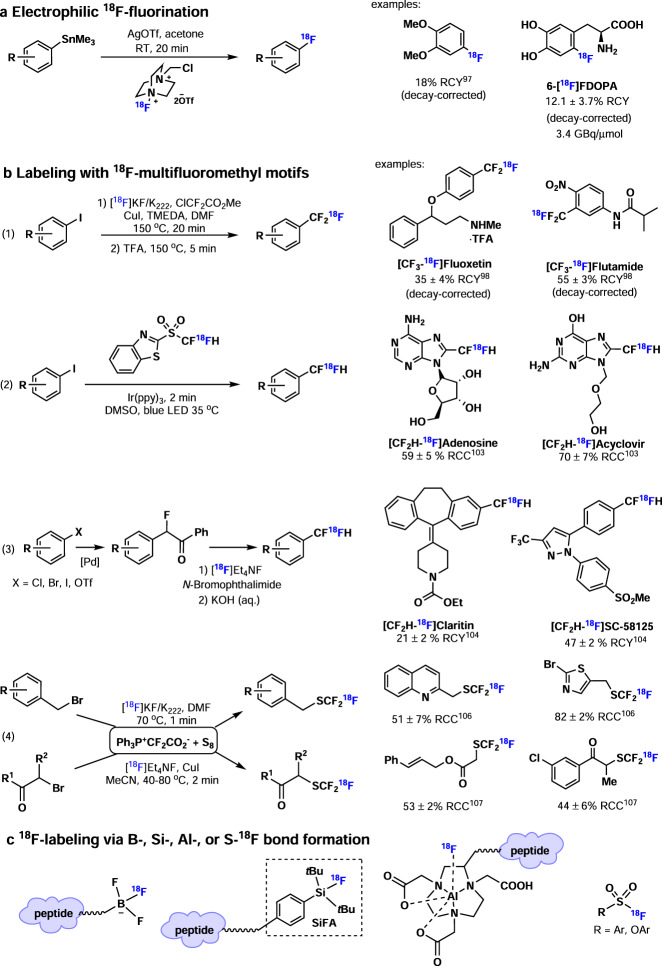
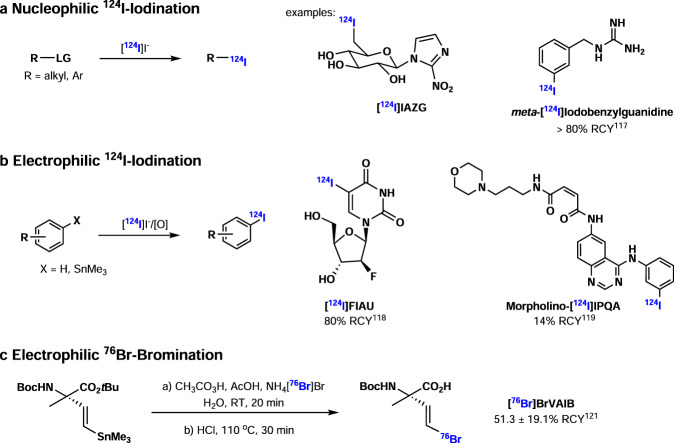
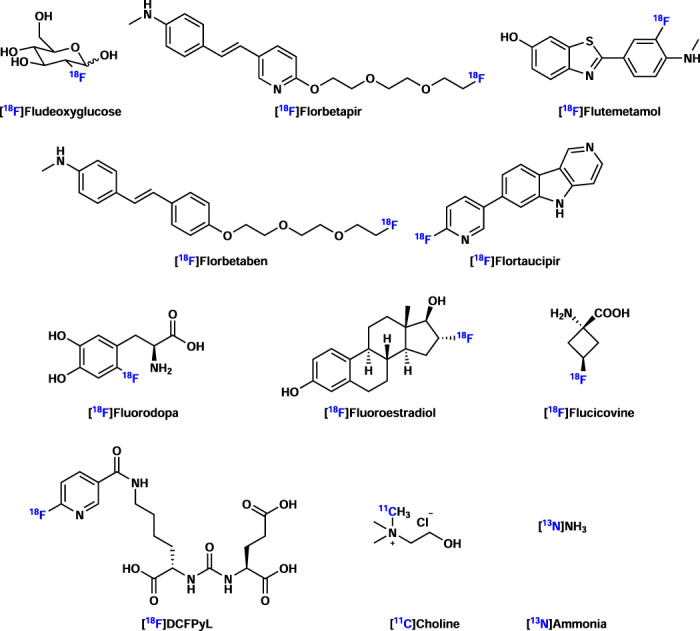
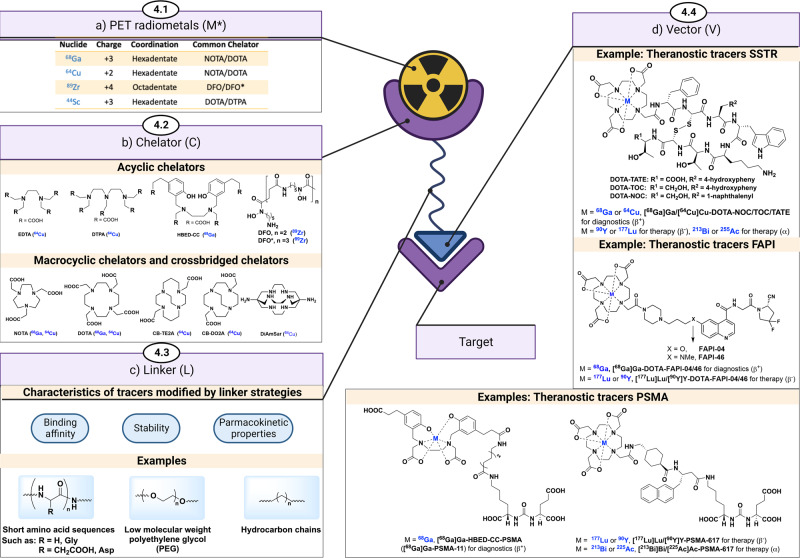
Positron emission tomography (PET) constitutes a functional imaging technique that is harnessed to probe biological processes in vivo. PET imaging has been used to diagnose and monitor the progression of diseases, as well as to facilitate drug development efforts at both preclinical and clinical stages. The wide applications and rapid development of PET have ultimately led to an increasing demand for new methods in radiochemistry, with the aim to expand the scope of synthons amenable for radiolabeling. In this work, we provide an overview of commonly used chemical transformations for the syntheses of PET tracers in all aspects of radiochemistry, thereby highlighting recent breakthrough discoveries and contemporary challenges in the field. We discuss the use of biologicals for PET imaging and highlight general examples of successful probe discoveries for molecular imaging with PET - with a particular focus on translational and scalable radiochemistry concepts that have been entered to clinical use.
© 2023. The Author(s).
Conflict of interest statement
The authors declare no competing interests.
Figures
References
-
- Tarkin, J. M., Joshi, F. R. & Rudd, J. H. PET imaging of inflammation in atherosclerosis. Nat. Rev. Cardiol.11, 443–457 (2014). - PubMed
-
- Nordberg, A., Rinne, J. O., Kadir, A. & Långström, B. The use of PET in Alzheimer’s disease. Nat. Rev. Neurol.6, 78–87 (2010). - PubMed
-
- Ametamey, S. M., Honer, M. & Schubiger, P. A. Molecular imaging with PET. Chem. Rev.108, 1501–1516 (2008). - PubMed
Publication types
MeSH terms
Substances
Grants and funding
- R01 AG075444/AG/NIA NIH HHS/United States
- R21 DA043507/DA/NIDA NIH HHS/United States
- R01 AG073428/AG/NIA NIH HHS/United States
- R61 NS130128/NS/NINDS NIH HHS/United States
- RF1 AG073428/AG/NIA NIH HHS/United States
- R01 MH120197/MH/NIMH NIH HHS/United States
- R01 AG079956/AG/NIA NIH HHS/United States
- R21 AG074218/AG/NIA NIH HHS/United States
- R01 MH128705/MH/NIMH NIH HHS/United States
- RF1 AG081401/AG/NIA NIH HHS/United States
- R21 AG080262/AG/NIA NIH HHS/United States
- R01 AG070060/AG/NIA NIH HHS/United States
- R21 AG078058/AG/NIA NIH HHS/United States
- R33 DA043507/DA/NIDA NIH HHS/United States
- K01 DA038000/DA/NIDA NIH HHS/United States
- R01 MH117125/MH/NIMH NIH HHS/United States
- R03 AG063290/AG/NIA NIH HHS/United States
LinkOut - more resources
Full Text Sources
