


Effects of modified sleeper stretch and modified cross-body stretch on upper limb functions and shoulder ROM in tennis players: a randomized trial
- PMID: 37277413
- PMCID: PMC10241818
- DOI: 10.1038/s41598-023-35977-w
Effects of modified sleeper stretch and modified cross-body stretch on upper limb functions and shoulder ROM in tennis players: a randomized trial
Abstract
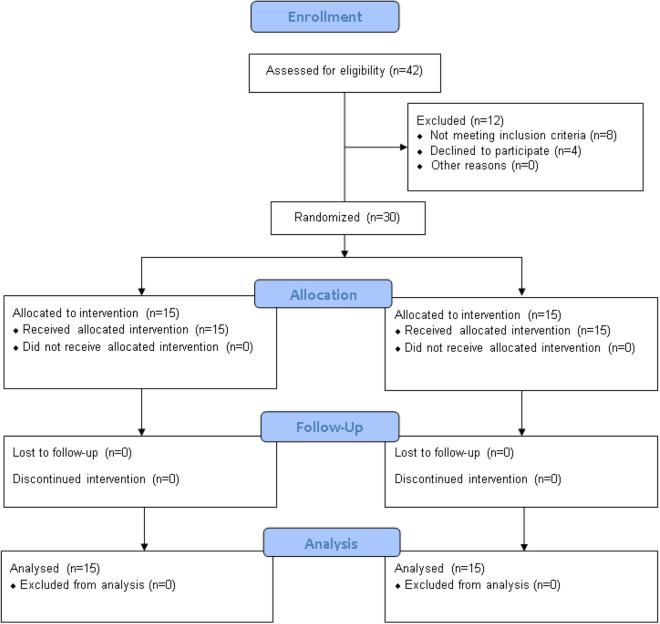
Tennis players often experience posterior shoulder pain due to restricted internal rotation (IR) range of motion (ROM) of the glenohumeral joint. No research has compared the effects of modified sleeper stretch (MSS) versus modified cross-body stretch (MCBS) on tennis players' upper limb functions and IR ROM. The study aimed to compare the efficacy of modified sleeper and cross-body adduction stretch in improving shoulder IR ROM and upper limb functions in tennis players. Thirty male lawn tennis players (aged 20 to 35 years) with more than 15° glenohumeral IR deficiency on the dominant side compared to the non-dominant side were recruited and divided into two groups: Modified sleeper stretch group (MSSG) and modified cross-body stretch group (MCBSG). MSSG received MSS, and MCBSG received MCBS, 3-5 repetitions once daily for 4 weeks. Upper limb functions were measured using the Disability of the Arm, Shoulder, and Hand (DASH) scale, and the IR ROM of the shoulder joint was measured using a universal goniometer. Both groups observed significant (p < 0.05) DASH scores and IR ROM improvements. DASH scores decreased by 85% in MSSG and 79.60% in MCBSG. IR ROM increased by 94.64% in MSSG and 89.52% in MCBSG. No significant differences (p > 0.05) were found in post-intervention DASH scores and IR ROM values between both groups. MSS and MCBS improved upper limb functions and IR ROM of the shoulder joint in the selected sample population of lawn tennis players. No difference was observed between both stretching techniques in improving upper limb functions and IR ROM of the shoulder joint.
© 2023. The Author(s).
Conflict of interest statement
The authors declare no competing interests.
Figures
References
-
- Manske RC, Meschke M, Porter A, et al. A randomized controlled single-blinded comparison of stretching versus stretching and joint mobilization for posterior shoulder tightness measured by internal rotation motion loss. Sports Health. 2010;2(2):94–100. doi: 10.1177/1941738109347775. - DOI - PMC - PubMed
Publication types
MeSH terms
LinkOut - more resources
Full Text Sources
