


A self-transmissible plasmid from a hyperthermophile that facilitates genetic modification of diverse Archaea
- PMID: 37277532
- PMCID: PMC10788138
- DOI: 10.1038/s41564-023-01387-x
A self-transmissible plasmid from a hyperthermophile that facilitates genetic modification of diverse Archaea
Abstract
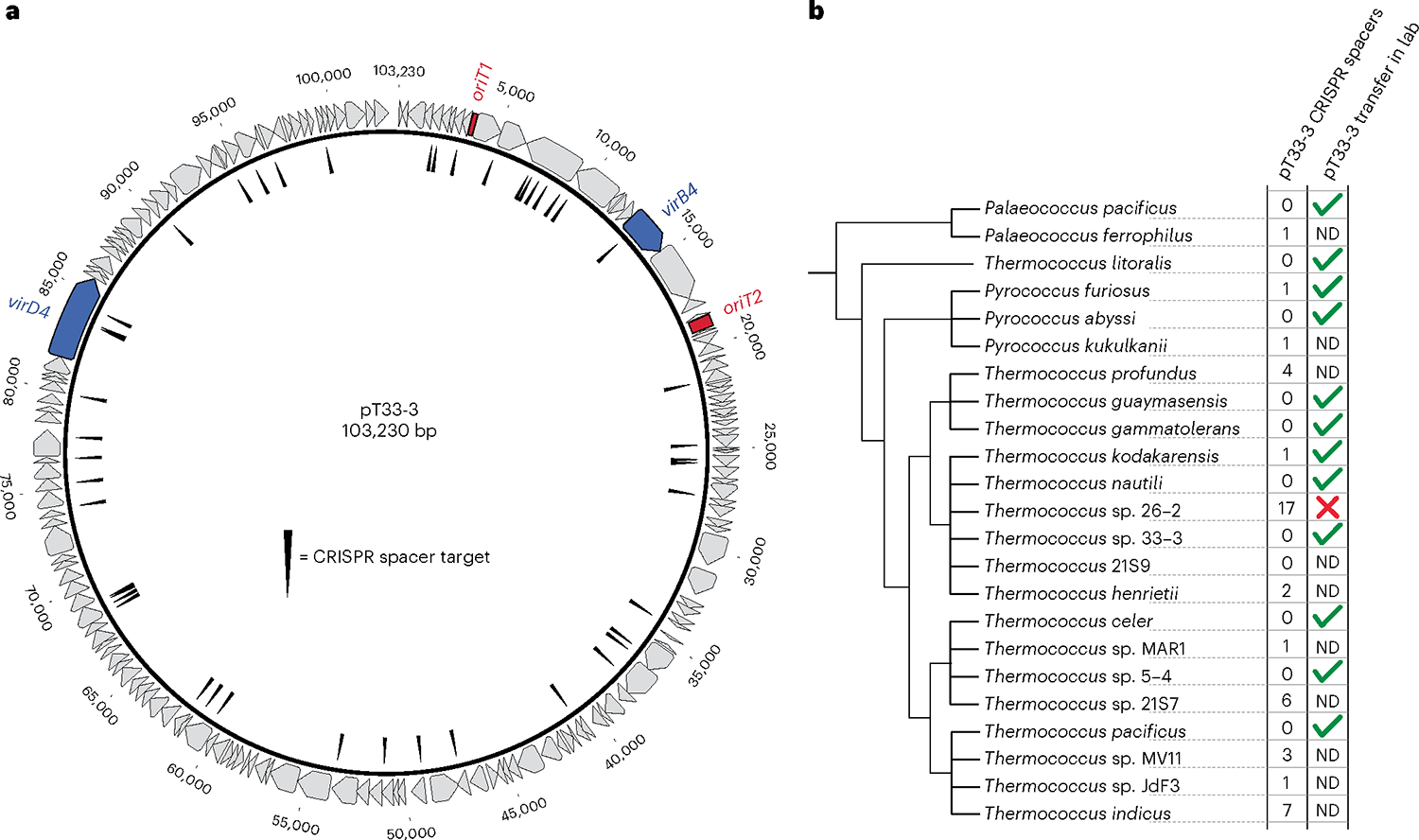
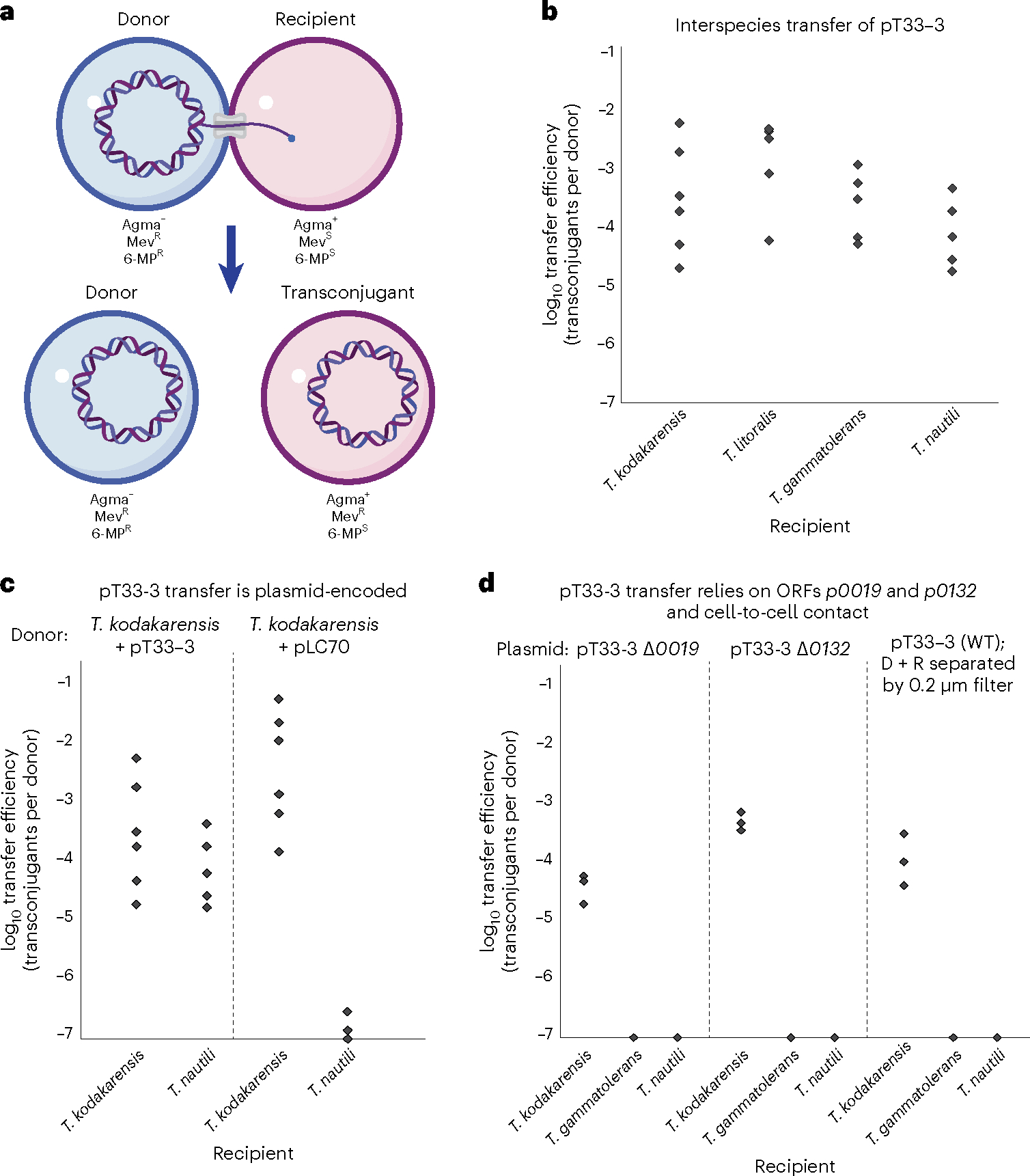
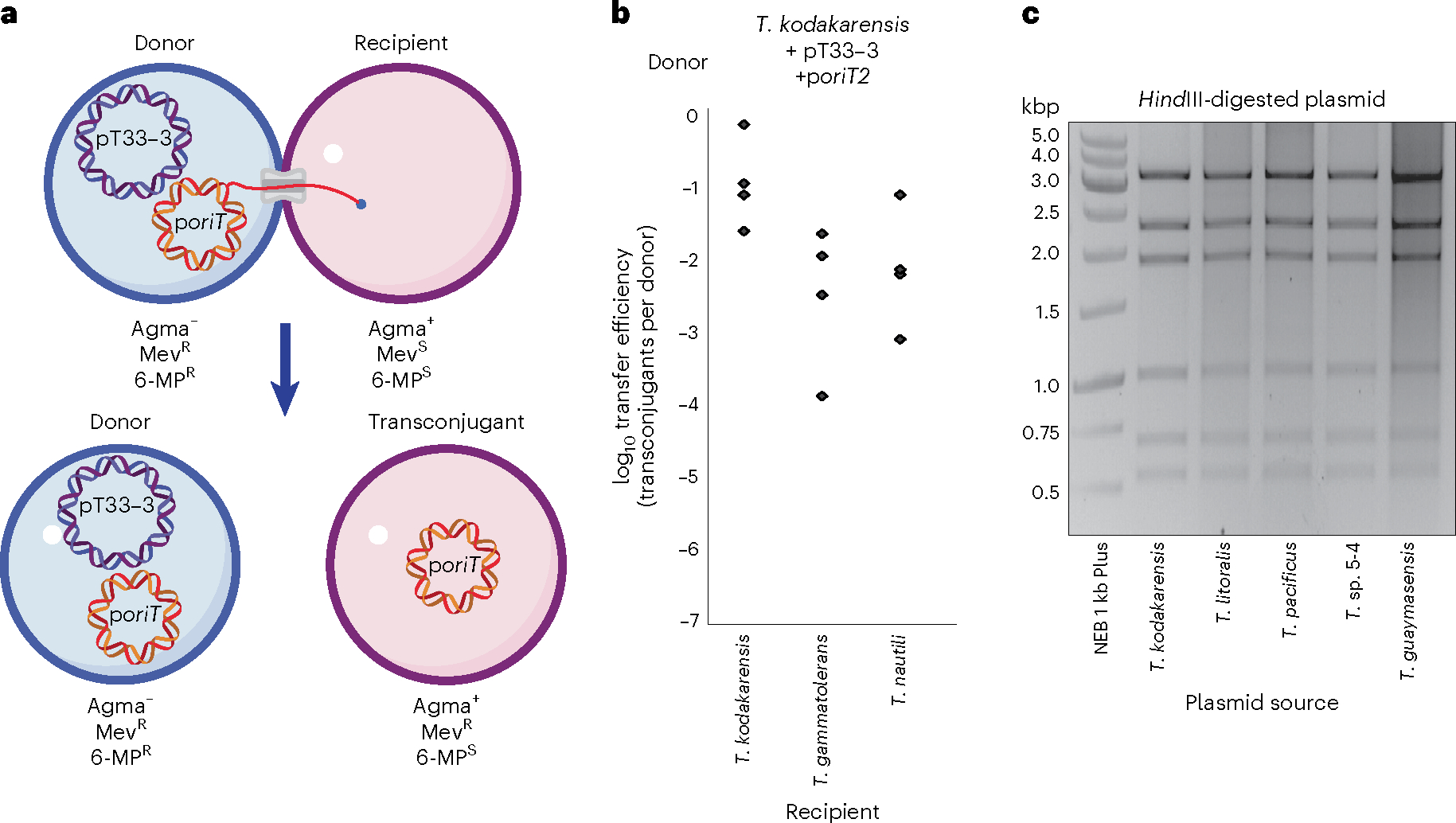
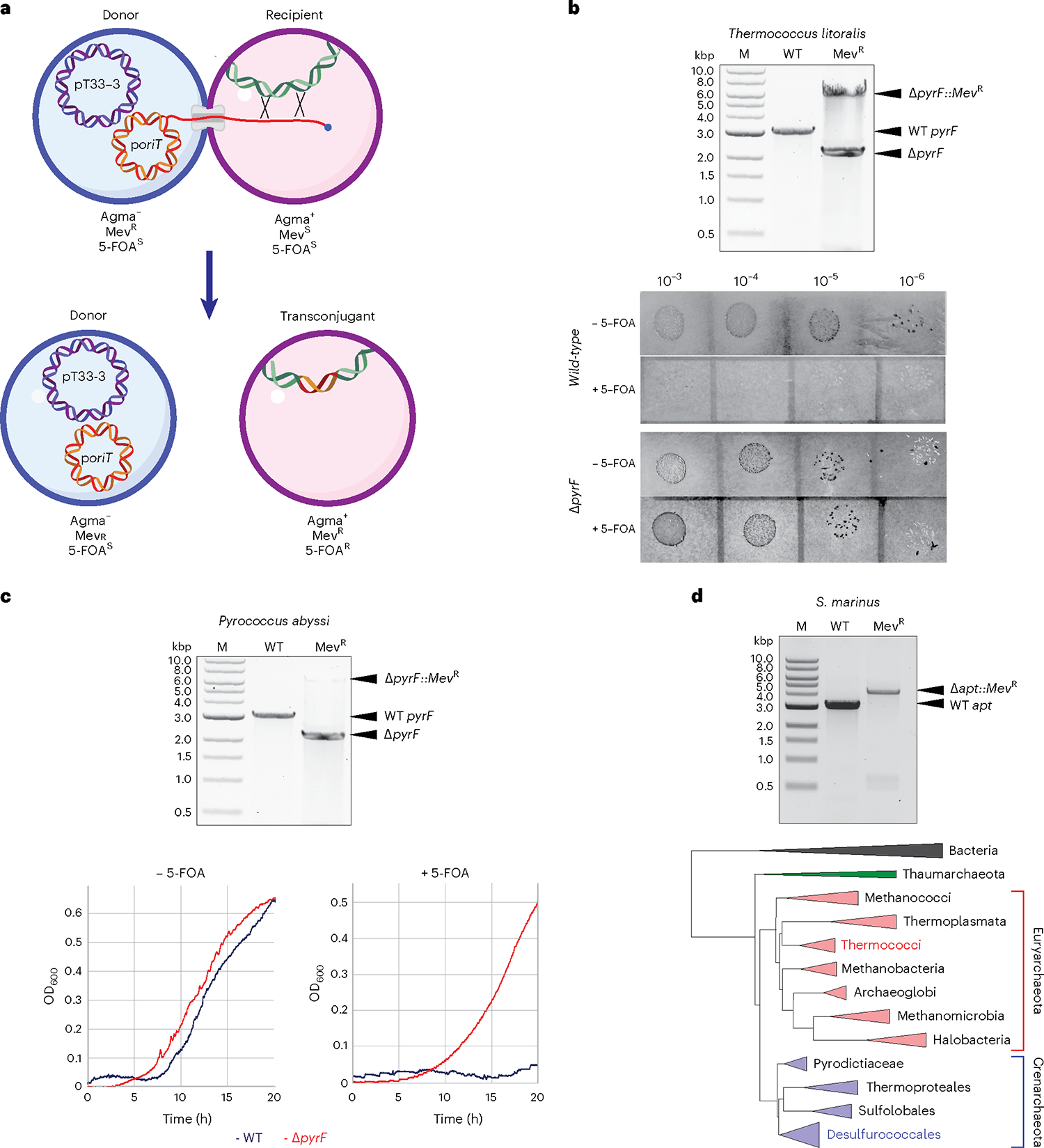
Conjugative plasmids are self-transmissible mobile genetic elements that transfer DNA between host cells via type IV secretion systems (T4SS). While T4SS-mediated conjugation has been well-studied in bacteria, information is sparse in Archaea and known representatives exist only in the Sulfolobales order of Crenarchaeota. Here we present the first self-transmissible plasmid identified in a Euryarchaeon, Thermococcus sp. 33-3. The 103 kbp plasmid, pT33-3, is seen in CRISPR spacers throughout the Thermococcales order. We demonstrate that pT33-3 is a bona fide conjugative plasmid that requires cell-to-cell contact and is dependent on canonical, plasmid-encoded T4SS-like genes. Under laboratory conditions, pT33-3 transfers to various Thermococcales and transconjugants propagate at 100 °C. Using pT33-3, we developed a genetic toolkit that allows modification of phylogenetically diverse Archaeal genomes. We demonstrate pT33-3-mediated plasmid mobilization and subsequent targeted genome modification in previously untransformable Thermococcales species, and extend this process to interphylum transfer to a Crenarchaeon.
© 2023. The Author(s), under exclusive licence to Springer Nature Limited.
Conflict of interest statement
Competing interests
The authors declare no competing interests.
Figures

Comment in
-
A plasmid to modify Archaea.Nat Rev Microbiol. 2023 Aug;21(8):483. doi: 10.1038/s41579-023-00927-w. Nat Rev Microbiol. 2023. PMID: 37322123 No abstract available.
References
-
- de la Cruz F, Frost LS, Meyer RJ & Zechner EL Conjugative DNA metabolism in Gram-negative bacteria. FEMS Microbiol. Rev. 34, 18–40 (2010). - PubMed
-
- Montero I, Herrero-Fresno A, Rodicio R & Rodicio MR Efficient mobilization of a resistance derivative of pSLT, the virulence plasmid specific of Salmonella enterica serovar Typhimurium, by an IncI1 plasmid. Plasmid 70, 104–109 (2013). - PubMed
