


Entomopathogens infecting brown marmorated stink bugs before, during, and after overwintering
- PMID: 37279521
- PMCID: PMC10243903
- DOI: 10.1093/jisesa/iead033
Entomopathogens infecting brown marmorated stink bugs before, during, and after overwintering
Abstract
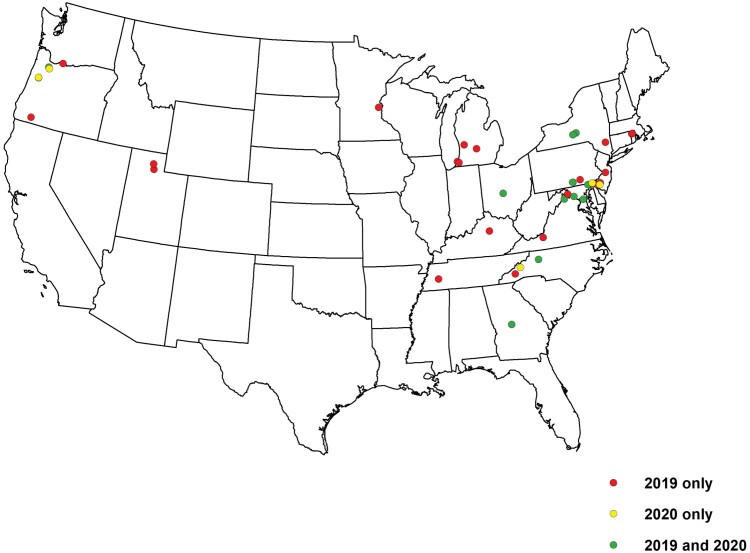
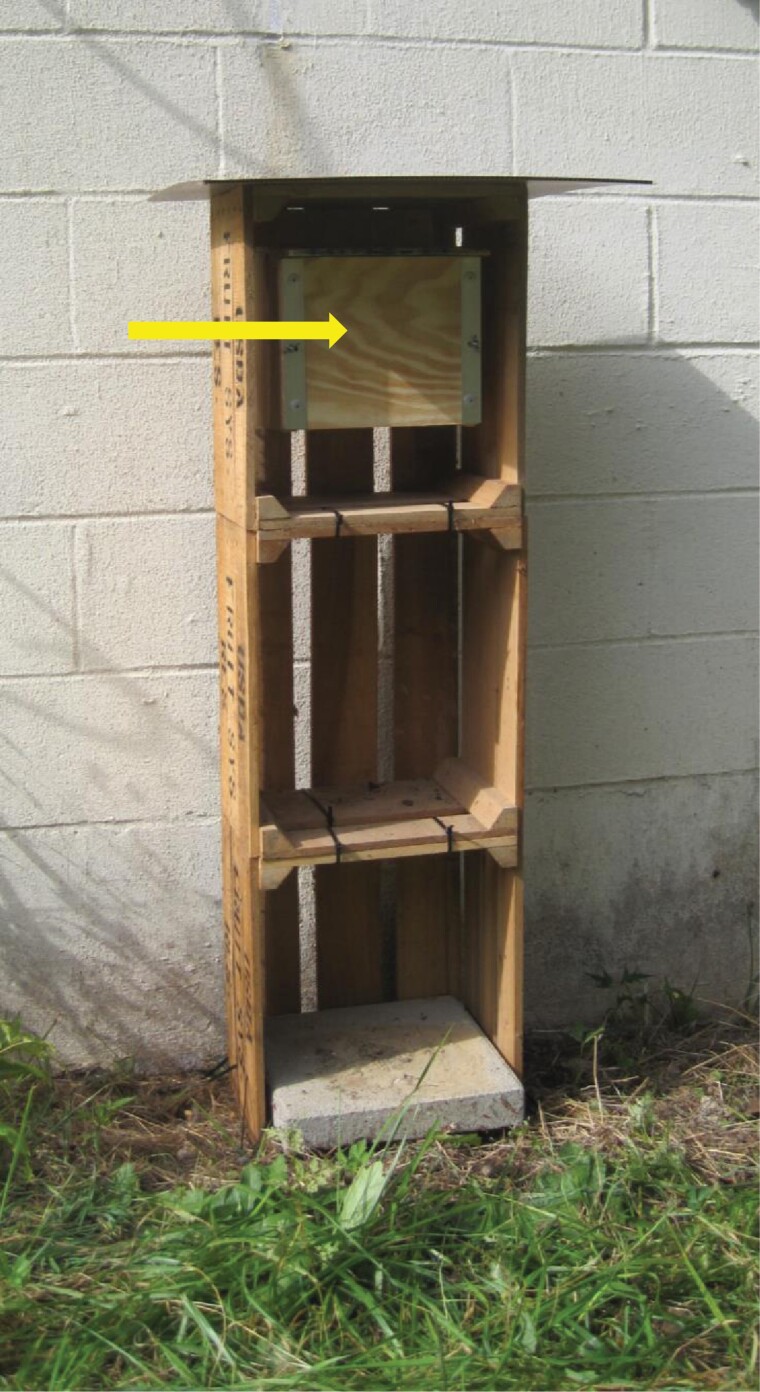
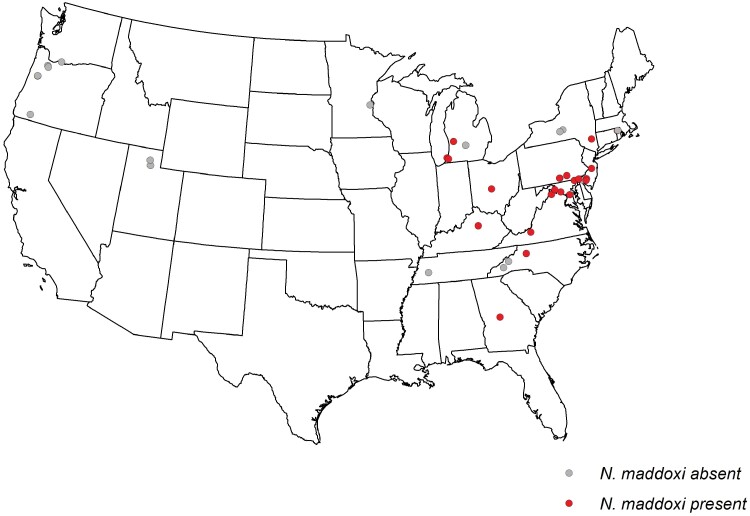
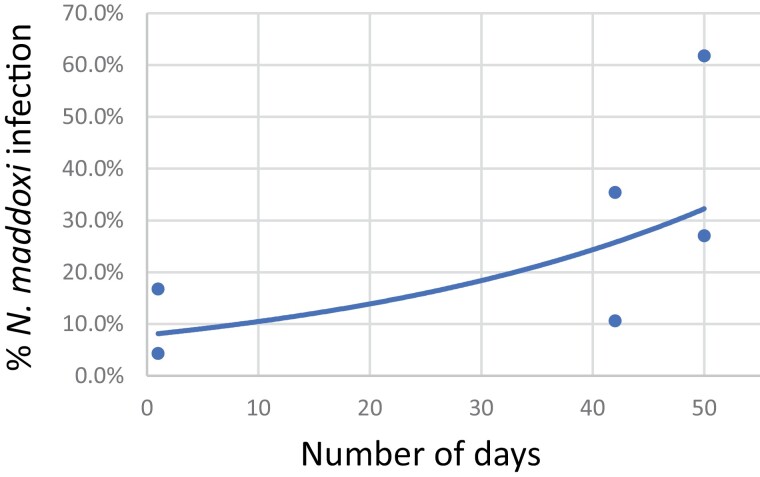
The microsporidian, Nosema maddoxi Becnel, Solter, Hajek, Huang, Sanscrainte & Estep, infects brown marmorated stink bug, Halyomorpha halys (Stål) (Hemiptera: Pentatomidae), populations in North America and Asia and causes decreased fitness in infected insects. This host overwinters as adults, often in aggregations in sheltered locations, and variable levels of mortality occur over the winter. We investigated pathogen prevalence in H. halys adults before, during, and after overwintering. Population level studies resulted in detection of N. maddoxi in H. halys in 6 new US states, but no difference in levels of infection by N. maddoxi in autumn versus the following spring. Halyomorpha halys that self-aggregated for overwintering in shelters deployed in the field were maintained under simulated winter conditions (4°C) for 5 months during the 2021-2022 winter and early spring, resulting in 34.6 ± 4.8% mortality. Over the 2020-2021 and 2021-2022 winters, 13.4 ± 3.5% of surviving H. halys in shelters were infected with N. maddoxi, while N. maddoxi infections were found in 33.4 ± 10.8% of moribund and dead H. halys that accumulated in shelters. A second pathogen, Colletotrichum fioriniae Marcelino & Gouli, not previously reported from H. halys, was found among 46.7 ± 7.8% of the H. halys that died while overwintering, but levels of infection decreased after overwintering. These 2 pathogens occurred as co-infections in 11.1 ± 5.9% of the fungal-infected insects that died while overwintering. Increasing levels of N. maddoxi infection caused epizootics among H. halys reared in greenhouse cages after overwintering.
Keywords: Colletotrichum fioriniae; Halyomorpha halys; Nosema maddoxi; entomopathogens; overwintering.
© The Author(s) 2023. Published by Oxford University Press on behalf of Entomological Society of America.
Figures
References
-
- Bergh JC, Morrison WR III, Joseph SV, Leskey TC.. Characterizing spring emergence of adult Halyomorpha halys using experimental overwinter shelters and commercial pheromone traps. Entomol Exp Appl. 2017:162:336–345.
-
- Costi E, Haye T, Maistrello L.. Biological parameters of the invasive brown marmorated stink bug, Halyomorpha halys, in southern Europe. J Pest Sci. 2017:90(4):1059–1067. 10.1007/s10340-017-0899-z - DOI
MeSH terms
Grants and funding
LinkOut - more resources
Full Text Sources
