


Clinical efficacy of one-finger meditation massage on IBS-C based on the "gut-brain axis" theory: study protocol for a randomized controlled trial
- PMID: 37280574
- PMCID: PMC10245512
- DOI: 10.1186/s12906-023-04019-3
Clinical efficacy of one-finger meditation massage on IBS-C based on the "gut-brain axis" theory: study protocol for a randomized controlled trial
Abstract
Background: As a common disorder of the gastrointestinal tract, irritable bowel syndrome (IBS) can have negative effects on patients and society, with irritable bowel syndrome with constipation(IBS-C) accounting for a large proportion of these effects. The main clinical manifestations of IBS-C are constipation, abdominal pain, and abdominal distension, which seriously impact the quality of life of patients. The mechanisms of IBS are complex, and the gut-brain axis has been an emerging and recognized theoretical system in recent years. Based on the theory of the gut-brain axis and the theory of Chinese medicine, we designed this study to evaluate the efficacy of one-finger meditation massage in treating IBS-C.
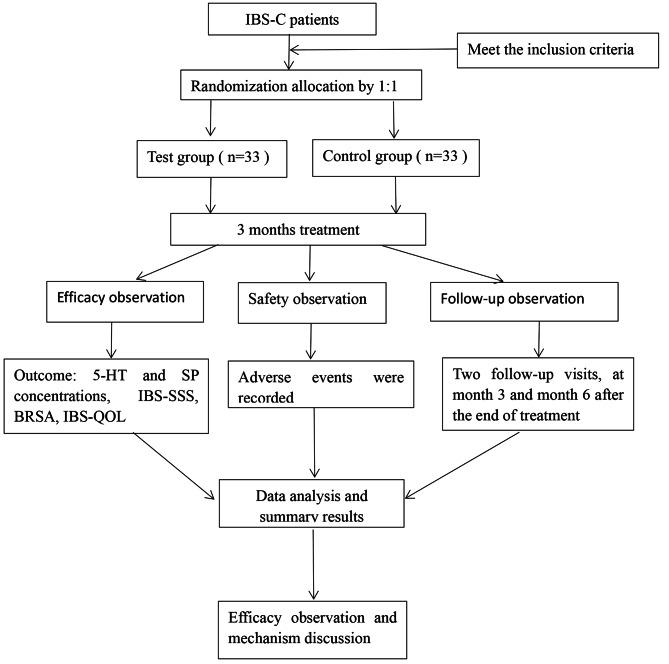
Methods/design: This is a randomized controlled trial. Eligible patients with irritable bowel syndrome (IBS-C) wererandomized 1:1 to a test group (massage plus probiotics) and a control group (probiotics). Patients in the test group weretreated once every 10 days for three consecutive courses of treatment (i.e., three months) and weregiven Bifidobacterium trifolium capsules 630 mg/dose three times daily 30 min after meals every day during the treatment period, with follow-up observations at the end of the third and sixth months of the treatment period. The control group weregiven Bifidobacterium trifolium capsules 630 mg/dose, 3 times a day for 3 months, with follow-up observations at the end of the third and sixth months of the treatment period. The primary outcome indicators are the concentrations of 5-HT and substance P and the IBS Severity Scale (IBS-SSS) assessment. Secondary outcomes are the Bristol Rating Scale (BRSA) score, the IBS Quality of Life Questionnaire (IBS-QOL scale) score, and the assessment of the effectiveness of the evidence. The results wereassessed at the pretreatment, posttreatment, and follow-up stages. Any side effects weresubject to assessment.
Discussion: The aim of this trial is to provide a new method of treatment based on pharmacological treatment that is easy to use, easy to promote and has proven efficacy and to establish the efficacy and safety of treating IBS-C through this trial.
Registration for trial: Chinese Clinical Trial Registry ChiCTR2200066417 on 5 December 2022. https://www.chictr.org.cn/bin/project/edit?pid=183461.
Keywords: Gut-brain axis; IBS-C; One-finger meditation massage; Randomized controlled trial.
© 2023. The Author(s).
Conflict of interest statement
The authors declare they have no commercial or financial interests that might constitute a potential conflict of interest.
Figures

References
-
- George F, Longstreth WGTW, Fermin Mearin ARCS. Funct Bowel Disorders Gastroenterol. 2006;130(5):1480–91. - PubMed
Publication types
MeSH terms
Substances
Grants and funding
- 2021ZB005/Science Research Foundation Programme of Zhejiang Provincial TCM Administration
- 2021ZB005/Science Research Foundation Programme of Zhejiang Provincial TCM Administration
- 2021ZB005/Science Research Foundation Programme of Zhejiang Provincial TCM Administration
- 2021ZB005/Science Research Foundation Programme of Zhejiang Provincial TCM Administration
- 2021ZB005/Science Research Foundation Programme of Zhejiang Provincial TCM Administration
LinkOut - more resources
Full Text Sources
Research Materials
