


It Takes Two to Tango: Links Between Traditional Beliefs About both Men's and Women's Gender Roles and Comfort Initiating Sex and Comfort Refusing Sex
- PMID: 37283732
- PMCID: PMC10148619
- DOI: 10.1007/s11199-023-01366-w
It Takes Two to Tango: Links Between Traditional Beliefs About both Men's and Women's Gender Roles and Comfort Initiating Sex and Comfort Refusing Sex
Abstract
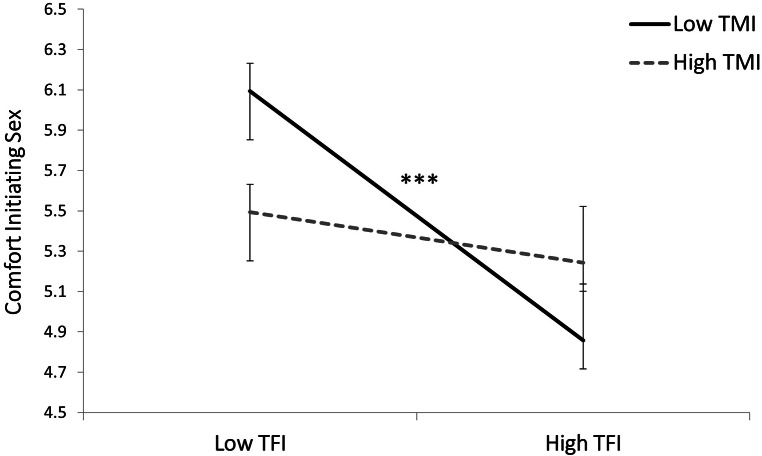
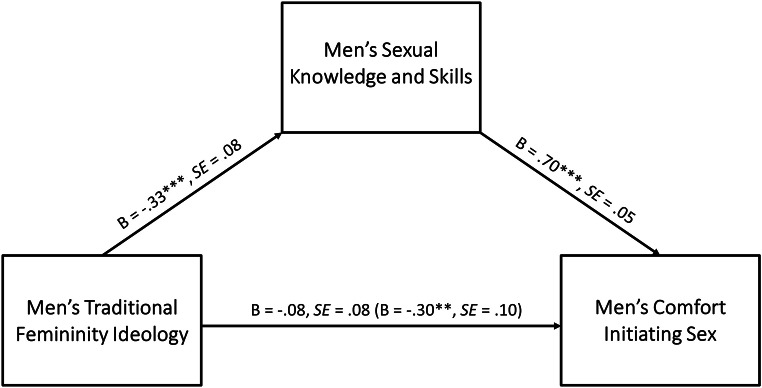
Traditional gender roles dictate rigid rules and standards prescribing which behaviors, thoughts, and feelings are considered masculine and feminine within sexual contexts, and thus internalizing these beliefs (higher traditional gender ideology) may influence sexual attitudes. Prior theorizing has primarily focused on how women's traditional beliefs about women's gender roles (traditional femininity ideology) and men's traditional beliefs about men's gender roles (traditional masculinity ideology) influence their sexual assertiveness. Yet, men can hold traditional beliefs about women, and women can hold traditional beliefs about men, and these beliefs should have important implications for sexual assertiveness. We addressed this gap by testing how both heterosexual women's (n = 389) and men's (n = 393) traditional masculinity and femininity ideologies associate with their reported comfort initiating sex and comfort refusing sex in their relationships. When accounting for both sets of beliefs, women's traditional beliefs about men's and women's roles interacted to predict comfort initiating sex, but not comfort refusing sex. Men's traditional beliefs about men's roles predicted less comfort refusing sex, and their traditional beliefs about women's roles predicted less comfort initiating sex. This novel research underscores the importance of considering beliefs about both sets of traditional gender roles for understanding people's sexual attitudes.
Supplementary information: The online version contains supplementary material available at 10.1007/s11199-023-01366-w.
Keywords: Gender ideology; Gender roles; Sexual assertiveness; Sexual initiation; Sexual refusal.
© The Author(s) 2023, corrected publication 2023. Springer Nature or its licensor (e.g. a society or other partner) holds exclusive rights to this article under a publishing agreement with the author(s) or other rightsholder(s); author self-archiving of the accepted manuscript version of this article is solely governed by the terms of such publishing agreement and applicable law.
Conflict of interest statement
Conflicts of interest/Competing interestsThe authors have no relevant financial or non-financial competing interests to disclose.
Figures
References
-
- Allen MS, Iliescu D, Greiff S. Single item measures in psychological science: A call to action [Editorial] European Journal of Psychological Assessment. 2022;38(1):1–5. doi: 10.1027/1015-5759/a000699. - DOI
-
- Basile KC. Rape by acquiescence: The ways in which women “give in” to unwanted sex with their husbands. Violence Against Women. 1999;5(9):1036–1058. doi: 10.1177/10778019922181617. - DOI
-
- Bem, S. L. (1981). Bem sex-role inventory. Consulting Psychology Press.
LinkOut - more resources
Full Text Sources
Miscellaneous