


Impact of fatigue as the primary determinant of functional limitations among patients with post-COVID-19 syndrome: a cross-sectional observational study
- PMID: 37286327
- PMCID: PMC10335413
- DOI: 10.1136/bmjopen-2022-069217
Impact of fatigue as the primary determinant of functional limitations among patients with post-COVID-19 syndrome: a cross-sectional observational study
Abstract
Objectives: To describe self-reported characteristics and symptoms of treatment-seeking patients with post-COVID-19 syndrome (PCS). To assess the impact of symptoms on health-related quality of life (HRQoL) and patients' ability to work and undertake activities of daily living.
Design: Cross-sectional single-arm service evaluation of real-time user data.
Setting: 31 post-COVID-19 clinics in the UK.
Participants: 3754 adults diagnosed with PCS in primary or secondary care deemed suitable for rehabilitation.
Intervention: Patients using the Living With Covid Recovery digital health intervention registered between 30 November 2020 and 23 March 2022.
Primary and secondary outcome measures: The primary outcome was the baseline Work and Social Adjustment Scale (WSAS). WSAS measures the functional limitations of the patient; scores of ≥20 indicate moderately severe limitations. Other symptoms explored included fatigue (Functional Assessment of Chronic Illness Therapy-Fatigue), depression (Patient Health Questionnaire-Eight Item Depression Scale), anxiety (Generalised Anxiety Disorder Scale, Seven-Item), breathlessness (Medical Research Council Dyspnoea Scale and Dyspnoea-12), cognitive impairment (Perceived Deficits Questionnaire, Five-Item Version) and HRQoL (EQ-5D). Symptoms and demographic characteristics associated with more severe functional limitations were identified using logistic regression analysis.
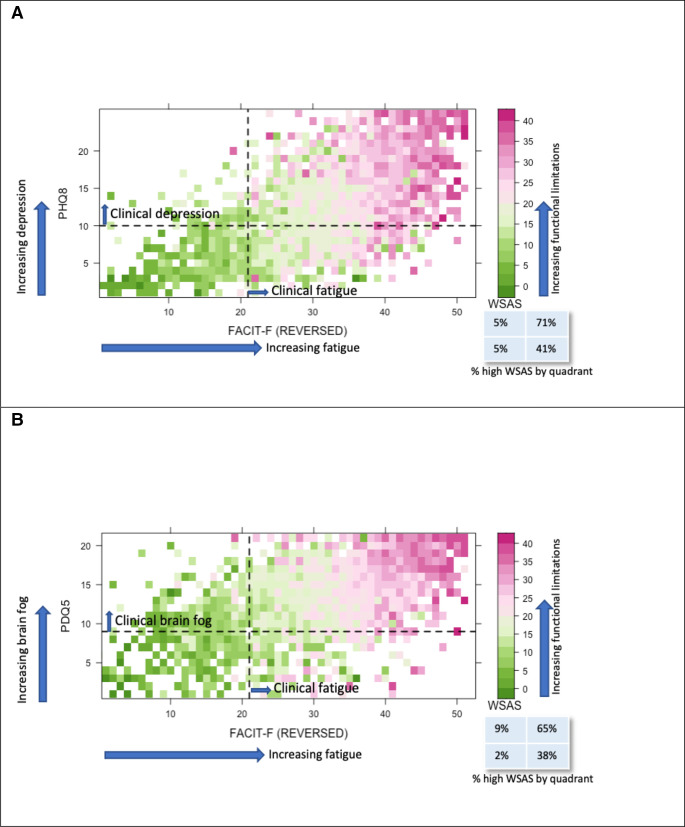
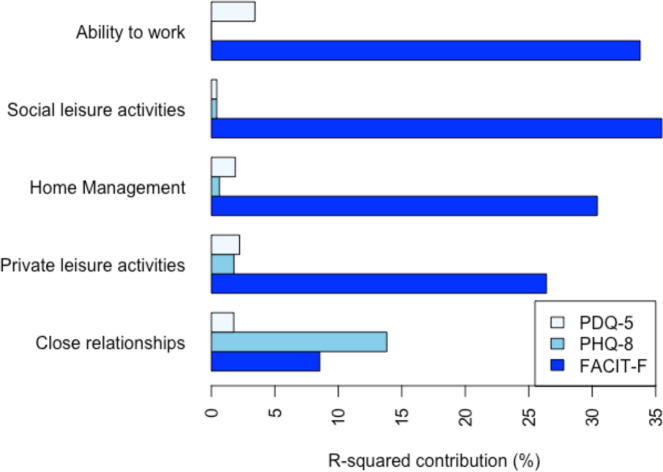
Results: 3541 (94%) patients were of working age (18-65); mean age (SD) 48 (12) years; 1282 (71%) were female and 89% were white. 51% reported losing ≥1 days from work in the previous 4 weeks; 20% reported being unable to work at all. Mean WSAS score at baseline was 21 (SD 10) with 53% scoring ≥20. Factors associated with WSAS scores of ≥20 were high levels of fatigue, depression and cognitive impairment. Fatigue was found to be the main symptom contributing to a high WSAS score.
Conclusion: A high proportion of this PCS treatment-seeking population was of working age with over half reporting moderately severe or worse functional limitation. There were substantial impacts on ability to work and activities of daily living in people with PCS. Clinical care and rehabilitation should address the management of fatigue as the dominant symptom explaining variation in functionality.
Keywords: Anxiety disorders; COVID-19; Depression & mood disorders; MENTAL HEALTH; PRIMARY CARE; Public health.
© Author(s) (or their employer(s)) 2023. Re-use permitted under CC BY. Published by BMJ.
Conflict of interest statement
Competing interests: JB reports payments from University College London for working with the patient and public involvement group to prepare content for the digital health intervention since May 2020. KB's research portfolio is partly funded by National Institute for Health &and Care Research (NIHR) Applied Research Collaboration Wessex. HG reports working as a clinical safety officer for Living With Ltd. JRH reports receiving personal fees and fees to institution for honorariums and consultancy payments from AstraZeneca, Boehringer Ingelheim, Chiesi, GlaxoSmithKline and Takeda, and also sponsorship for attending meetings from AstraZeneca and GlaxoSmithKline. HH reports payment from the University of East London for providing a lecture on long COVID and COVID-19 recovery in February 2021. SL reports grants from NIHR in which the payment was made to Camden and Islington NHS Trust between the period of October–September 2022. PEP reports grants from the Medical Research Council and NIHR outside the submitted work. All other authors declare no competing interests.
Figures
References
-
- National Institute for Health and Care Excellence . COVID-19 rapid guideline: managing the long-term effects of COVID-19. 2022. Available: https://www.nice.org.uk/guidance/ng188 - PubMed
-
- World Health Organization . Who coronavirus (COVID-19) dashboard 2022. 2022. Available: https://covid19.who.int/
-
- Maxwell E, Poole R. NIHR themed review: living with covid19-second review: National Institute of health and care research. 2021. Available: https://evidence.nihr.ac.uk/themedreview/living-with-covid19-second-review/
-
- Whitaker M, Elliott J, Chadeau-Hyam M, et al. n.d. Persistent symptoms following SARS-cov-2 infection in a random community sample of 508,707 people medrxiv 21259452. MedRxiv 10.1101/2021.06.28.21259452 - DOI
Publication types
MeSH terms
Grants and funding
LinkOut - more resources
Full Text Sources
Medical
