


How it feels in a cell
- PMID: 37286396
- PMCID: PMC10592589
- DOI: 10.1016/j.tcb.2023.05.002
How it feels in a cell
Abstract
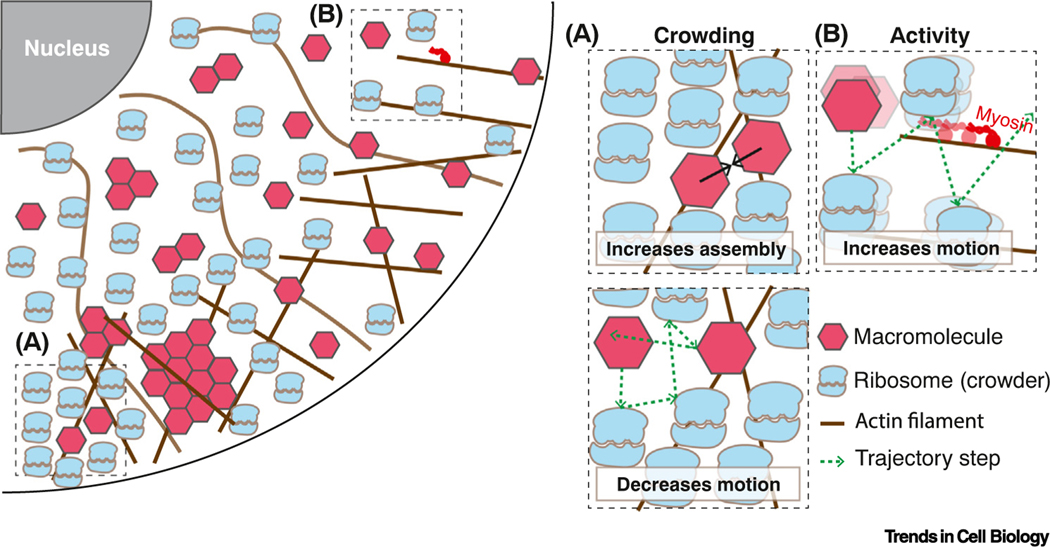
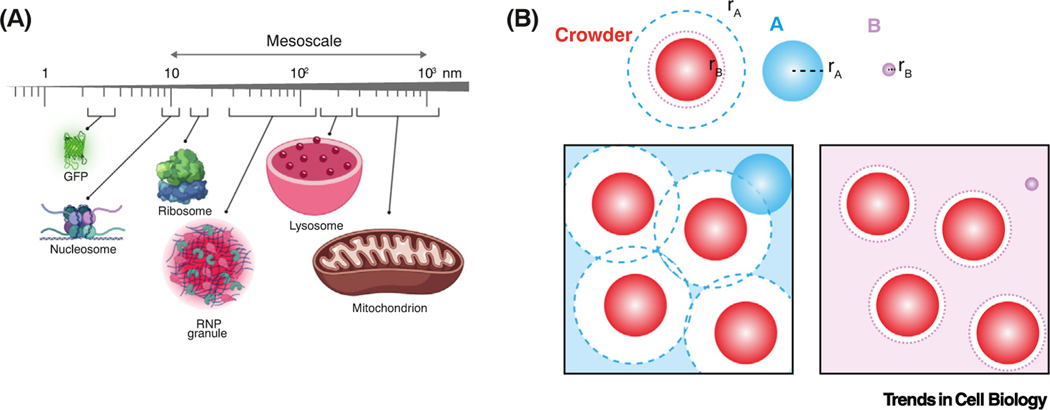
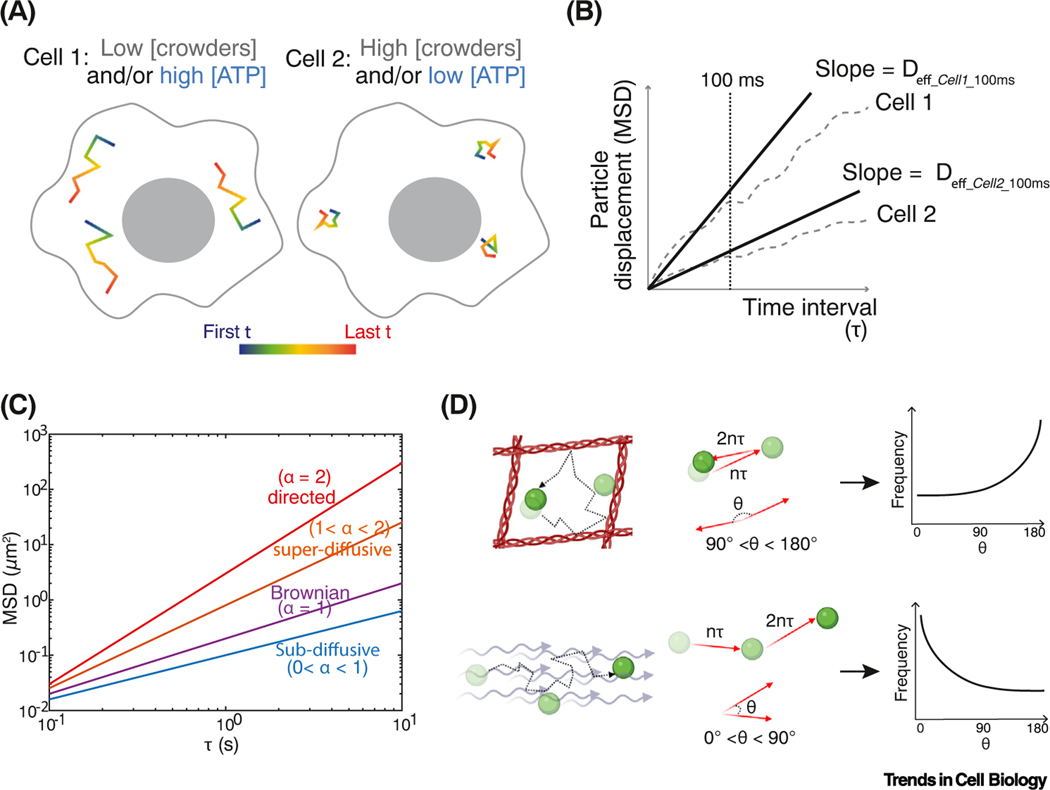
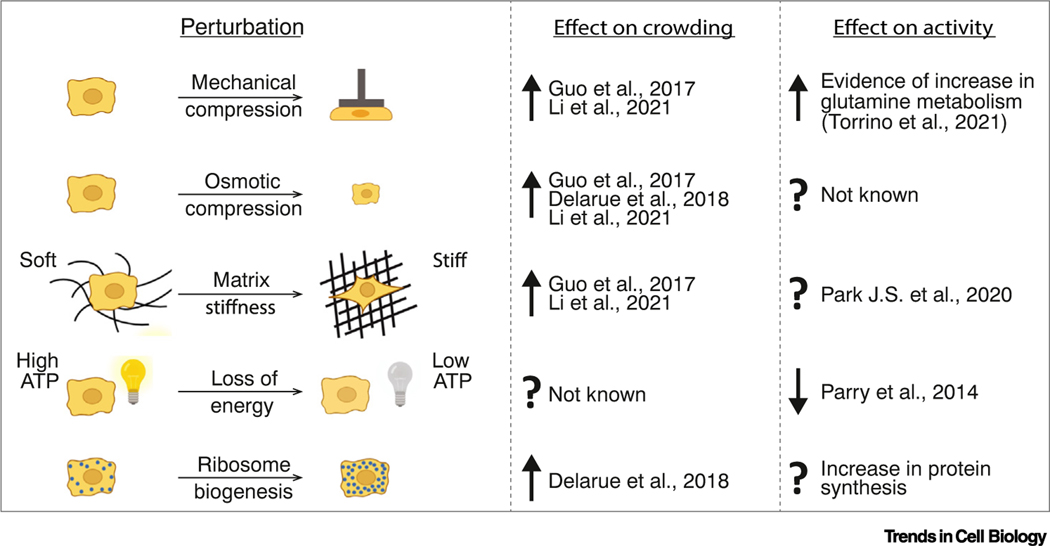
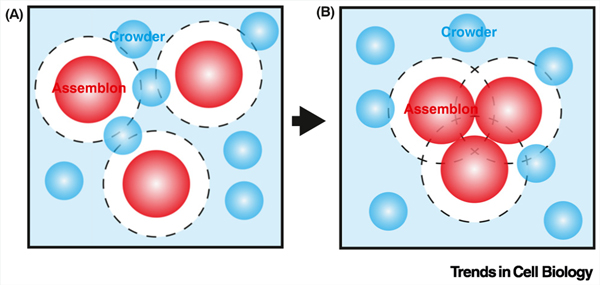
Life emerges from thousands of biochemical processes occurring within a shared intracellular environment. We have gained deep insights from in vitro reconstitution of isolated biochemical reactions. However, the reaction medium in test tubes is typically simple and diluted. The cell interior is far more complex: macromolecules occupy more than a third of the space, and energy-consuming processes agitate the cell interior. Here, we review how this crowded, active environment impacts the motion and assembly of macromolecules, with an emphasis on mesoscale particles (10-1000 nm diameter). We describe methods to probe and analyze the biophysical properties of cells and highlight how changes in these properties can impact physiology and signaling, and potentially contribute to aging, and diseases, including cancer and neurodegeneration.
Keywords: active matter; mechanobiology; mesoscale; microrheology; molecular crowding.
Copyright © 2023 Elsevier Ltd. All rights reserved.
Conflict of interest statement
Declaration of interests The authors declare no competing interests.
Figures
References
-
- Zimmerman SB and Trach SO (1991) Estimation of macromolecule concentrations and excluded volume effects for the cytoplasm of Escherichia coli. J. Mol. Biol 222, 599–620 - PubMed
-
- Medalia O. et al. (2002) Macromolecular architecture in eukaryotic cells visualized by cryoelectron tomography. Science 298, 1209–1213 - PubMed
-
- Zhang J. (2000) Protein-length distributions for the three domains of life. Trends Genet. 16, 107–109 - PubMed
Publication types
MeSH terms
Grants and funding
LinkOut - more resources
Full Text Sources
