


Environmental Fate of Cl-PFPECAs: Accumulation of Novel and Legacy Perfluoroalkyl Compounds in Real-World Vegetation and Subsoils
- PMID: 37290100
- PMCID: PMC10366621
- DOI: 10.1021/acs.est.3c00665
Environmental Fate of Cl-PFPECAs: Accumulation of Novel and Legacy Perfluoroalkyl Compounds in Real-World Vegetation and Subsoils
Abstract
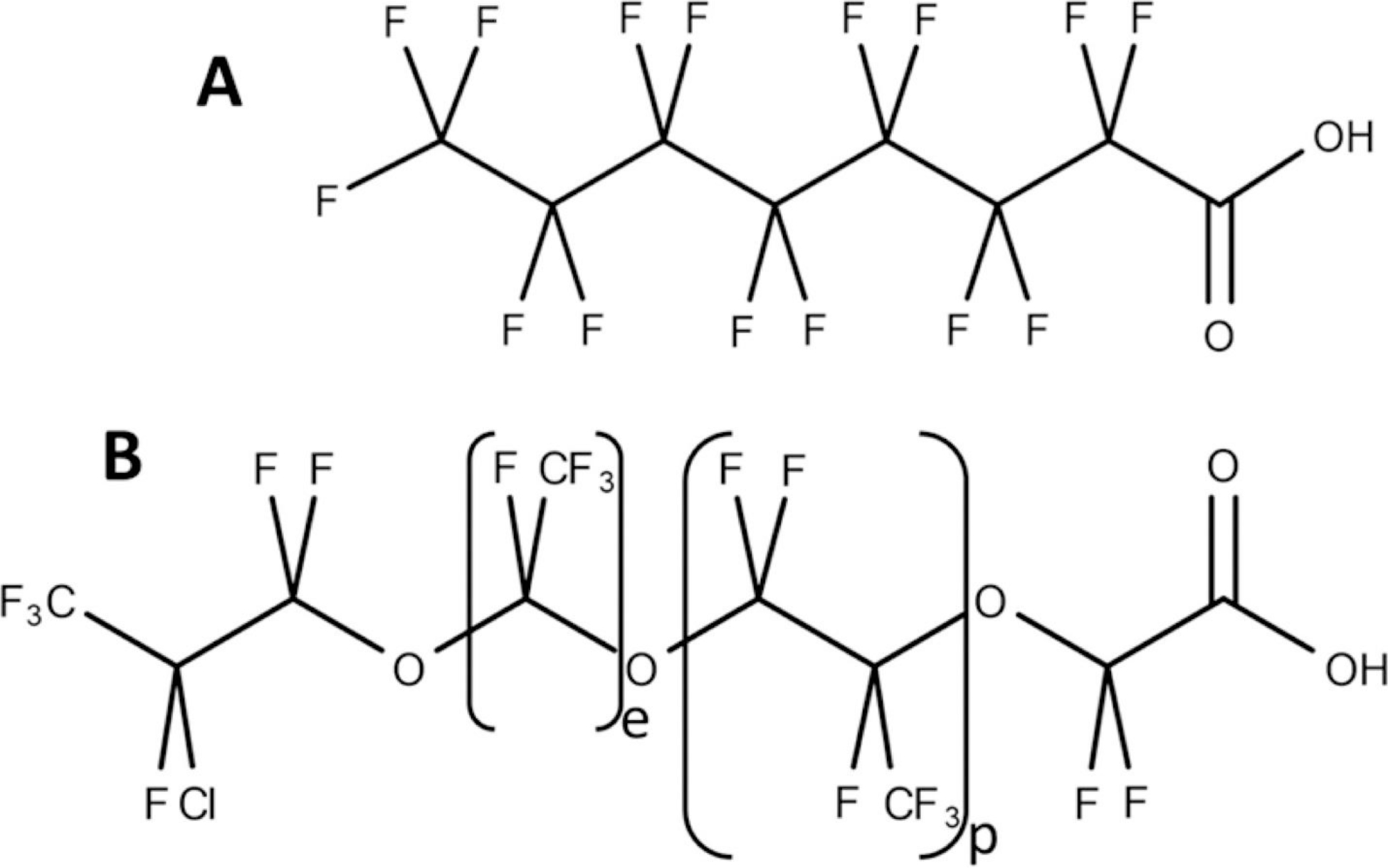
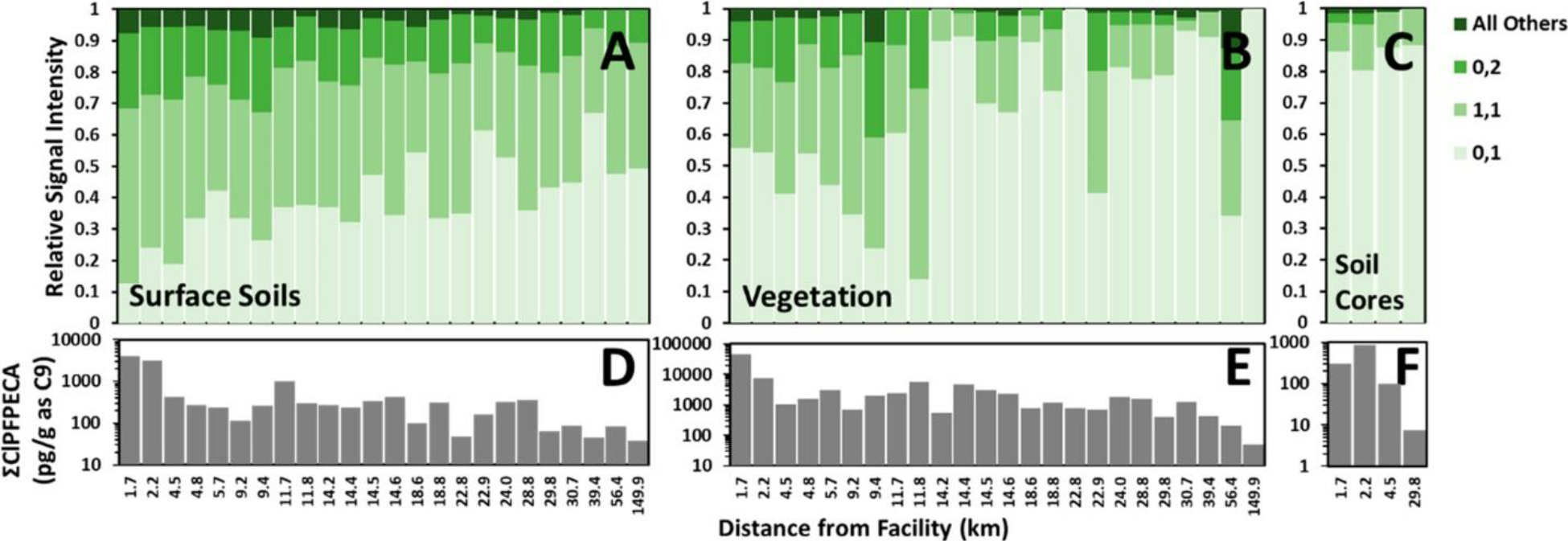
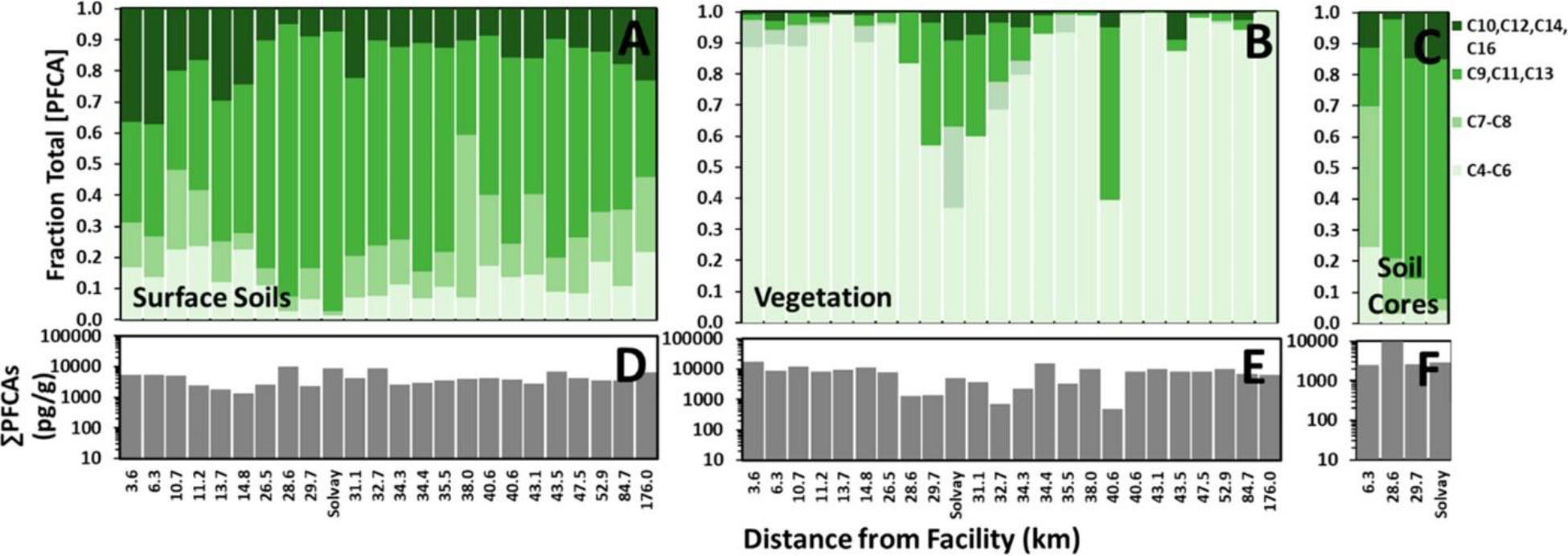
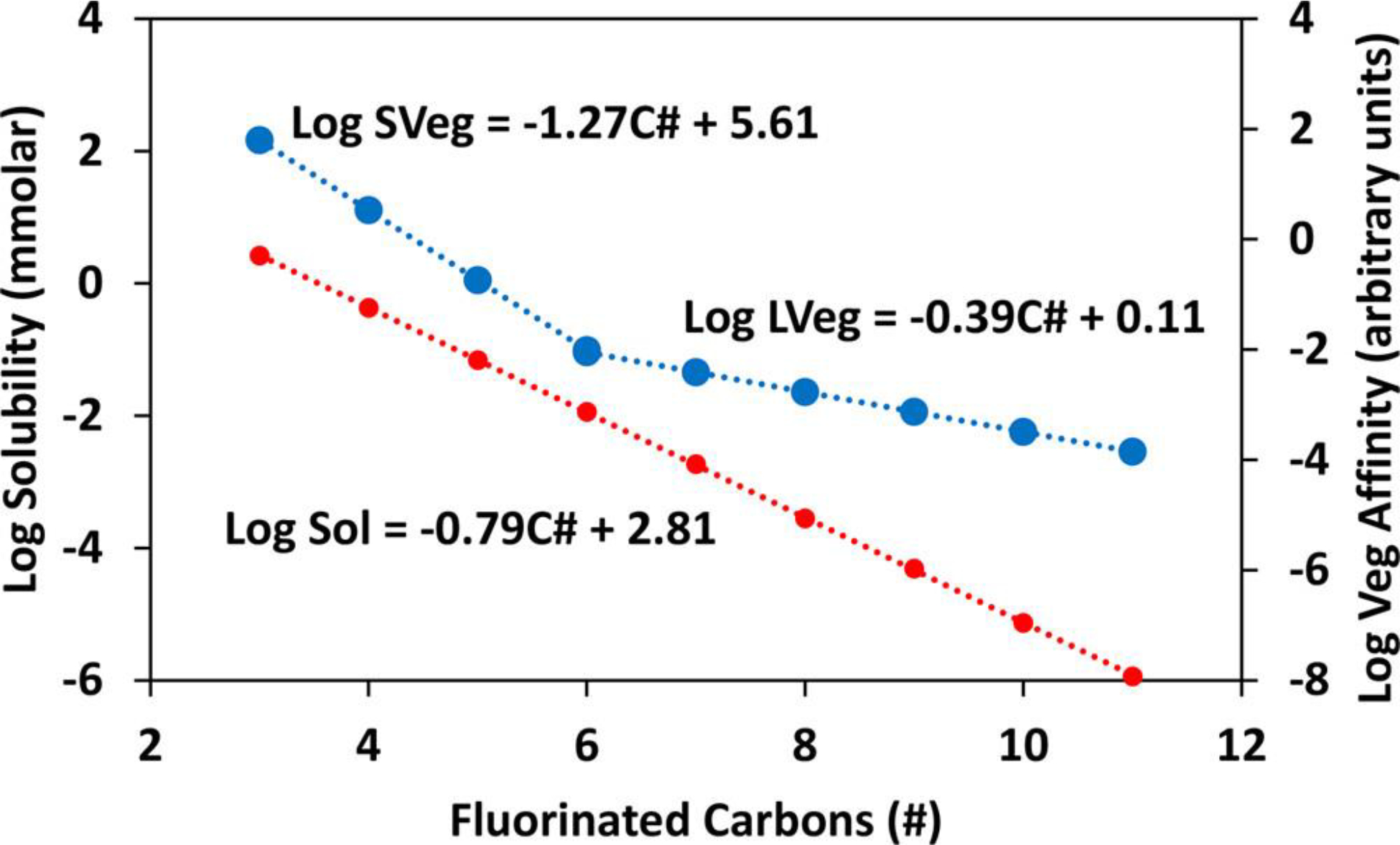
Per- and polyfluoroalkyl substances (PFAS) are globally distributed and potentially toxic compounds. We report accumulation of chloroperfluoropolyethercarboxylates (Cl-PFPECAs) and perfluorocarboxylates (PFCAs) in vegetation and subsoils in New Jersey. Lower molecular weight Cl-PFPECAs, containing 7-10 fluorinated carbons, and PFCAs containing 3-6 fluorinated carbons were enriched in vegetation relative to surface soils. Subsoils were dominated by lower molecular weight Cl-PFPECAs, a divergence from surface soils. Contrastingly, PFCA homologue profiles in subsoils were similar to surface soils, likely reflecting temporal-use patterns. Accumulation factors (AFs) for vegetation and subsoils decreased with increasing CF2, 6-13 for vegetation and 8-13 in subsoils. In vegetation, for PFCAs having CF2 = 3-6, AFs diminished with increasing CF2 as a more sensitive function than for longer chains. Considering that PFAS manufacturing has transitioned from long-chain chemistry to short-chain, this elevated vegetative accumulation of short-chain PFAS suggests the potential for unanticipated PFAS exposure levels globally in human and/or wildlife populations. This inverse relationship between AFs and CF2-count in terrestrial vegetation is opposite the positive relationship reported in aquatic vegetation suggesting aquatic food webs may be preferentially enriched in long-chain PFAS. AFs normalized to soil-water concentrations increased with chain length for CF2 = 6-13 in vegetation but remained inversely related to chain length for CF2 = 3-6, reflecting a fundamental change in vegetation affinity for short chains compared to long.
Keywords: PFAS alternatives; accumulation factors; next-generation chemicals; polyfluorinated alkyl substances.
Conflict of interest statement
The authors declare no competing financial interest.
M.J.B.D.: Retired.
Figures

References
-
- Evich MG; Davis MJB; McCord JP; Acrey B; Awkerman JA; Knappe DRU; Lindstrom AB; Speth TF; Tebes-Stevens C; Strynar MJ; Wang Z; Weber EJ; Henderson WM; Washington JW Per- and polyfluoroalkyl substances in the environment. Science 2022, 375 (6580), eabg9065 DOI: 10.1126/science.abg9065 - DOI - PMC - PubMed
-
- Costello MCS; Lee LS Sources, Fate, and Plant Uptake in Agricultural Systems of Per- and Polyfluoroalkyl Substances. Current Pollution Reports 2020, DOI: 10.1007/s40726-020-00168-y - DOI
-
- Sunderland EM; Hu XC; Dassuncao C; Tokranov AK; Wagner CC; Allen JG A review of the pathways of human exposure to poly- and perfluoroalkyl substances (PFASs) and present understanding of health effects. Journal of Exposure Science & Environmental Epidemiology 2019, 29 (2), 131–147, DOI: 10.1038/s41370-018-0094-1 - DOI - PMC - PubMed
Publication types
MeSH terms
Substances
Grants and funding
LinkOut - more resources
Full Text Sources
Miscellaneous
