Clinical Trial
. 2023 Jun;29(6):1468-1475.
doi: 10.1038/s41591-023-02398-1. Epub 2023 Jun 8.

Trofinetide for the treatment of Rett syndrome: a randomized phase 3 study

Affiliations
Clinical Trial

Trofinetide for the treatment of Rett syndrome: a randomized phase 3 study

Jeffrey L Neul et al. Nat Med. 2023 Jun.

Abstract

Rett syndrome is a rare, genetic neurodevelopmental disorder. Trofinetide is a synthetic analog of glycine-proline-glutamate, the N-terminal tripeptide of the insulin-like growth factor 1 protein, and has demonstrated clinical benefit in phase 2 studies in Rett syndrome. In this phase 3 study ( https://clinicaltrials.gov identifier NCT04181723 ), females with Rett syndrome received twice-daily oral trofinetide (n = 93) or placebo (n = 94) for 12 weeks. For the coprimary efficacy endpoints, least squares mean (LSM) change from baseline to week 12 in the Rett Syndrome Behaviour Questionnaire for trofinetide versus placebo was -4.9 versus -1.7 (P = 0.0175; Cohen's d effect size, 0.37), and LSM Clinical Global Impression-Improvement at week 12 was 3.5 versus 3.8 (P = 0.0030; effect size, 0.47). For the key secondary efficacy endpoint, LSM change from baseline to week 12 in the Communication and Symbolic Behavior Scales Developmental Profile Infant-Toddler Checklist Social Composite score was -0.1 versus -1.1 (P = 0.0064; effect size, 0.43). Common treatment-emergent adverse events included diarrhea (80.6% for trofinetide versus 19.1% for placebo), which was mostly mild to moderate in severity. Significant improvement for trofinetide compared with placebo was observed for the coprimary efficacy endpoints, suggesting that trofinetide provides benefit in treating the core symptoms of Rett syndrome.


Conflict of interest statement

J.L.N. has received research funding from the International Rett Syndrome Foundation, the National Institutes of Health and Rett Syndrome Research Trust; and personal consultancy fees from Acadia Pharmaceuticals, Analysis Group, AveXis, GW Pharmaceuticals, Hoffmann-La Roche, Myrtelle, Neurogene, Newron Pharmaceuticals, Signant Health and Taysha Gene Therapies and for the preparation of CME activities for Medscape and PeerView Institute; serves on the scientific advisory board of Alcyone Lifesciences; is a scientific cofounder of LizarBio Therapeutics; and was a member of a data safety monitoring board for clinical trials conducted by Ovid Therapeutics. A.K.P. is coeditor of Translational Science of Rare Diseases, received research funding from the National Institutes of Health and is a consultant for Acadia Pharmaceuticals, AveXis, GW Pharmaceuticals and Anavex Life Science as well as an adviser to the International Rett Syndrome Foundation. T.A.B. received research funding from the GRIN2B Foundation, the International Foundation for CDKL5 Research, the Loulou Foundation, the National Institutes of Health and the Simons Foundation; has consultancies for Alcyone, AveXis, GRIN Therapeutics, GW Pharmaceuticals, the International Rett Syndrome Foundation, Marinus Pharmaceuticals, Neurogene, Ovid Therapeutics and Takeda Pharmaceutical; has clinical trials with Acadia Pharmaceuticals, GW Pharmaceuticals, Marinus Pharmaceuticals, Ovid Therapeutics and Rett Syndrome Research Trust; all remuneration has been made to his department. E.M.B.-K. has received funding from Acadia Pharmaceuticals, Alcobra Pharmaceuticals, AMO Pharma, Asuragen, AveXis, Biogen, BioMarin, Cydan Development, EryDel, Fulcrum Therapeutics, GeneTx, GW Pharmaceuticals, Ionis Pharmaceuticals, Jaguar Health, Lumos Pharma, Marinus Pharmaceuticals, Neuren Pharmaceuticals, Neurogene, Neurotrope, Novartis, Orphazyme, Ovid Therapeutics, Retrophin, Roche, Seaside Therapeutics, Taysha Gene Therapies, Tetra Bio-Pharma, Ultragenyx, Yamo Pharmaceuticals, Zynerba Pharmaceuticals and Vtesse–Sucampo–Mallinckrodt Pharmaceuticals to consult on trial design or run clinical or laboratory validation trials in genetic neurodevelopmental or neurodegenerative disorders, all of which is directed to Rush University Medical Center in support of rare disease programs; E.M.B.-K. receives no personal funds, and Rush University Medical Center has no relevant financial interest in any of the commercial entities listed. D.G.G. has received personal compensation and research support from Acadia Pharmaceuticals, Neuren Pharmaceuticals and Newron Pharmaceuticals. E.D.M. has received research support from the National Institute of Neurological Disorders and Stroke and the National Institute of Child Health and Human Development, the Eagles Autism Foundation, Penn Orphan Disease Center, the International Rett Syndrome Foundation, Rett Syndrome Research Trust, the International CDKL5 Research Foundation and the Loulou Foundation. He has been a site principal investigator for trials from Stoke Therapeutics, GW Pharmaceuticals, Zogenix, Acadia Pharmaceuticals and Marinus Pharmaceuticals. He has received personal compensation for consulting from Stoke Therapeutics and Acadia Pharmaceuticals. J.M.Y., K.M.B., S.S. and T.L. are employees of and stockholders in Acadia Pharmaceuticals. S.S. is also a board director and stockholder of Neurogene.

Figures

Fig. 1
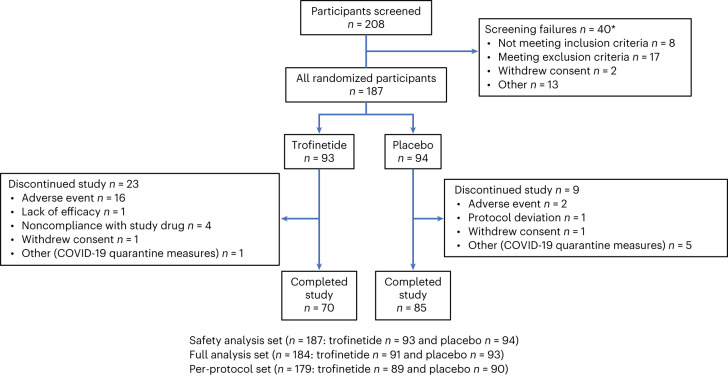
Fig. 1. Participant disposition.
Note that the three participants missing from the full analysis set (n = 184), who were included in the randomized analysis set (n = 187), had a baseline assessment but no post-baseline efficacy assessments. *208 unique participants were screened, but some were rescreened, for a total of 227 screenings. COVID-19, coronavirus disease 2019. Source data
Fig. 2
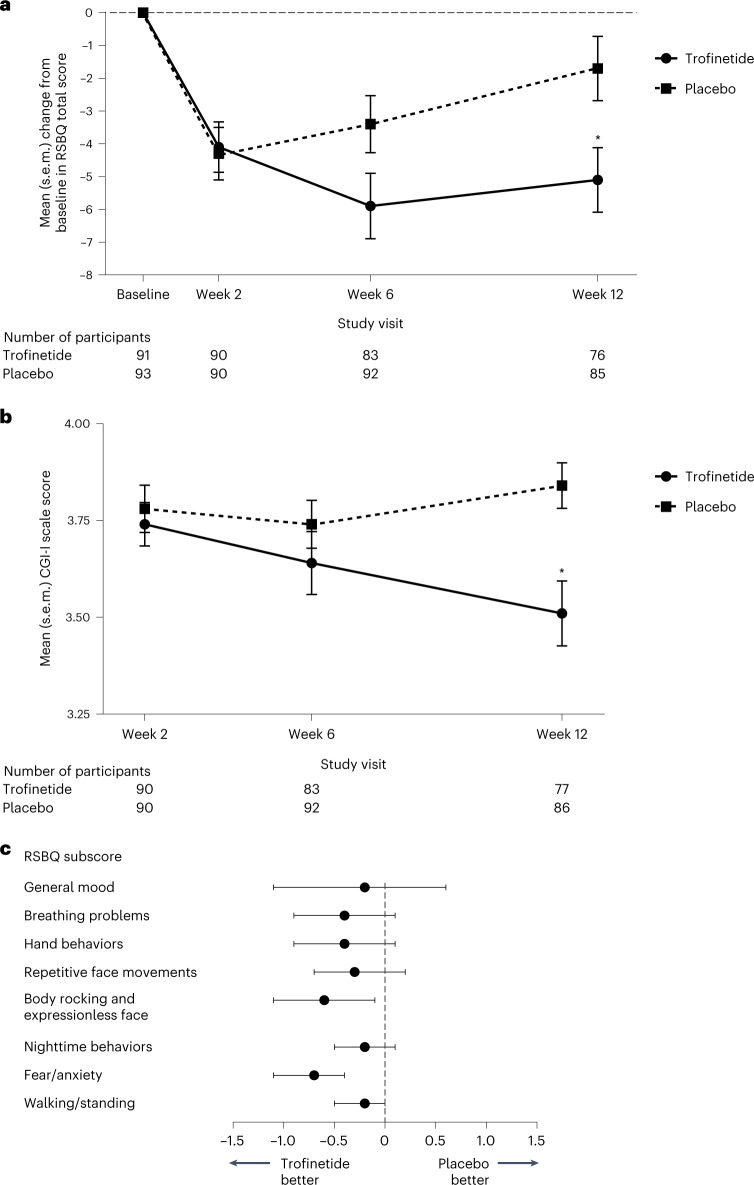
Fig. 2. RSBQ total scores, CGI-I scale scores and RSBQ subscores.
a, Mean (s.e.m.) change from baseline in RSBQ total score at each study visit in the full analysis set. b, Mean (s.e.m.) CGI-I scale score at each study visit in the full analysis set. c, LSM treatment differences with 95% CIs for the change in RSBQ subscores from baseline to week 12. In a,b, data are presented as mean values ± s.e.m.; asterisks at week 12 denote significance based on the LSM treatment difference from the MMRM analysis in which adjustments were made for multiple comparisons (two-sided P = 0.0175 and Cohen’s d effect size = 0.37 for the RSBQ change from baseline to week 12 and two-sided P = 0.0030 and Cohen’s d effect size = 0.47 for the CGI-I scale score at week 12). In c, data are presented as LSM treatment difference, and whiskers represent the lower and upper limits of the 95% CI; CI widths have not been adjusted for multiplicity. Sample size for each RSBQ subscore analysis: trofinetide (n = 76) and placebo (n = 85). Source data
Fig. 3
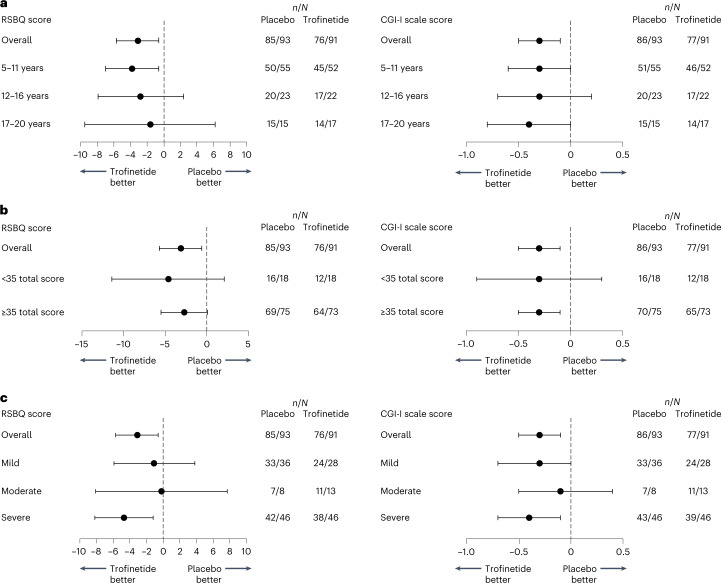
Fig. 3. Subgroup analyses of the coprimary efficacy endpoints.
ac, LSM treatment differences with 95% CIs for the coprimary efficacy endpoints by age (a), baseline RSBQ severity (b) and category of mutation severity (c) based on the MMRM analysis in the full analysis set. In ac, data are presented as LSM treatment difference, and whiskers represent the lower and upper limits of the 95% CI; CI widths have not been adjusted for multiplicity. Source data
Extended Data Fig. 1
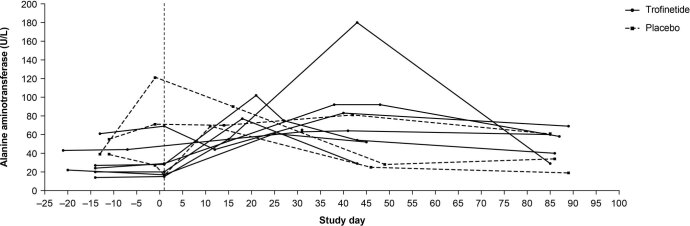
Extended Data Fig. 1. Alanine Aminotransferase Values.
Figure footnote: The dashed vertical line at day 1 indicates when study treatment was initiated. Source data
Extended Data Fig. 2
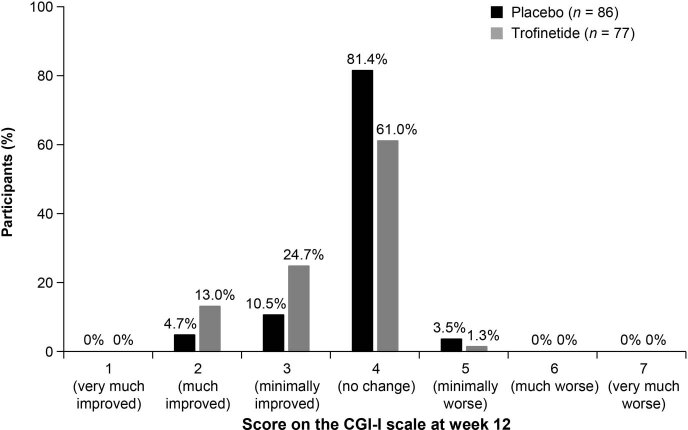
Extended Data Fig. 2. Score on the CGI-I Scale at Week 12.
Figure footnote: CGI-I denotes Clinical Global Impression-Improvement. Source data

References

    1. Neul, J. L. et al. Rett syndrome: revised diagnostic criteria and nomenclature. Ann. Neurol.68, 944–950 (2010). - PMC - PubMed
    1. Motil, K. J. et al. Gastrointestinal and nutritional problems occur frequently throughout life in girls and women with Rett syndrome. J. Pediatr. Gastroenterol. Nutr.55, 292–298 (2012). - PMC - PubMed
    1. Amir, R. E. et al. Rett syndrome is caused by mutations in X-linked MECP2, encoding methyl-CpG-binding protein 2. Nat. Genet.23, 185–188 (1999). - PubMed
    1. Baj, G., Patrizio, A., Montalbano, A., Sciancalepore, M. & Tongiorgi, E. Developmental and maintenance defects in Rett syndrome neurons identified by a new mouse staging system in vitro. Front. Cell. Neurosci.8, 18 (2014). - PMC - PubMed
    1. Bedogni, F. et al. Defects during Mecp2 null embryonic cortex development precede the onset of overt neurological symptoms. Cereb.Cortex26, 2517–2529 (2016). - PubMed

Publication types

Associated data