This is a preprint.
Spatial genomic, biochemical, and cellular mechanisms drive meningioma heterogeneity and evolution
- PMID: 37292686
- PMCID: PMC10246120
- DOI: 10.21203/rs.3.rs-2921804/v1
Spatial genomic, biochemical, and cellular mechanisms drive meningioma heterogeneity and evolution
Update in
-
Spatial genomic, biochemical and cellular mechanisms underlying meningioma heterogeneity and evolution.Nat Genet. 2024 Jun;56(6):1121-1133. doi: 10.1038/s41588-024-01747-1. Epub 2024 May 17. Nat Genet. 2024. PMID: 38760638 Free PMC article.
Abstract
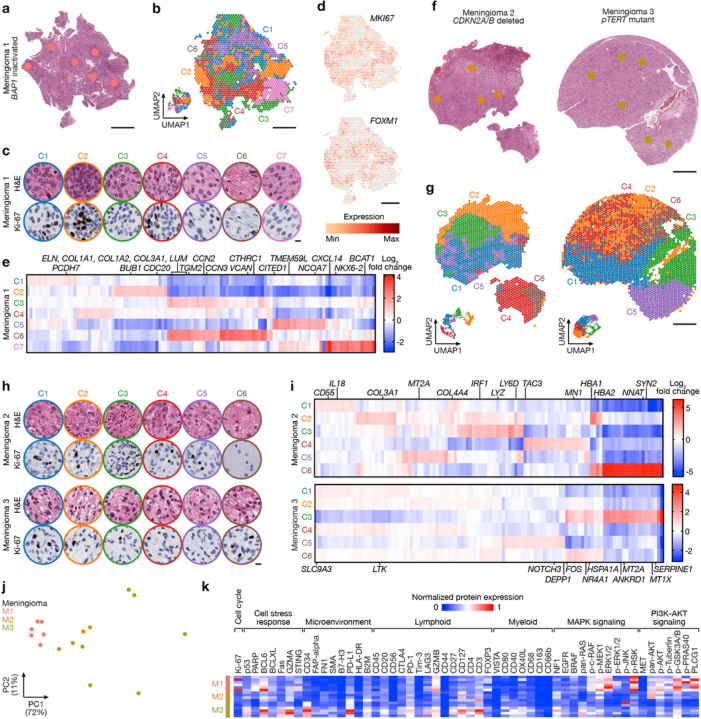
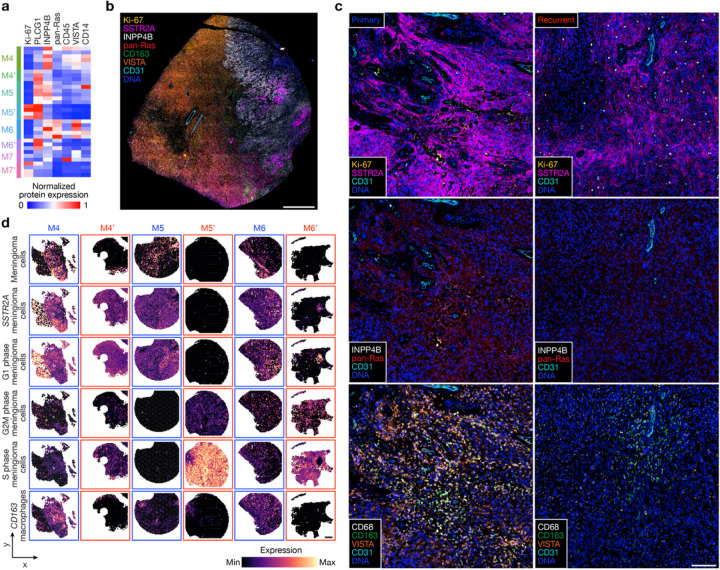
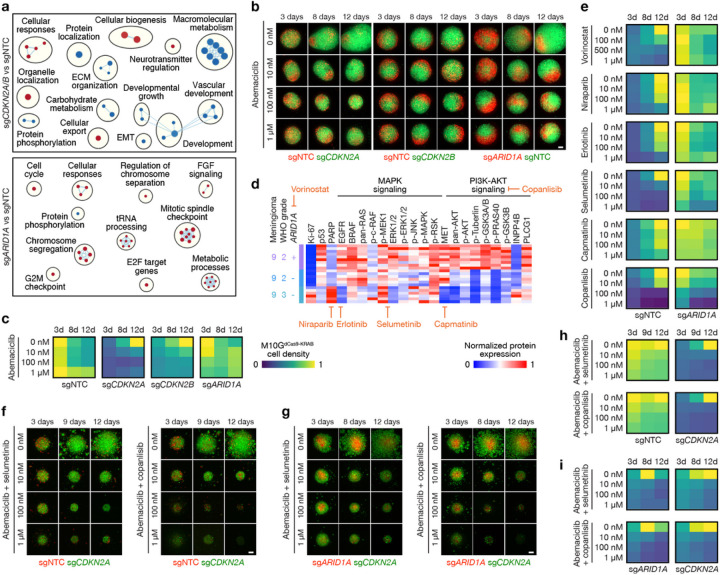
Intratumor heterogeneity underlies cancer evolution and treatment resistance1-5, but targetable mechanisms driving intratumor heterogeneity are poorly understood. Meningiomas are the most common primary intracranial tumors and are resistant to all current medical therapies6,7. High-grade meningiomas cause significant neurological morbidity and mortality and are distinguished from low-grade meningiomas by increased intratumor heterogeneity arising from clonal evolution and divergence8. Here we integrate spatial transcriptomic and spatial protein profiling approaches across high-grade meningiomas to identify genomic, biochemical, and cellular mechanisms linking intratumor heterogeneity to the molecular, temporal, and spatial evolution of cancer. We show divergent intratumor gene and protein expression programs distinguish high-grade meningiomas that are otherwise grouped together by current clinical classification systems. Analyses of matched pairs of primary and recurrent meningiomas reveal spatial expansion of sub-clonal copy number variants underlies treatment resistance. Multiplexed sequential immunofluorescence (seqIF) and spatial deconvolution of meningioma single-cell RNA sequencing show decreased immune infiltration, decreased MAPK signaling, increased PI3K-AKT signaling, and increased cell proliferation drive meningioma recurrence. To translate these findings to clinical practice, we use epigenetic editing and lineage tracing approaches in meningioma organoid models to identify new molecular therapy combinations that target intratumor heterogeneity and block tumor growth. Our results establish a foundation for personalized medical therapy to treat patients with high-grade meningiomas and provide a framework for understanding therapeutic vulnerabilities driving intratumor heterogeneity and tumor evolution.
Conflict of interest statement
Competing interests statement The authors declare no competing interests.
Figures




References
-
- Jamal-Hanjani M. et al. Tracking the Evolution of Non–Small-Cell Lung Cancer. New Engl J Med 376, 2109–2121 (2017). - PubMed
Publication types
Grants and funding
LinkOut - more resources
Full Text Sources
Molecular Biology Databases
Research Materials