


The correlation between 9-HPT and patient-reported measures of upper limb function in multiple sclerosis: a systematic review and meta-analysis
- PMID: 37294322
- PMCID: PMC10421783
- DOI: 10.1007/s00415-023-11801-3
The correlation between 9-HPT and patient-reported measures of upper limb function in multiple sclerosis: a systematic review and meta-analysis
Abstract
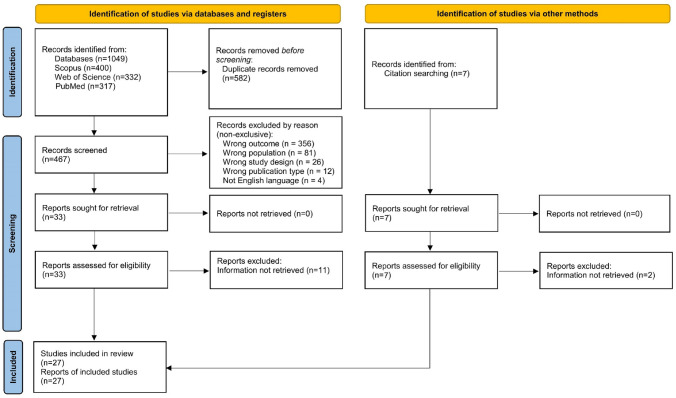
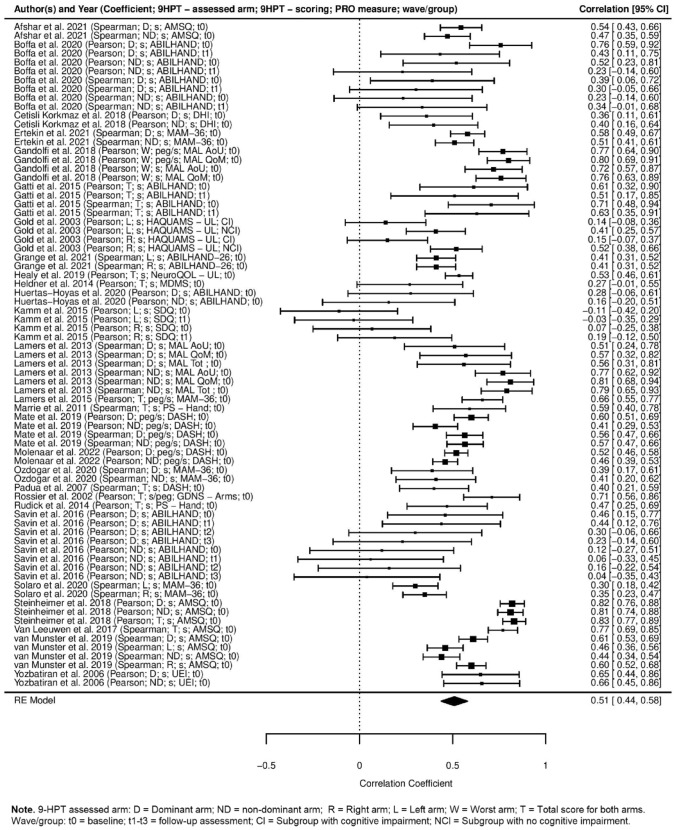
Upper limb function is one of the most affected domains in people with multiple sclerosis (PwMS), as self-reported by 50% of patients. Heterogeneous results have been found about the correlation between objective and subjective upper limb function. The aim of the present study is to perform a systematic review and meta-analysis of studies presenting data on the strength of association between the gold standard for 9-Hole Peg Test scores and Patient-Reported Outcome Measures (PROMs) of manual ability. Primary research studies including assessments of 9-Hole Peg Test scores and Patient-Reported Outcome Measures were searched in Scopus, Web of Science, and PubMed. Meta analytical calculations were performed using a random-effects model. We retrieved n = 27 studies including n = 75 distinct effect sizes (N of subjects = 3263). The central tendency analysis showed a strong correlation between 9-HPT scores and PROMs (r = 0.51, 95% CI [0.44, 0.58]). Moderator analysis showed the effect size to be significantly larger in studies with a mean or median EDSS level indicating severe disability. The publication bias hypothesis was not supported; instead, we noted that studies based on larger samples also tend to report stronger effect sizes. Results of the study indicate that the correlation between 9-HPT and PROMs is strong, although the constructs measured by these instrument does not fully overlap. The correlation between 9-HPT and PROMs was stronger in larger studies and when samples include a sizeable subgroup of PwMS with severe disability, pointing out the importance of sample diversity.
Keywords: 9-Hole Peg Test; Meta-analysis; Multiple sclerosis; Patient-Reported Outcome Measures; Upper limb function.
© 2023. The Author(s).
Conflict of interest statement
The authors have no relevant financial or non-financial interests to disclose.
Figures

References
-
- McDonald I, Compston A. The symptoms and signs of multiple sclerosis. In: Compston A, Ebers G, Lassmann H, editors. McAlpine's multiple sclerosis. 4. London: Curchill Livingstone; 2006. pp. 287–346.
-
- Confavreux C, Compston A, McDonald I, Noseworthy J, Lassmann H, Miller D, et al., editors. McAlpine’s multiple sclerosis. 4. London: Churchill Livingstone Elsevier; 2006. pp. 183–269.
