Association of Multiple High-Risk Factors on Observed Outcomes in Real-World Patients With Advanced Ovarian Cancer Treated With First-Line Therapy
- PMID: 37294913
- PMCID: PMC10569783
- DOI: 10.1200/CCI.22.00189
Association of Multiple High-Risk Factors on Observed Outcomes in Real-World Patients With Advanced Ovarian Cancer Treated With First-Line Therapy
Abstract
Purpose: To identify risk factors for disease progression or death and assess outcomes by risk categories in real-world patients with advanced ovarian cancer.
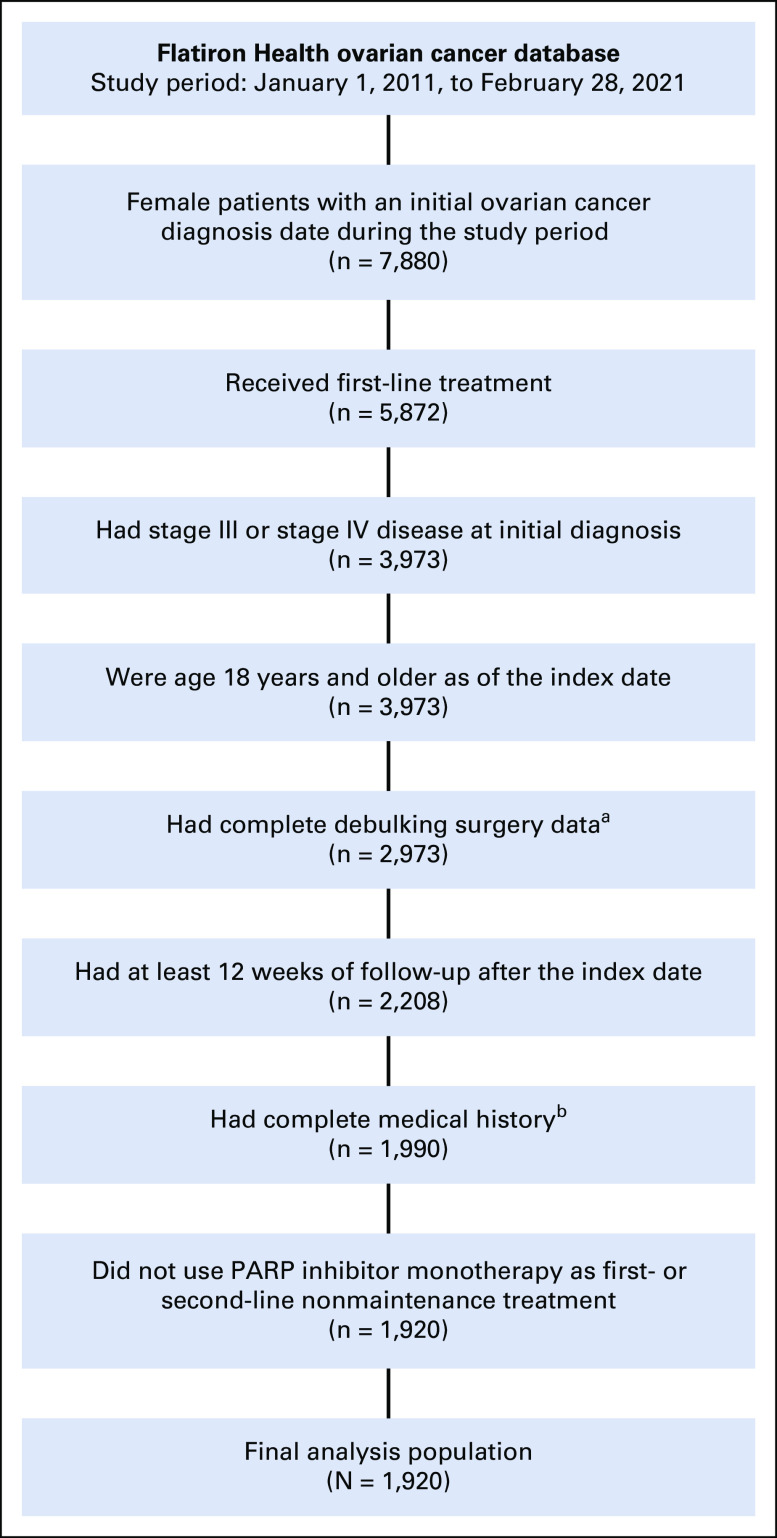
Methods: This retrospective study included adult patients from a nationwide electronic health record-derived deidentified database with stage III/IV ovarian cancer who received first-line therapy and had ≥12 weeks of follow-up after index date (end of first-line therapy). Factors predictive of time to next treatment and overall survival (OS) were assessed. Patients were grouped according to the cumulative number of high-risk factors present (stage IV disease, no debulking surgery or neoadjuvant therapy and interval debulking surgery, visible residual disease after surgery, and breast cancer gene [BRCA] wild-type disease/unknown BRCA status), and time to next treatment and OS were assessed.
Results: Region of residence, disease stage, histology, BRCA status, surgery modality, and visible residual disease were significant predictors of time to next treatment; age, Eastern Cooperative Oncology Group performance status, disease stage, BRCA status, surgery modality, visible residual disease, and platelet levels were significant predictors of OS (N = 1,920). Overall, 96.4%, 74.1%, and 40.3% of patients had at least 1, 2, or 3 high-risk factors, respectively; 15.7% of patients had all four high-risk factors. Observed median time to next treatment was 26.4 months (95% CI, 17.1 to 49.2) in patients with no high-risk factors and 4.6 months (95% CI, 4.1 to 5.7) in patients with four high-risk factors. Observed median OS was shorter among patients with more high-risk factors.
Conclusion: These results underscore the complexity of risk assessment and demonstrate the importance of assessing a patient's cumulative risk profile rather than the impact of individual high-risk factors. They also highlight the potential for bias in cross-trial comparisons of median progression-free survival because of differences in risk-factor distribution among patient populations.
Conflict of interest statement
The following represents disclosure information provided by authors of this manuscript. All relationships are considered compensated unless otherwise noted. Relationships are self-held unless noted. I = Immediate Family Member, Inst = My Institution. Relationships may not relate to the subject matter of this manuscript. For more information about ASCO's conflict of interest policy, please refer to
Open Payments is a public database containing information reported by companies about payments made to US-licensed physicians (
No other potential conflicts of interest were reported.
Figures


References
-
- Siegel RL, Miller KD, Fuchs HE, et al. : Cancer statistics, 2021. CA Cancer J Clin 71:7-33, 2021 - PubMed
-
- PDQ Adult Treatment Editorial Board : Ovarian Epithelial, Fallopian Tube, and Primary Peritoneal Cancer Treatment (PDQ®): Health Professional Version, in PDQ Cancer Information Summaries. Bethesda (MD), National Cancer Institute (US), 2021 - PubMed
Publication types
MeSH terms
LinkOut - more resources
Full Text Sources
Medical