Ephaptic Coupling as a Resolution to the Paradox of Action Potential Wave Speed and Discordant Alternans Spatial Scales in the Heart
- PMID: 37295103
- PMCID: PMC10688031
- DOI: 10.1103/PhysRevLett.130.218401
Ephaptic Coupling as a Resolution to the Paradox of Action Potential Wave Speed and Discordant Alternans Spatial Scales in the Heart
Abstract
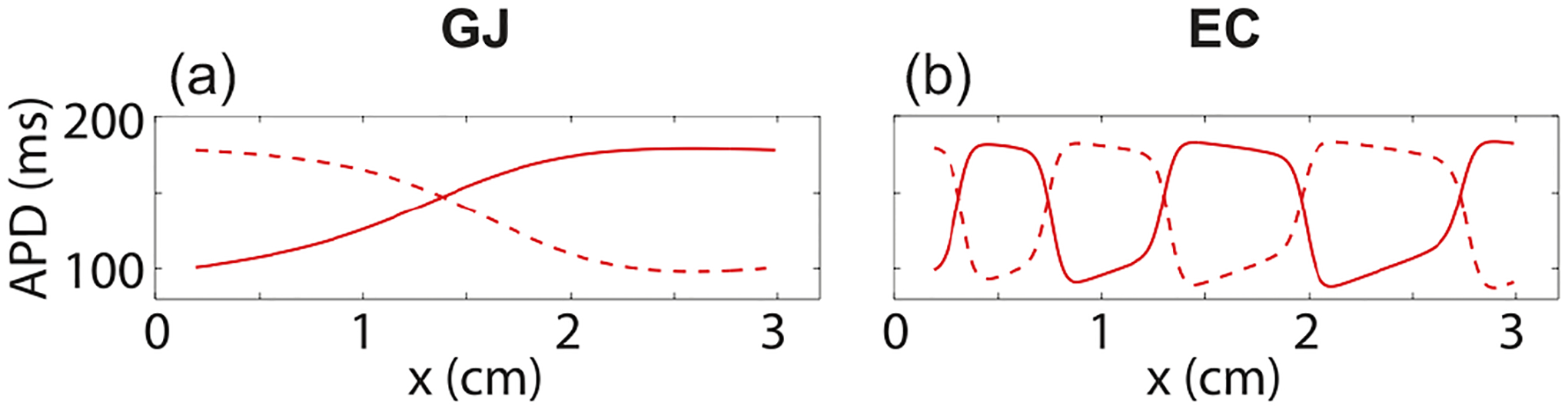
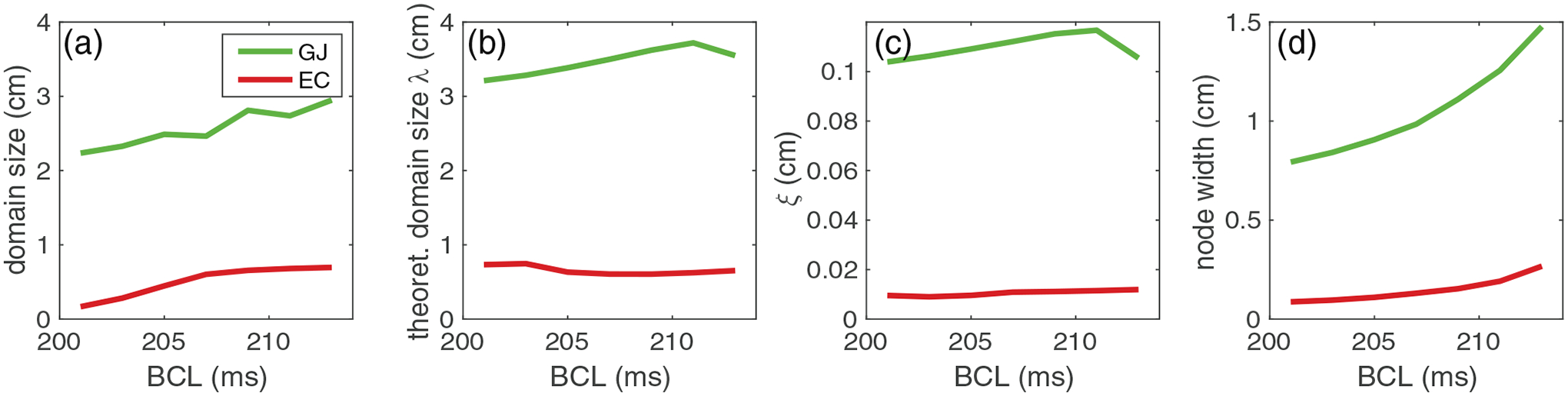
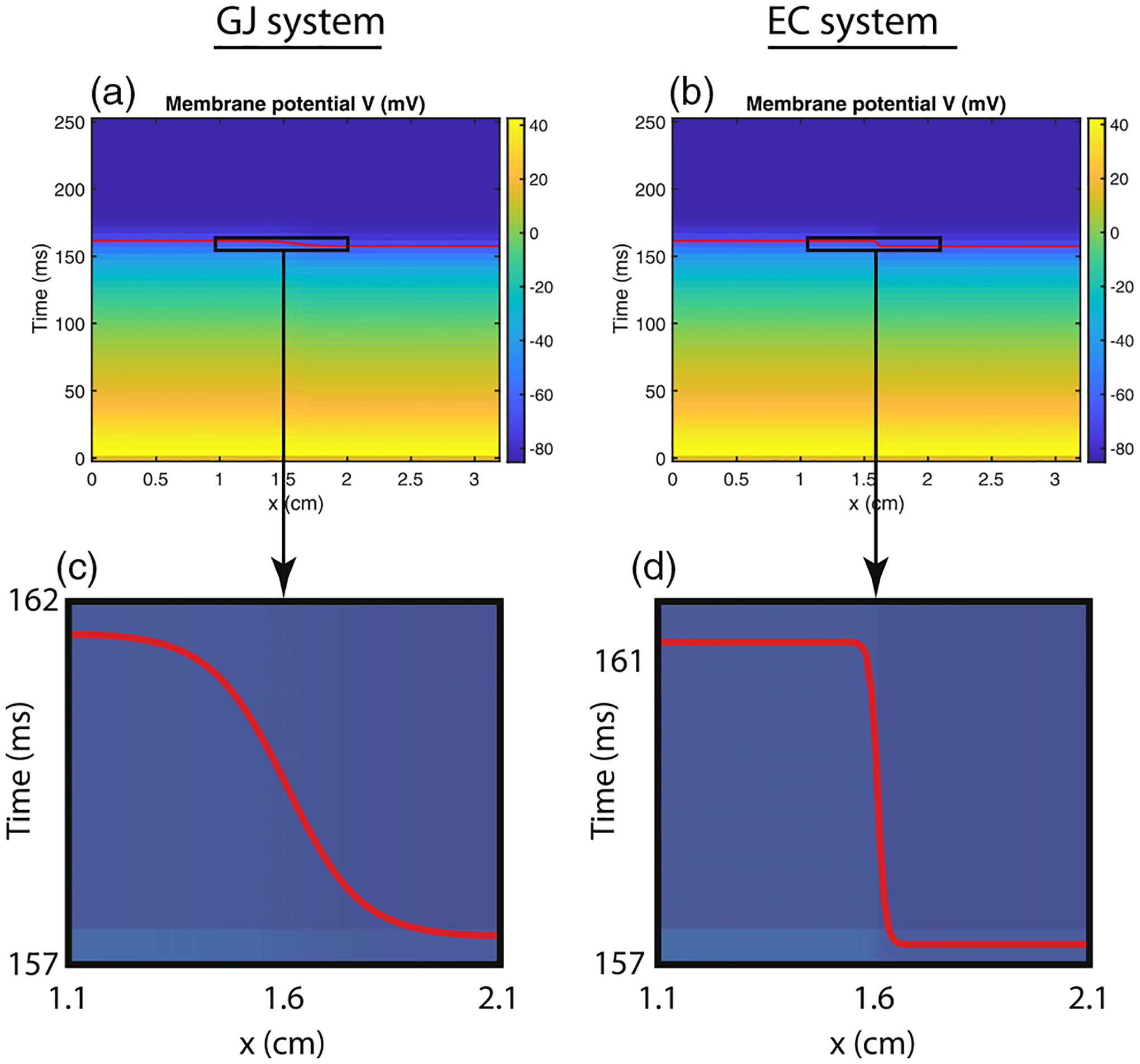
Previous computer simulations have suggested that existing models of action potential wave propagation in the heart are not consistent with observed wave propagation behavior. Specifically, computer models cannot simultaneously reproduce the rapid wave speeds and small spatial scales of discordant alternans patterns measured experimentally in the same simulation. The discrepancy is important, because discordant alternans can be a key precursor to the development of abnormal and dangerous rapid rhythms in the heart. In this Letter, we show that this paradox can be resolved by allowing so-called ephaptic coupling to play a primary role in wave front propagation in place of conventional gap-junction coupling. With this modification, physiological wave speeds and small discordant alternans spatial scales both occur with gap-junction resistance values that are more in line with those observed in experiments. Our theory thus also provides support to the hypothesis that ephaptic coupling plays an important role in normal wave propagation.
Figures

References
-
- Pastore JM, Girouard SD, Laurita KR, Akar FG, and Rosenbaum DS, Circulation 99, 1385 (1999). - PubMed
-
- Watanabe MA, Fenton FH, Evans SJ, Hastings HM, and Karma A, J. Cardiovasc. Electrophysiol 12, 196 (2001). - PubMed
-
- Qu Z, Garfinkel A, Chen P-S, and Weiss JN, Circulation 102, 1664 (2000). - PubMed
-
- Fox JJ, Riccio ML, Hua F, Bodenschatz E, and Gilmour RF Jr., Circ. Res 90, 289 (2002). - PubMed
MeSH terms
Grants and funding
LinkOut - more resources
Full Text Sources
Miscellaneous