


Modeling historic neighborhood deprivation and non-Hodgkin lymphoma risk
- PMID: 37295583
- PMCID: PMC10526976
- DOI: 10.1016/j.envres.2023.116361
Modeling historic neighborhood deprivation and non-Hodgkin lymphoma risk
Abstract
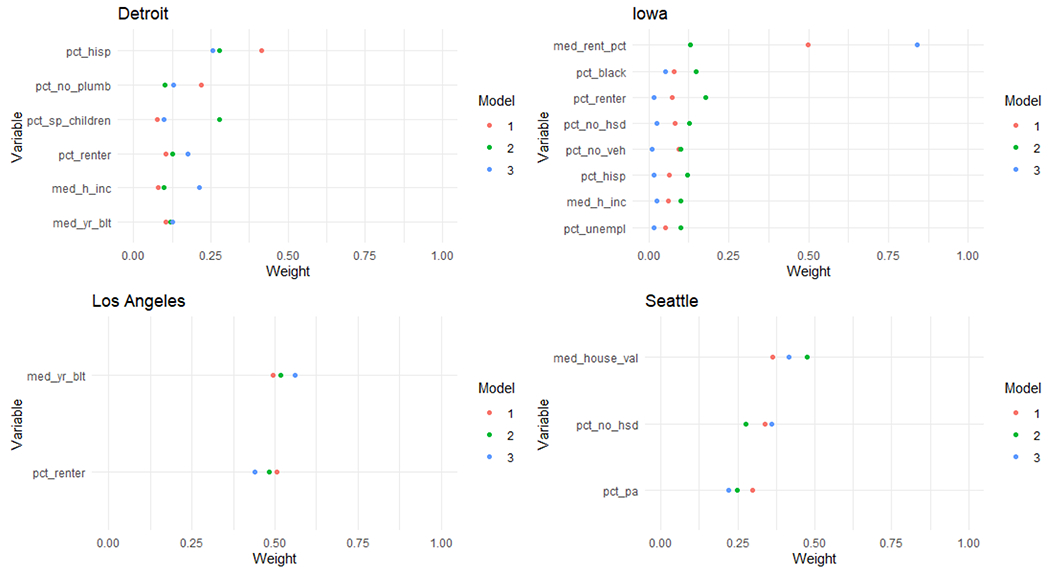
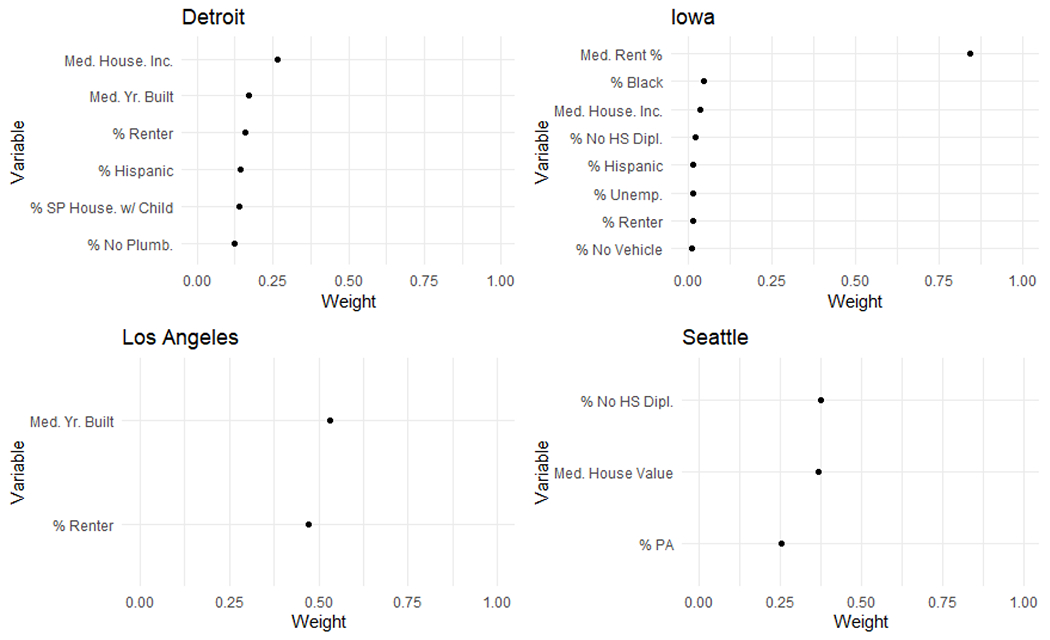
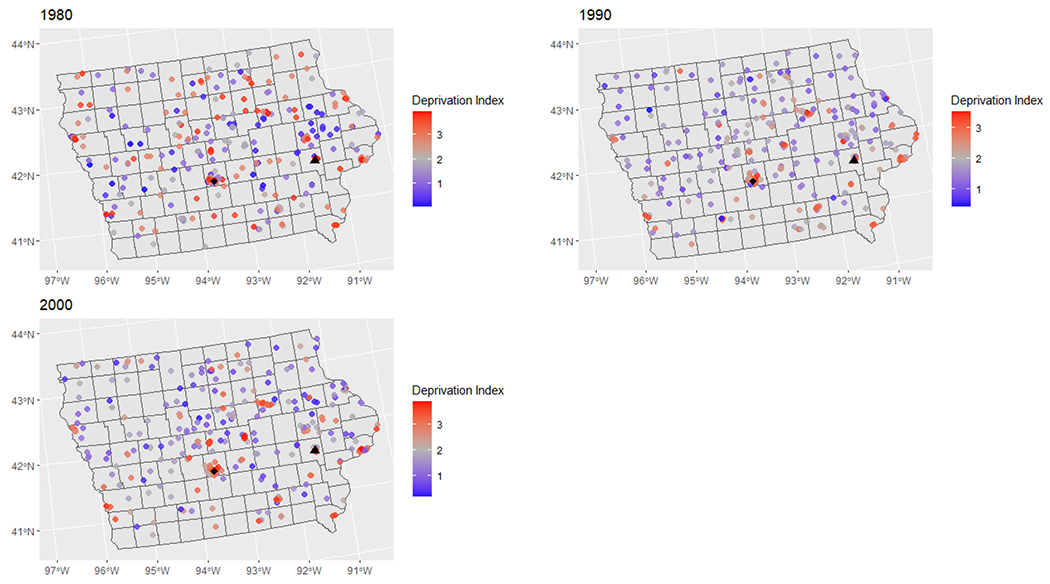
Many studies have identified associations between neighborhood deprivation and disease, emphasizing the importance of social determinants of health. However, when studying diseases with long latency periods such as cancers, considering the timing of exposures for deprivation becomes more important. In this study, we estimated the associations between neighborhood deprivation indices at several time points and risk of non-Hodgkin lymphoma (NHL) in a population-based case-control study at four study centers - Detroit, Iowa, Los Angeles County, and Seattle (1998-2000). We used the Bayesian index regression model and residential histories to estimate neighborhood deprivation index effects in crude models and adjusted for four chemical mixtures measured in house dust and individual-level covariates. We found that neighborhood deprivation in 1980, approximately twenty years before study entry, provided better model fit than did neighborhood deprivation at 1990 and 2000. We identified several statistically significant associations between neighborhood deprivation in 1980 and NHL risk in Iowa and among long-term (20+ years) residents of Detroit. The most important variables in these indices were median gross rent as a percentage of household income in Iowa and percent of single-parent households with at least one child and median household income in Detroit. Associations remained statistically significant after adjustment for individual-level covariates and chemical mixtures, providing evidence for historic neighborhood deprivation as a risk factor for NHL and motivating future research to uncover the specific carcinogens driving these associations in deprived areas.
Keywords: Exposome; Historic exposures; Mixture analysis; Neighborhood deprivation; Non-hodgkin lymphoma; Residential history.
Copyright © 2023 Elsevier Inc. All rights reserved.
Conflict of interest statement
Declaration of competing interest The authors declare that they have no known competing financial interests or personal relationships that could have appeared to influence the work reported in this paper.
Figures
References
-
- Wild CP, “Complementing the genome with an ‘exposome’: the outstanding challenge of environmental exposure measurement in molecular epidemiology,” Cancer Epidemiol. Prev. Biomarkers, vol. 14, no. 8, pp. 1847–1850, 2005. - PubMed
-
- de Vuijst E, van Ham M, and Kleinhans R, “A life course approach to understanding neighbourhood effects,” IZA Discussion paper #10276, 2016.
-
- Dannefer D, “Cumulative advantage/disadvantage and the life course: Cross-fertilizing age and social science theory,” Journals Gerontol. Ser. B Psychol. Sci. Soc. Sci, vol. 58, no. 6, pp. S327–S337, 2003. - PubMed
Publication types
MeSH terms
Substances
Grants and funding
LinkOut - more resources
Full Text Sources
