


Himalayan Sources of Anthocyanins and Its Multifunctional Applications: A Review
- PMID: 37297448
- PMCID: PMC10252932
- DOI: 10.3390/foods12112203
Himalayan Sources of Anthocyanins and Its Multifunctional Applications: A Review
Abstract
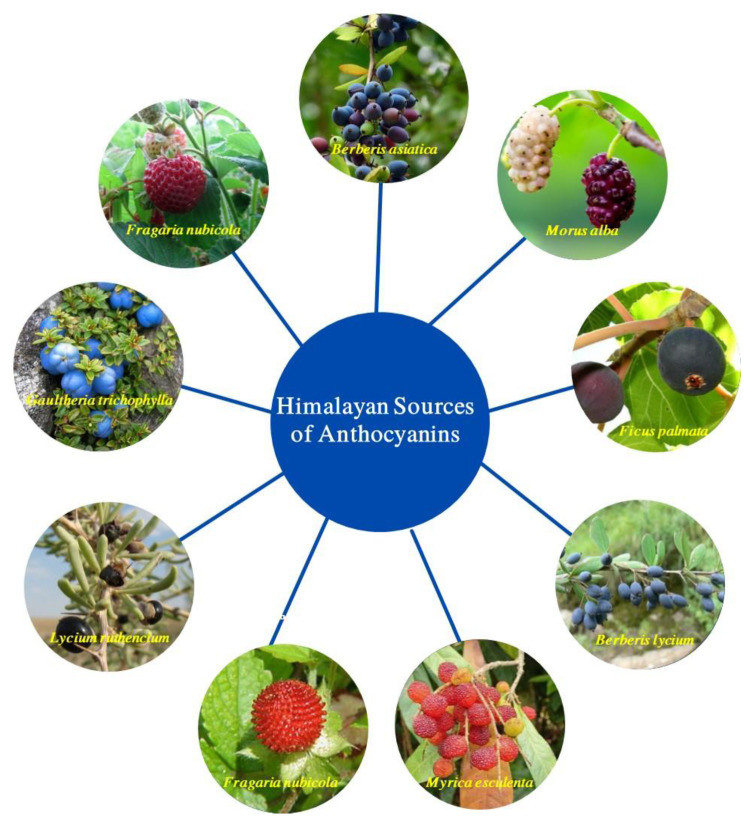
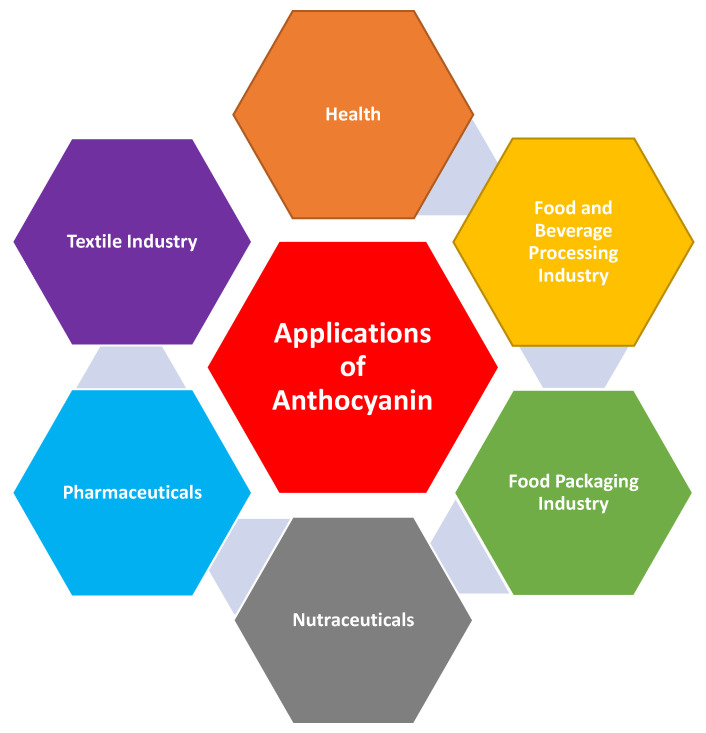
Anthocyanins, the colored water-soluble pigments, have increasingly drawn the attention of researchers for their novel applications. The sources of anthocyanin are highly diverse, and it can be easily extracted. The unique biodiversity of the Himalayan Mountain range is an excellent source of anthocyanin, but it is not completely explored. Numerous attempts have been made to study the phytochemical aspects of different Himalayan plants. The distinct flora of the Himalayas can serve as a potential source of anthocyanins for the food industry. In this context, this review is an overview of the phytochemical studies conducted on Himalayan plants for the estimation of anthocyanins. For that, many articles have been studied to conclude that plants (such as Berberis asiatica, Morus alba, Ficus palmata, Begonia xanthina, Begonia palmata, Fragaria nubicola, etc.) contain significant amounts of anthocyanin. The application of Himalayan anthocyanin in nutraceuticals, food colorants, and intelligent packaging films have also been briefly debated. This review creates a path for further research on Himalayan plants as a potential source of anthocyanins and their sustainable utilization in the food systems.
Keywords: anthocyanin; food; himalayan plant; natural colorant; nutraceuticals; smart packaging.
Conflict of interest statement
The authors declare no conflict of interest.
Figures
References
-
- Schaal B. Plants and People: Our Shared History and Future. Plants People Planet. 2019;1:14–19. doi: 10.1002/ppp3.12. - DOI
-
- Kumar V., Chopra A.K. Impact of Climate Change on Biodiversity of India with Special Reference to Himalayan Region-An Overview. J. Appl. Nat. Sci. 2009;1:117–122. doi: 10.31018/jans.v1i1.48. - DOI
-
- Delgoda R., Murray J.E. Pharmacognosy. Elsevier; Amsterdam, The Netherlands: 2017. Evolutionary Perspectives on the Role of Plant Secondary Metabolites; pp. 93–100. - DOI
-
- Oz A.T., Kafkas E. Superfood and Functional Food—An Overview of Their Processing and Utilization. InTech; Sydney, Australia: 2017. Phytochemicals in Fruits and Vegetables; pp. 175–184. - DOI
Publication types
LinkOut - more resources
Full Text Sources
Miscellaneous
