


Development and Validation of a New LC-MS/MS Bioanalytical Method for the Simultaneous Determination of Levodopa, Levodopa Methyl Ester, and Carbidopa in Human Plasma Samples
- PMID: 37298741
- PMCID: PMC10254897
- DOI: 10.3390/molecules28114264
Development and Validation of a New LC-MS/MS Bioanalytical Method for the Simultaneous Determination of Levodopa, Levodopa Methyl Ester, and Carbidopa in Human Plasma Samples
Abstract
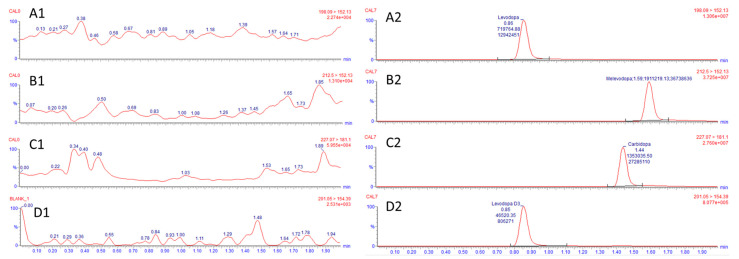
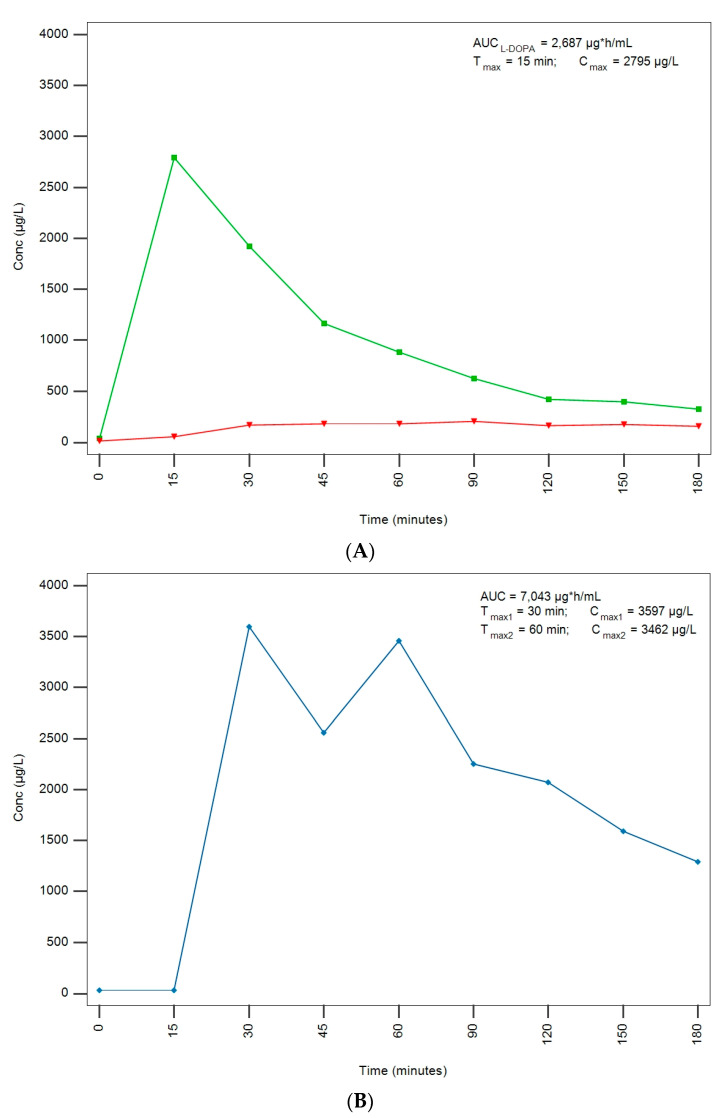
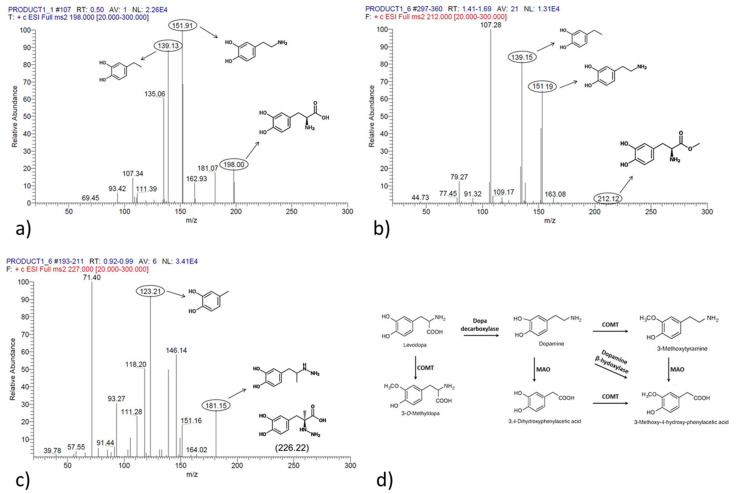
Levodopa (L-DOPA) treatment, combined with the administration of dopa-decarboxylase inhibitors (DDCIs), is still the most effective symptomatic treatment of Parkinson's disease (PD). Although its efficacy in the early stage of the disease has been confirmed, its complex pharmacokinetics (PK) increases the variability of the intra-individual motor response, thus amplifying the risk of motor/non-motor fluctuations and dyskinesia. Moreover, it has been demonstrated that L-DOPA PK is strongly influenced by several clinical, therapeutic, and lifestyle variables (e.g., dietary proteins). L-DOPA therapeutic monitoring is therefore crucial to provide personalized therapy, hence improving drug efficacy and safety. To this aim, we have developed and validated an ultra-high performance liquid chromatography-tandem mass spectrometry (UHPLC-MS/MS) method to quantify L-DOPA, levodopa methyl ester (LDME), and the DDCI carbidopa in human plasma. The compounds were extracted by protein precipitation and samples were analyzed with a triple quadrupole mass spectrometer. The method showed good selectivity and specificity for all compounds. No carryover was observed, and dilution integrity was demonstrated. No matrix effect could be retrieved; intra-day and inter-day precision and accuracy values met the acceptance criteria. Reinjection reproducibility was assessed. The described method was successfully applied to a 45-year-old male patient to compare the pharmacokinetic behavior of an L-DOPA-based medical treatment involving commercially available Mucuna pruriens extracts and an LDME/carbidopa (100/25 mg) formulation.
Keywords: Parkinson’s disease; analytical method; carbidopa; levodopa; levodopa methyl ester; liquid chromatography–mass spectrometry (LC–MS); therapeutic drug monitoring.
Conflict of interest statement
The authors declare no conflict of interest.
Figures
References
Publication types
MeSH terms
Substances
Grants and funding
LinkOut - more resources
Full Text Sources
Miscellaneous
