


Iron Complexes with Antarctic Krill-Derived Peptides Show Superior Effectiveness to Their Original Protein-Iron Complexes in Mice with Iron Deficiency Anemia
- PMID: 37299473
- PMCID: PMC10255654
- DOI: 10.3390/nu15112510
Iron Complexes with Antarctic Krill-Derived Peptides Show Superior Effectiveness to Their Original Protein-Iron Complexes in Mice with Iron Deficiency Anemia
Abstract
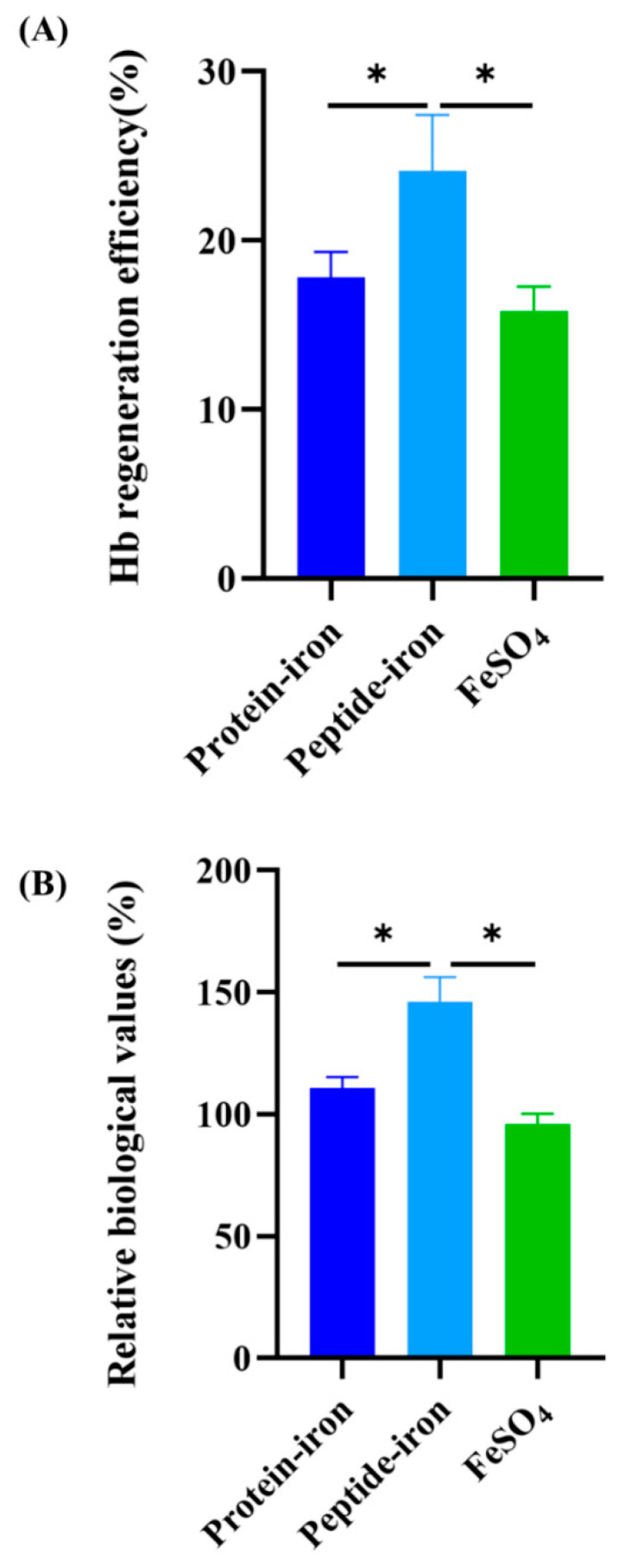
Antarctic krill protein-iron complex and peptide-iron complex were acquired to investigate their iron bioavailability, expression of iron-regulated genes, and in vivo antioxidant capacity. Results indicated that the Antarctic krill peptide-iron complex significantly increased the hemoglobin (Hb), serum iron (SI), and iron contents in the liver and spleen in iron-deficiency anemia (IDA) mice (p < 0.05) compared with those of the Antarctic krill protein-iron complex. Despite the gene expressions of the divalent metal transporter 1(DMT1), the transferrin (Tf), and the transferrin receptor (TfR) being better regulated by both Antarctic krill peptide-iron complex and protein-iron complex, the relative iron bioavailability of the Antarctic krill peptide-iron complex group (152.53 ± 21.05%) was significantly higher than that of the protein-iron complex group (112.75 ± 9.60%) (p < 0.05). Moreover, Antarctic krill peptide-iron complex could enhance the antioxidant enzyme activities of superoxidase dismutase (SOD) and glutathione peroxidase (GSH-Px), reduce the malondialdehyde (MDA) level in IDA mice compared with the protein-iron complex, and reduce the cell damage caused by IDA. Therefore, these results indicated that Antarctic krill peptide-iron complex could be used as a highly efficient and multifunctional iron supplement.
Keywords: Antarctic krill peptide–iron; IDA mice; in vivo antioxidant capacity; iron bioavailability; iron-regulated genes.
Conflict of interest statement
The authors declare no conflict of interest.
Figures




References
MeSH terms
Substances
Grants and funding
LinkOut - more resources
Full Text Sources
Miscellaneous
