. 2023 May 29;23(11):5175.
doi: 10.3390/s23115175.

Fully 3D-Printed Dry EEG Electrodes

Affiliations

Fully 3D-Printed Dry EEG Electrodes

Adele Tong et al. Sensors (Basel). .

Abstract

Electroencephalography (EEG) is used to detect brain activity by recording electrical signals across various points on the scalp. Recent technological advancement has allowed brain signals to be monitored continuously through the long-term usage of EEG wearables. However, current EEG electrodes are not able to cater to different anatomical features, lifestyles, and personal preferences, suggesting the need for customisable electrodes. Despite previous efforts to create customisable EEG electrodes through 3D printing, additional processing after printing is often needed to achieve the required electrical properties. Although fabricating EEG electrodes entirely through 3D printing with a conductive material would eliminate the need for further processing, fully 3D-printed EEG electrodes have not been seen in previous studies. In this study, we investigate the feasibility of using a low-cost setup and a conductive filament, Multi3D Electrifi, to 3D print EEG electrodes. Our results show that the contact impedance between the printed electrodes and an artificial phantom scalp is under 550 Ω, with phase change of smaller than -30∘, for all design configurations for frequencies ranging from 20 Hz to 10 kHz. In addition, the difference in contact impedance between electrodes with different numbers of pins is under 200 Ω for all test frequencies. Through a preliminary functional test that monitored the alpha signals (7-13 Hz) of a participant in eye-open and eye-closed states, we show that alpha activity can be identified using the printed electrodes. This work demonstrates that fully 3D-printed electrodes have the capability of acquiring relatively high-quality EEG signals.

Keywords: 3D printing; EEG; conductive filament; dry electrodes.


Conflict of interest statement

The authors declare no conflict of interest.

Figures

Figure 1
Figure 1
(a) Dimension of the 3D-printed electrode design; (b) Configurations with different number of pins (0 pin, 3 pins, 4 pins and 5 pins); (c) All configurations 3D-printed with Electrifi.
Figure 2
Figure 2
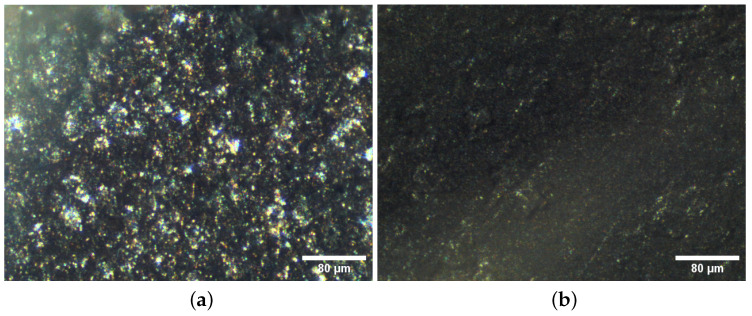
(a) Optical microscope image of an electrode printed with Electrifi; (b) Optical microscope image of a Neurospec dry Ag/AgCl electrode.
Figure 3
Figure 3
Electrical circuit demonstrating the contact impedance of a dry electrode to the skin, as adopted from Velcescu et al. [6] and Krachunov & Casson [7].
Figure 4
Figure 4
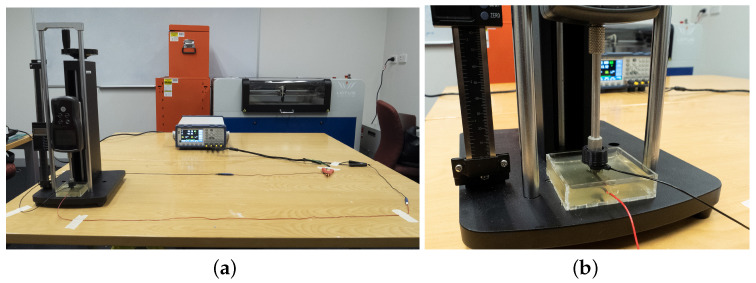
Setup for impedance testing: (a) The general setup showing the connection of the electrodes to the gelatine and the LCR meter; (b) The gelatine phantom scalp with embedded electrode.
Figure 5
Figure 5
Graphs showing impedance measurements of printed 0-pin-flat electrode and Neurospec flat electrode at different frequencies: (a) Impedance magnitude; (b) Impedance phase.
Figure 6
Figure 6
Graphs showing impedance measurements of 3-pin, 4-pin, and 5-pin electrodes and Neurospec dry 2 mm electrode at different frequencies: (a) Impedance magnitude; (b) Impedance phase.
Figure 7
Figure 7
Functional test results for electrodes 3D-printed with Electrifi: (a) Location of recorded nodes according to the 10–20 system; (b) Power spectral density graph during eye-open and eye-closed states; (c) Electroencephalography (EEG) signals collected during a 5-s eye-open phase and a 5-s eye-closed phase.
Figure 8
Figure 8
Functional test results for Neurospec’s commercially available dry electrodes: (a) Location of recorded nodes according to the 10–20 system; (b) Power spectral density graph during eye-open and eye-closed states; (c) EEG signals collected during a 5-s eye-open phase and a 5-s eye-closed phase.

References

    1. Nayak C.S., Anilkumar A.C. StatPearls. StatPearls Publishing; Treasure Island, FL, USA: 2022. EEG Normal Waveforms. - PubMed
    1. Usakli A.B. Improvement of EEG Signal Acquisition: An Electrical Aspect for State of the Art of Front End. Comput. Intell. Neurosci. 2010;2010:630649. doi: 10.1155/2010/630649. - DOI - PMC - PubMed
    1. Moffett S.X., O’Malley S.M., Man S., Hong D., Martin J.V. Dynamics of high frequency brain activity. Sci. Rep. 2017;7:15758. doi: 10.1038/s41598-017-15966-6. - DOI - PMC - PubMed
    1. Niedermeyer E. Ultrafast Frequencies and Full-Band EEG, Ultrafast EEG Activities and Their Significance. Clin. EEG Neurosci. 2005;36:257–262. doi: 10.1177/155005940503600404. - DOI - PubMed
    1. Casson A.J. Wearable EEG and beyond. Biomed. Eng. Lett. 2019;9:53–71. doi: 10.1007/s13534-018-00093-6. - DOI - PMC - PubMed

LinkOut - more resources