. 2023 May 26:(195):10.3791/64740.
doi: 10.3791/64740.

Design and Implementation of a Rat Ex Vivo Lung Perfusion Model

Affiliations

Design and Implementation of a Rat Ex Vivo Lung Perfusion Model

William J Cleveland et al. J Vis Exp. .

Abstract

Ex vivo lung preparations are a useful model that can be translated to many different fields of research, complementing corresponding in vivo and in vitro models. Laboratories wishing to use isolated lungs need to be aware of important steps and inherent challenges to establish a setup that is affordable, reliable, and that can be easily adapted to fit the topic of interest. This paper describes a DIY (do it yourself) model for ex vivo rat lung ventilation and perfusion to study drug and gas effects on pulmonary vascular tone, independent of changes in cardiac output. Creating this model includes a) the design and construction of the apparatus, and b) the lung isolation procedure. This model results in a setup that is more cost-effective than commercial alternatives and yet modular enough to adapt to changes in specific research questions. Various obstacles had to be resolved to ensure a consistent model that is capable of being used for a variety of different research topics. Once established, this model has proven to be highly adaptable to different questions and can easily be altered for different fields of study.


Figures
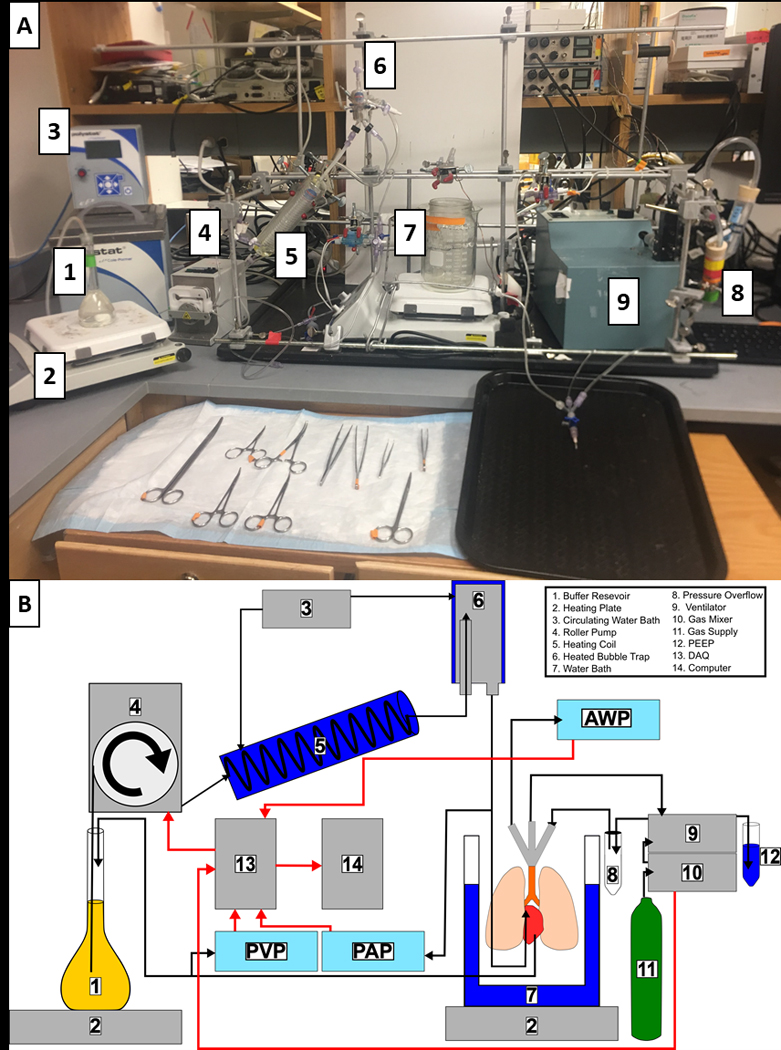
Figure 1:
Figure 1:. A custom-built lattice to allow for easy configuration and incorporation of new devices.
(A) Photograph of the custom-made lattice used to house all the equipment and devices. Not shown are the pressure overflow, gas mixer, gas supply, DAQ, or computer. (B) Schematic of the closed circuit used to perfuse the lung and each device involved in the setup: 1) The buffer is stored in a volumetric flask to reduce volume and surface area. 2) Heating plates are used to heat both the buffer and the lung chamber. A digital thermometer is used to monitor to temperature inside the lung chamber. 3) Circulating water bath heats the heating coil and air trap to maintain a constant temperature. 4) In the constant-flow setup described here, the roller pump is used to control lung buffer perfusion. 5) Buffer is passed through a heating coil to maintain its temperature. 6) The air trap ensures no air bubbles reach the lung and helps maintain the temperature. 7) A custom double boiler is used to create a humid environment for the lung and maintain its temperature. 8) A pressure overflow is placed between the ventilator and the lung to prevent over-ventilating the lung. 9) A volume-controlled ventilator is used for reliable tidal volumes. 10) The gas mixer can be used to create different gas compositions. 11) Various gas tanks such as O2, CO2, and N2 are needed for ventilating different compositions of gas. 12) A simple water column is connected to the ventilator to adjust the positive end expiratory pressure on the lung. 13) The DAQ system is responsible for collecting all the data and sending it to the computer. 14) Data are collected and visualized live on the computer. Abbreviations: DAQ = data acquisition system; PEEP = positive end expiratory pressure; AWP = Airway Pressure.
Figure 2:
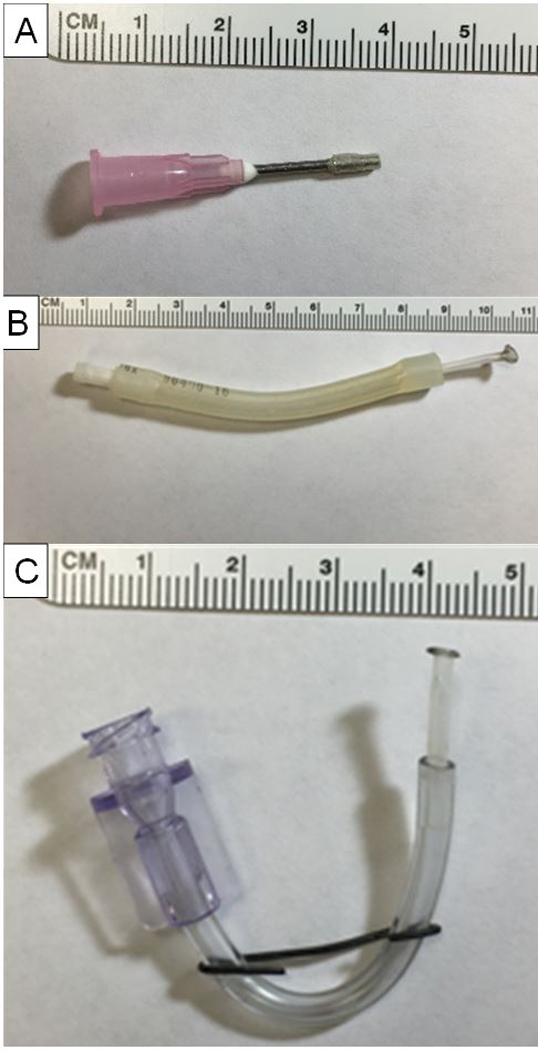
Figure 2:. Custom-made cannulas.
(A) Tracheal cannula (made from an 18 G needle). (B) Pulmonary artery cannula. (C) Pulmonary vein cannula.
Figure 3:
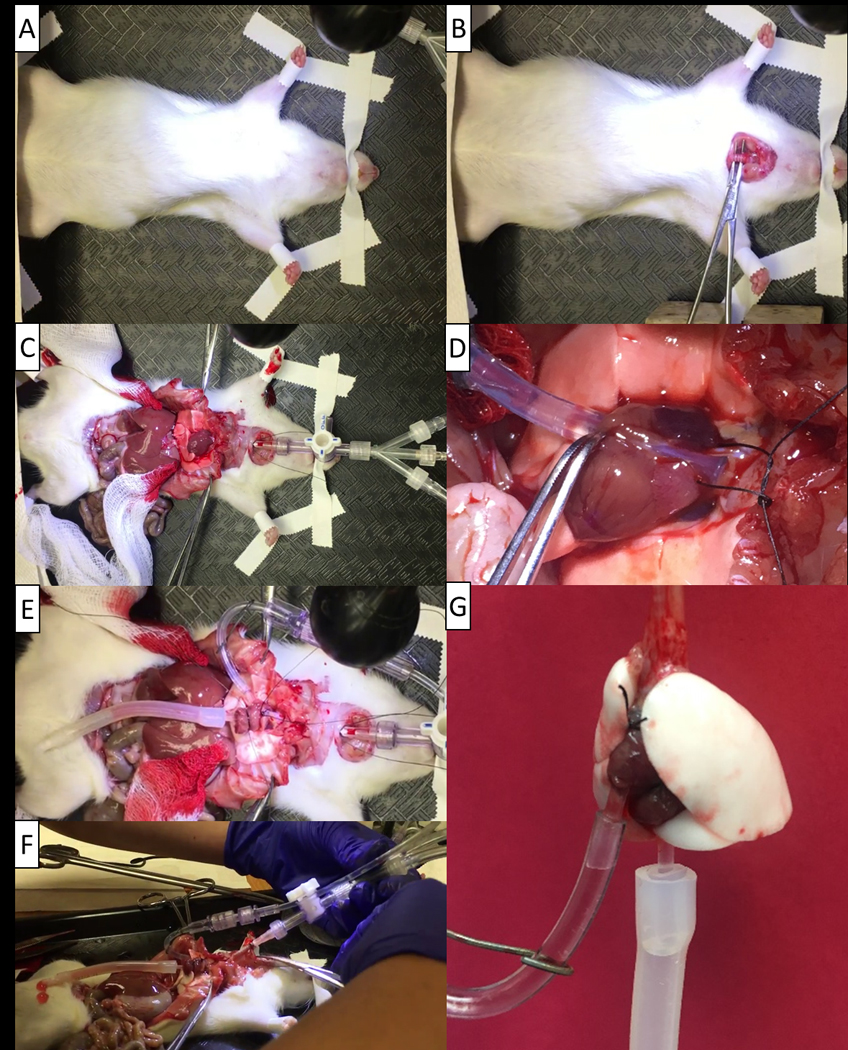
Figure 3:. Isolation process of the rat lungs.
(A) The rat is securely taped down after anesthesia with the mouth taped as well to ensure minimal movement. (B) Proper isolation and placement of the forceps for performing the tracheostomy. (C) Spreading the rib cage to open the surgical area and minimize the risk of a broken rib puncturing the lungs. (D) Placement of the pulmonary artery cannula. (E) Placement of the pulmonary vein cannula following it being secured to the heart. (F) Removal of the trachea and heart-lung block from the rat. (G) The rat isolated lungs hanging prior to placement in the chamber.
Figure 4:
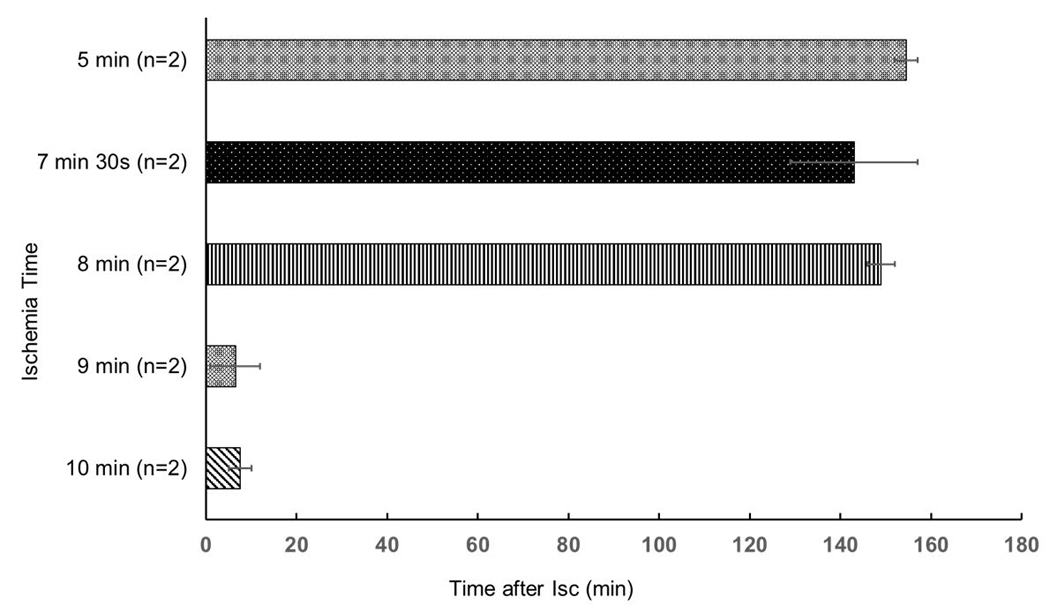
Figure 4:. Representative results on lung viability after ischemia and reperfusion.
Lung viability was defined as survival time until the lungs exhibited a fulminant increase in airway pressure and became fully edematous. Data of limited experiments per group are displayed as mean ± standard error of the mean. Statistical tests were not conducted because of the low number of experiments per group.

References

    1. Uhlig S & Taylor AE. Methods in Pulmonary Research. (Birkhäuser, 1998).
    1. Ghaidan H et al. Ten year follow-up of lung transplantations using initially rejected donor lungs after reconditioning using ex vivo lung perfusion. J Cardiothorac Surg. 14 (1), 125, doi:10.1186/s13019-019-0948-1, (2019). - DOI - PMC - PubMed
    1. Stone ML et al. Ex Vivo Perfusion With Adenosine A2A Receptor Agonist Enhances Rehabilitation of Murine Donor Lungs After Circulatory Death. Transplantation. 99 (12), 2494–2503, doi:10.1097/TP.0000000000000830, (2015). - DOI - PMC - PubMed
    1. Valenza F et al. The consumption of glucose during ex vivo lung perfusion correlates with lung edema. Transplant Proc. 43 (4), 993–996, doi:10.1016/j.transproceed.2011.01.122, (2011). - DOI - PubMed
    1. Sayner SL et al. Paradoxical cAMP-induced lung endothelial hyperpermeability revealed by Pseudomonas aeruginosa ExoY. Circ Res. 95 (2), 196–203, doi:10.1161/01.RES.0000134922.25721.d9, (2004). - DOI - PubMed

Publication types

LinkOut - more resources