


Curcumin-rich curry consumption and life expectancy: Singapore longitudinal ageing study
- PMID: 37306893
- PMCID: PMC10828228
- DOI: 10.1007/s11357-023-00842-1
Curcumin-rich curry consumption and life expectancy: Singapore longitudinal ageing study
Abstract
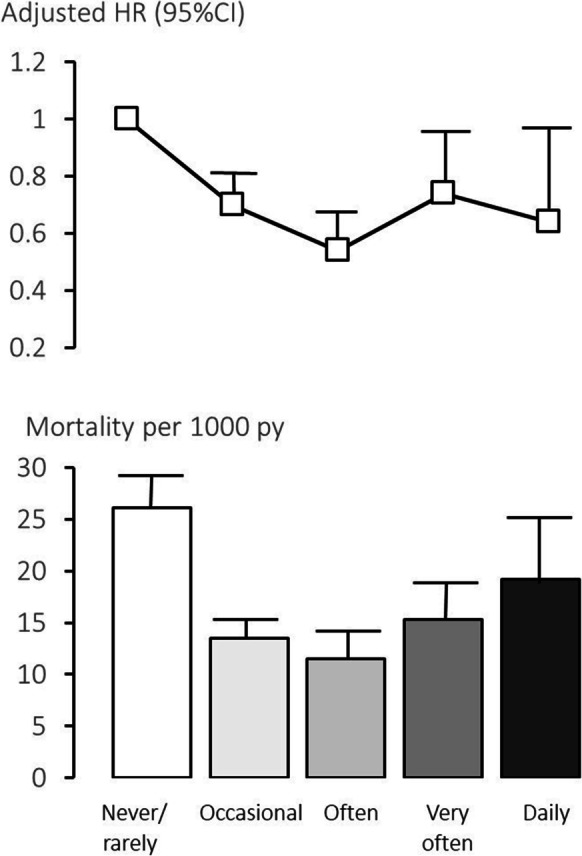
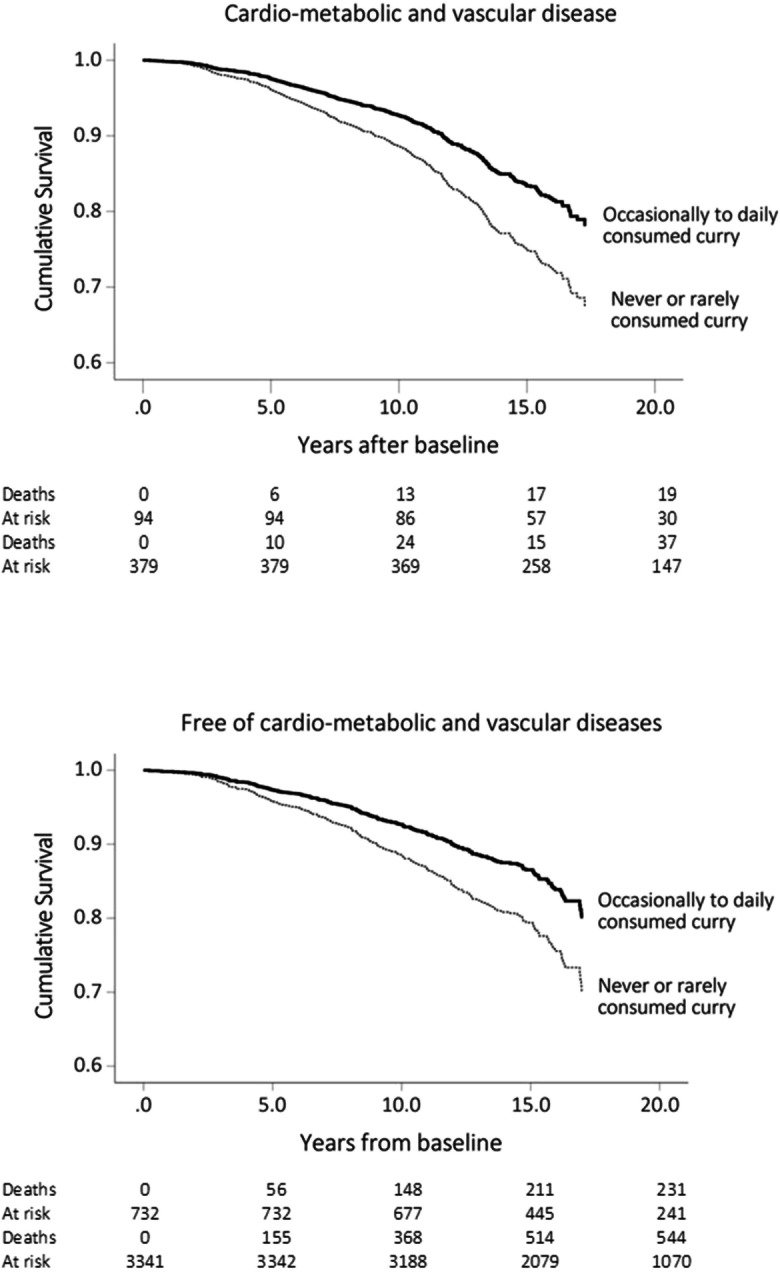
The therapeutic potential of curcumin for many diseases are intensively investigated. However, real-world observational data documenting health and longevity effects associated with dietary curcumin in turmeric from consuming curry in food is lacking. A prospective cohort study of 4551 adults aged 55 + assessed curry consumption (never or < once/year, ≥ once/year to < once/month, ≥ once/month to < once/week, ≥ once/week to < daily, ≥ once daily), prevalent health conditions, blood biomarker indexes of atherogenicity, insulin resistance, and inflammation at baseline, and mean (SD) 11.6 (3.8) year follow up of all-cause, CVS and cancer mortality. There were linear positive associations of increasing curry consumption with waist circumference, fasting blood glucose, TyG, AIP, CRI-1, CRI-2, central obesity and diabetes prevalence, and inverse association with eGFR. There were non-linear associations with FEV1/height2 and COPD prevalence, GDS score and depression, MMSE score and cognitive impairment, comorbidity count, serum albumin and haemoglobin, being most favourable with moderate consumption. The levels of NLR, PLR and SII indices of systemic and immune inflammation decreased linearly with curry consumption. Total mortality HR adjusted for baseline co-variables, decreased across curry consumption, 0.68 (95%CI 0.56-0.82), 0.54 (95%CI 0.43-0.69), 0.70 (0.52-0.93), and 0.62 (0.41-0.95), being lowest in the middle categories. Among participants with cardio-metabolic and vascular diseases (CMVD), at least occasional curry consumption was associated with decreased mortality risk by 39%, and increased life expectancy by 1.0 years. Among those without CMVD, the associated life expectancy increase was 1.9 years. Moderate curry consumption may confer meaningful longevity benefits.
Keywords: Biomarkers; Cancer; Cardio-metabolic; Health; Mortality; Observational study.
© 2023. The Author(s), under exclusive licence to American Aging Association.
Conflict of interest statement
The authors
Figures
References
Publication types
MeSH terms
Substances
Grants and funding
LinkOut - more resources
Full Text Sources
Research Materials
Miscellaneous
