


Fenofibrate for diabetic retinopathy
- PMID: 37310870
- PMCID: PMC10264082
- DOI: 10.1002/14651858.CD013318.pub2
Fenofibrate for diabetic retinopathy
Abstract
Background: Diabetic retinopathy (DR) remains a major cause of sight loss worldwide, despite new therapies and improvements in the metabolic control of people living with diabetes. Therefore, DR creates a physical and psychological burden for people, and an economic burden for society. Preventing the development and progression of DR, or avoiding the occurrence of its sight-threatening complications is essential, and must be pursued to save sight. Fenofibrate may be a useful strategy to achieve this goal, by reversing diabetes' effects and reducing inflammation in the retina, as well as improving dyslipidaemia and hypertriglyceridaemia. OBJECTIVES: To investigate the benefits and harms of fenofibrate for preventing the development and progression of diabetic retinopathy in people with type 1 (T1D) or type 2 diabetes (T2D), compared with placebo or observation.
Search methods: We searched CENTRAL, MEDLINE, Embase, and three trials registers (February 2022).
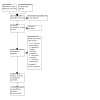
Selection criteria: We included randomised controlled trials (RCTs) that included people with T1D or T2D, when these compared fenofibrate with placebo or with observation, and assessed the effect of fenofibrate on the development or progression of DR (or both).
Data collection and analysis: We used standard Cochrane methods for data extraction and analysis. Our primary outcome was progression of DR, a composite outcome of 1) incidence of overt retinopathy for participants who did not have DR at baseline, or 2) advancing two or more steps on the Early Treatment Diabetic Retinopathy Study (ETDRS) severity scale for participants who had any DR at baseline (or both), based on the evaluation of stereoscopic or non-stereoscopic fundus photographs, during the follow-up period. Overt retinopathy was defined as the presence of any DR observed on stereoscopic or non-stereoscopic colour fundus photographs. Secondary outcomes included the incidence of overt retinopathy, reduction in visual acuity of participants with a reduction in visual acuity of 10 ETDRS letters or more, proliferative diabetic retinopathy, and diabetic macular oedema; mean vision-related quality of life, and serious adverse events of fenofibrate. We used GRADE to assess the certainty of evidence.
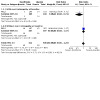
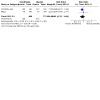
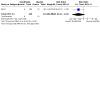
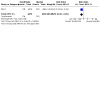
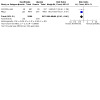
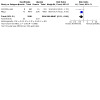
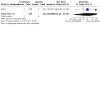
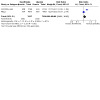
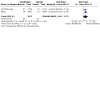
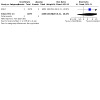
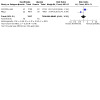
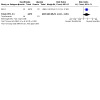
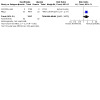
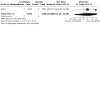
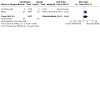
Main results: We included two studies and their eye sub-studies (15,313 participants) in people with T2D. The studies were conducted in the US, Canada, Australia, Finland, and New Zealand; follow-up period was four to five years. One was funded by the government, the other by industry. Compared to placebo or observation, fenofibrate likely results in little to no difference in progression of DR (risk ratio (RR) 0.86; 95% confidence interval (CI) 0.60 to 1.25; 1 study, 1012 participants; moderate-certainty evidence) in a population with and without overt retinopathy at baseline. Those without overt retinopathy at baseline showed little or no progression (RR 1.00, 95% CI 0.68 to 1.47; 1 study, 804 participants); those with overt retinopathy at baseline found that their DR progressed slowly (RR 0.21, 95% CI 0.06 to 0.71; 1 study, 208 people; test for interaction P = 0.02). Compared to placebo or observation, fenofibrate likely resulted in little to no difference in either the incidence of overt retinopathy (RR 0.91; 95% CI 0.76 to 1.09; 2 studies, 1631 participants; moderate-certainty evidence); or the incidence of diabetic macular oedema (RR 0.39; 95% CI 0.12 to 1.24; 1 study, 1012 participants; moderate-certainty evidence). The use of fenofibrate increased severe adverse effects (RR 1.55; 95% CI 1.05 to 2.27; 2 studies, 15,313 participants; high-certainty evidence). The studies did not report on incidence of a reduction in visual acuity of 10 ETDRS letters or more, incidence of proliferative diabetic retinopathy, or mean vision-related quality of life.
Authors' conclusions: Current, moderate-certainty evidence suggests that in a mixed group of people with and without overt retinopathy, who live with T2D, fenofibrate likely results in little to no difference in progression of diabetic retinopathy. However, in people with overt retinopathy who live with T2D, fenofibrate likely reduces the progression. Serious adverse events were rare, but the risk of their occurrence was increased by the use of fenofibrate. There is no evidence on the effect of fenofibrate in people with T1D. More studies, with larger sample sizes, and participants with T1D are needed. They should measure outcomes that are important to people with diabetes, e.g. change in vision, reduction in visual acuity of 10 ETDRS letters or more, developing proliferative diabetic retinopathy; and evaluating the requirement of other treatments, e.g. injections of anti-vascular endothelial growth factor therapies, steroids.
Copyright © 2023 The Cochrane Collaboration. Published by John Wiley & Sons, Ltd.
Conflict of interest statement
SYK: none
NL: none
YK: none
SK: none
KI: none
NW: none related to the present review
Figures

Update of
- doi: 10.1002/14651858.CD013318
Similar articles
-
Anti-vascular endothelial growth factor for diabetic macular oedema: a network meta-analysis.Cochrane Database Syst Rev. 2017 Jun 22;6(6):CD007419. doi: 10.1002/14651858.CD007419.pub5. Cochrane Database Syst Rev. 2017. Update in: Cochrane Database Syst Rev. 2018 Oct 16;10:CD007419. doi: 10.1002/14651858.CD007419.pub6. PMID: 28639415 Free PMC article. Updated.
-
Anti-vascular endothelial growth factor for diabetic macular oedema: a network meta-analysis.Cochrane Database Syst Rev. 2023 Jun 27;2023(6):CD007419. doi: 10.1002/14651858.CD007419.pub7. Cochrane Database Syst Rev. 2023. PMID: 38275741 Free PMC article.
-
Anti-vascular endothelial growth factor for choroidal neovascularisation in people with pathological myopia.Cochrane Database Syst Rev. 2016 Dec 15;12(12):CD011160. doi: 10.1002/14651858.CD011160.pub2. Cochrane Database Syst Rev. 2016. PMID: 27977064 Free PMC article.
-
Anti-vascular endothelial growth factor combined with intravitreal steroids for diabetic macular oedema.Cochrane Database Syst Rev. 2018 Apr 18;4(4):CD011599. doi: 10.1002/14651858.CD011599.pub2. Cochrane Database Syst Rev. 2018. PMID: 29669176 Free PMC article.
-
Prophylactic non-steroidal anti-inflammatory drugs for the prevention of macular oedema after cataract surgery.Cochrane Database Syst Rev. 2016 Nov 1;11(11):CD006683. doi: 10.1002/14651858.CD006683.pub3. Cochrane Database Syst Rev. 2016. PMID: 27801522 Free PMC article.
Cited by
-
Transcriptome combined with Mendelian randomization to screen key genes associated with mitochondrial and programmed cell death causally associated with diabetic retinopathy.Front Endocrinol (Lausanne). 2024 Nov 20;15:1422787. doi: 10.3389/fendo.2024.1422787. eCollection 2024. Front Endocrinol (Lausanne). 2024. PMID: 39634176 Free PMC article.
-
Advances in cell therapies using stem cells/progenitors as a novel approach for neurovascular repair of the diabetic retina.Stem Cell Res Ther. 2022 Jul 30;13(1):388. doi: 10.1186/s13287-022-03073-x. Stem Cell Res Ther. 2022. PMID: 35907890 Free PMC article. Review.
-
12. Retinopathy, Neuropathy, and Foot Care: Standards of Care in Diabetes-2025.Diabetes Care. 2025 Jan 1;48(1 Suppl 1):S252-S265. doi: 10.2337/dc25-S012. Diabetes Care. 2025. PMID: 39651973 Review.
-
Fenofibrate therapy in reducing the progression of diabetic retinopathy: revisiting the FIELD and ACCORD-EYE studies through the LENS trial.Eye (Lond). 2025 Jan;39(1):15-17. doi: 10.1038/s41433-024-03410-9. Epub 2024 Oct 22. Eye (Lond). 2025. PMID: 39438742 Free PMC article. No abstract available.
-
Incidence of diabetic retinopathy in anti-tnf treated rheumatic disease patients with type 2 diabetes.Graefes Arch Clin Exp Ophthalmol. 2024 Nov;262(11):3559-3565. doi: 10.1007/s00417-024-06529-3. Epub 2024 Jun 6. Graefes Arch Clin Exp Ophthalmol. 2024. PMID: 38842591 Free PMC article.
References
References to studies included in this review
ACCORD‐Lipid {published data only}
-
- Chew EY, Ambrosius WT, Howard LT, Greven CM, Johnson S, Danis RP, et al. Rationale, design, and methods of the action to control cardiovascular risk in diabetes eye study (ACCORD-EYE). American Journal of Cardiology 2007;99(Suppl 12 ):S103-11. - PubMed
-
- Chew EY, Davis MD, Danis RP, Lovato JF, Perdue LH, Greven C, et al. The effects of medical management on the progression of diabetic retinopathy in persons with type 2 diabetes: the Action to Control Cardiovascular Risk in Diabetes (ACCORD) eye study. Ophthalmology 2014;121(12):2443‐51. - PMC - PubMed
FIELD {published data only}
-
- D'Emden M, Li LP, Zannino D, Best J, Keech AC, on behalf of the FIELD Study Investigators. Effect of fenofibrate on cardiovascular events and mortality in women with type 2 diabetes: results from the fenofibrate intervention and event lowering in diabetes (FIELD) study. Diabetes 2009;58(Suppl 1A):A178.
-
- ISRCTN64783481. Fenofibrate intervention and event lowering in diabetes. www.isrctn.com/ISRCTN64783481? (first registered 19 October 2004). [DOI: 10.1186/ISRCTN64783481] - DOI
-
- Keech A, Simes RJ, Barter P, Best J, Scott R, Taskinen MR, et al. Effects of long-term fenofibrate therapy on cardiovascular events in 9795 people with type 2 diabetes mellitus (the FIELD study): randomised controlled trial. Lancet 2005;366(9500):1849-61. - PubMed
-
- Keech AC, Mitchell P, Summanen PA, O'Day J, Davis TM, Moffitt MS, et al. Effect of fenofibrate on the need for laser treatment for diabetic retinopathy (FIELD study): a randomised controlled trial. Lancet 2007;370(9600):1687‐97. - PubMed
References to studies excluded from this review
ACCORDION 2016 {published data only}
-
- Action to Control Cardiovascular Risk in Diabetes Follow-On (ACCORDION) Eye Study Group and the Action to Control Cardiovascular Risk in Diabetes Follow-On (ACCORDION) Study Group. Persistent effects of intensive glycemic control on retinopathy in type 2 diabetes in the action to control cardiovascular risk in diabetes (ACCORD) follow-on study. Diabetes Care 2016;39(7):1089-100. - PMC - PubMed
ACTRN 12618000592246 {published data only}
-
- ACTRN 12618000592246. A randomised multi-centre placebo controlled trial of fenofibrate for treatment of diabetic macular oedema with economic evaluation (FORTE Study). anzctr.org.au/Trial/Registration/TrialReview.aspx?ACTRN=12618000592246 (first received 17 April 2018). [ANZCTR: 12618000592246]
Borona 2021 {published data only}
-
- Bonora BM, Albiero M, Morieri Ml, Cappellari R, Amendolagine FI, Mazzucato M, et al. Fenofibrate increases circulating haematopoietic stem cells in people with diabetic retinopathy: a randomised, placebo-controlled trial. Diabetologia 2021;64:2334-44. - PubMed
Bronson 2010 {published data only}
-
- Bronson DL. Intensifying glucose control and adding fenofibrate to simvastatin each reduced progression of retinopathy in type 2 diabetes. Annals of Internal Medicine 2010;153(10):JC5-10. - PubMed
Cui 2018 {published data only}
-
- Cui Y, Li XD. Efficacy of fenofibrate combined with 23G minimally invasive vitrectomy for diabetic retinopathy. International Eye Science 2018;18(12):2155-9.
Elam 2011 {published data only}
Fazio 2009 {published data only}
-
- Fazio S. More clinical lessons from the FIELD study. Cardiovascular Drugs and Therapy 2009;23(3):235-41. - PubMed
Feher 2005 {published data only}
-
- Feher MD, Elkeles RS. Fenofibrate in type 2 diabetes: the FIELD study. British Journal of Diabetes and Vascular Disease 2005;5(6):330‐3.
FIELD 2008 {published data only}
-
- Fenofibrate reduces laser treatment needs in patients with diabetic retinopathy. Australian Journal of Pharmacy 2008;89(1061):77.
Fuessl 2008 {published data only}
-
- Fuessl HS. Fenofibrate reduces the need for laser treatment for diabetic retinopathy. MMW-Fortschritte der Medizin 2008;150(13):22.
Grigoryeva 2011 {published data only}
-
- Grigoryeva N, Shklyarov E, Shadrichev F, Kryaneva O. Fenofibrate effect on diabetic retinopathy. European Journal of Ophthalmology. 2011;21(3):344.
Massin 2014 {published data only}
-
- Massin P, Peto T, Ansquer JC, Aubonnet P. Effects of fenofibric acid on diabetic macular edema: the MacuFen study. Ophthalmic Epidemiology 2014;21(5):307‐17. - PubMed
-
- Massin P, Peto T, Le-Malicot K, Ansquer J. Effects of fenofibric acid on diabetic macular edema measured by optical coherence tomography. European Journal of Ophthalmology 2012;22(3):518.
Matthews 2011 {published data only}
-
- Matthews DR. Fenofibrate and statin therapy, compared with placebo and statin, slows the development of retinopathy in type 2 diabetes patients of 10 years duration: the ACCORD study. Evidence-Based Medicine 2011;16(2):45‐6. - PubMed
NCT04140201 {published data only}
-
- NCT04140201. Effect of lipid lowering agents on diabetic retinopathy and cardiovascular risk of diabetic patients. clinicaltrials.gov/ct2/show/study/NCT04140201 (first received 25 October 2019).
NCT04885153 {published data only}
-
- NCT04885153. Effects of oral fenofibrate on retinal thickness and macular volume. clinicaltrials.gov/ct2/show/NCT04885153 (first received 13 May 2021).
O'Connor 2011 {published data only}
Srinivasan 2018 {published data only}
Valentine 2013 {published data only}
-
- Valentine WJ, Pollock RF, Carr E, Aubonnet P, Mitchell P, Keech A. Evaluating the cost-utility of fenofibrate treatment of diabetic retinopathy in Australia. Value in Health 2013;16(7):A442.
References to ongoing studies
FAME 1 EYE {unpublished data only}
-
- ACTRN 12611000249954. The fenofibrate and microvascular event eye (FAME 1 EYE) trial in adults with type 1 diabetes mellitus: a randomised trial in adults with type 1 diabetes mellitus evaluating the effects of daily oral fenofibrate compared with placebo on macular thickness and volume. anzctr.org.au/Trial/Registration/TrialReview.aspx?ACTRN=12611000249954 (first received 7 March 2011).
-
- NCT01320345. The fenofibrate and microvascular events in type 1 diabetes eye (FAME 1 EYE) [A randomised trial to evaluate the efficacy on retinopathy and safety of fenofibrate in adults with type 1 diabetes. A multicentre double-blind placebo-controlled study in Australia and internationally.]. clinicaltrials.gov/ct2/show/NCT01320345 (first received 22 March 2011).
NCT03439345 {published and unpublished data}
-
- NCT03439345. Lowering events in non-proliferative retinopathy in Scotland [A randomised placebo-controlled trial of fenofibrate to prevent progression of non-proliferative retinopathy in diabetes]. clinicaltrials.gov/ct2/show/nct03439345 (first received 20 February 2018).
-
- Preiss D, Armitage J, Olson J, Scotland G, Leese G, Colhoun H, et al. LENS-a clinical trial embedded in routine clinical practice to reduce the burden of diabetic eye disease. Trials 2017;18 (Suppl 1):56. [DOI: 10.1186/s13063-017-1902-y] - DOI
NCT04661358 {unpublished data only}
-
- NCT04661358. Fenofibrate for prevention of DR worsening (protocol AF) [A randomized clinical trial evaluating fenofibrate for prevention of diabetic retinopathy worsening]. clinicaltrials.gov/ct2/show/NCT04661358 (first received 10 December 2020).
Additional references
Aiello 2010
Blane 1989
-
- Blane G F. Review of European clinical experience with fenofibrate. Cardiology 1989;76(Suppl 1):1-13. - PubMed
Boyer 2014
-
- Boyer DS, Yoon YH, Belfort R Jr, Bandello F, Maturi RK, Augustin AJ. Three-year, randomized, sham-controlled trial of dexamethasone intravitreal implant in patients with diabetic macular edema. Ophthalmology 2014;121(10):1904-14. - PubMed
Brown 2021
Ciudin 2013
Covidence [Computer program]
-
- Covidence. Version accessed 28 February 2022. Melbourne, Australia: Veritas Health Innovation. Available at www.covidence.org.
Czupryniak 2016
-
- Czupryniak L, Joshi SR, Gogtay JA, Lopez M. Effect of micronized fenofibrate on microvascular complications of type 2 diabetes: a systematic review. Expert Opinion on Pharmacotherapy 2016;17(11):1463-73. - PubMed
Deeks 2022
-
- Deeks JJ, Higgins JP, Altman DG, editor(s) on behalf of the Cochrane Statistical Methods Group. Chapter 10: Analysing data and undertaking meta-analyses. In: Higgins JPT, Thomas J, Chandler J, Cumpston M, Li T, Page MJ, et al, editor(s), Cochrane Handbook for Systematic Reviews of Interventions version 6.3 (updated February 2022), Cochrane, 2022. Available at www.training.cochrane.org/handbook.
Duh 2017
Elkjaer 2020
-
- Elkjaer AS, Lynge SK, Grauslund J. Evidence and indications for systemic treatment in diabetic retinopathy: a systematic review. Acta Ophthalmologica 2020;98(4):329-36. - PubMed
ETDRS 1991
-
- Early Treatment Diabetic Retinopathy Study Research Group. Fundus photographic risk factors for progression of diabetic retinopathy. ETDRS report number 12. Ophthalmology 1991;98(Suppl 5 ):823-33. - PubMed
Evans 2014
Glanville 2006
Gong 2016
GRADEpro GDT [Computer program]
-
- GRADEpro GDT. Version accessed 30 June 2022. Hamilton (ON): McMaster University (developed by Evidence Prime). Available at gradepro.org.
Gross 2015
Guay 1999
-
- Guay RP. Micronized fenofibrate: a new fibric acid hypolipidemic agent. Annals of Pharmacotherapy 1999;33(10):1083-103. - PubMed
Guyatt 2011
-
- Guyatt GH, Oxman AD, Kunz R, Brozek J, Alonso-Coello P, Rind D, et al. GRADE guidelines 6. Rating the quality of evidence—imprecision. Journal of Clinical Epidemiology 2011;64(12):1283-93. - PubMed
Heintz 2010
-
- Heintz E, Wirehn AB, Peebo BB, Rosenqvist U, Levin LA. Prevalence and healthcare costs of diabetic retinopathy: a population-based register study in Sweden. Diabetologia 2010;53(10):2147-54. - PubMed
Higgins 2017
-
- Higgins JP, Altman DG, Sterne JA, editor(s). Chapter 8: Assessing risk of bias in included studies. In: Higgins JPT, Churchill R, Chandler J, Cumpston MS, editor(s), Cochrane Handbook for Systematic Reviews of Interventions version 5.2.0 (updated June 2017), Cochrane, 2017. Available from training.cochrane.org/handbook/archive/v5.2.
Hu 2013
Liu 2017
-
- Liu Q, Zhang F, Zhang X, Cheng R, Ma JX, Yi J, et al. Fenofibrate ameliorates diabetic retinopathy by modulating Nrf2 signaling and NLRP3 inflammasome activation. Molecular and Cellular Biochemistry 2018;445(1-2):105-15. - PubMed
Maturi 2021
-
- Maturi RK, Glassman AR, Josic K, Antoszyk AN, Blodi BA, Jampol LM, et al. Effect of intravitreous anti-vascular endothelial growth factor vs sham treatment for prevention of vision-threatening complications of diabetic retinopathy: the protocol W randomized clinical trial. JAMA Ophthalmology 2021;139(7):E1-12. - PMC - PubMed
McCulloch 2017
-
- McCulloch DK, Nathan DM, Trobe J, Mulder JE. Diabetic retinopathy: pathogenesis. www.uptodate.com/contents/diabetic-retinopathy-pathogenesis (accessed 14 January 2019).
Review Manager 2020 [Computer program]
-
- Review Manager (RevMan). Version 5.4. The Cochrane Collaboration, 2020.
RevMan Web 2023 [Computer program]
-
- Review Manager Web (Rev Man Web). Version 5.3.1. The Cochrane Collaboration, 2023. Available at revman.cochrane.org.
Romero‐Aroca 2016
Schmier 2009
-
- Schmier JK, Covert DW, Lau EC, Matthews GP. Medicare expenditures associated with diabetes and diabetic retinopathy. Retina 2009;29(2):199-206. - PubMed
Schünemann 2022
-
- Schünemann HJ, Higgins JPT, Vist GE, Glasziou P, Akl EA, Skoetz N, et al. Chapter 14: Completing ‘Summary of findings’ tables and grading the certainty of the evidence. In: Higgins JPT, Thomas J, Chandler J, Cumpston M, Li T, Page MJ, et al, editor(s). Cochrane Handbook for Systematic Reviews of Interventions Version 6.3 (updated February 2022). Cochrane, 2022. Available from training.cochrane.org/handbook.
Sivaprasad 2017
-
- Sivaprasad S, Prevost AT, Vasconcelos JC, Riddell A, Murphy C, Kelly J, et al. Clinical efficacy of intravitreal aflibercept versus panretinal photocoagulation for best corrected visual acuity in patients with proliferative diabetic retinopathy at 52 weeks (CLARITY): a multicentre, single-blinded, randomised, controlled, phase 2b, non-inferiority trial. Lancet 2017;389(10085):2193-203. - PubMed
Stitt 2016
-
- Stitt AW, Curtis TM, Chen M, Medina RJ, McKay GJ, Jenkins A, et al. The progress in understanding and treatment of diabetic retinopathy. Progress in Retinal and Eye Research 2016;51:156-86. - PubMed
Su 2019
Tan 2017
-
- Tan GS, Cheung N, Simó R, Cheung GC, Wong TY. Diabetic macular oedema. Lancet Diabetes and Endocrinology 2017;5(2):143-55. - PubMed
Teo 2021
-
- Teo ZL, Tham YC, Yu M, Chee ML, Rim TH, Cheung N, et al. Global prevalence of diabetic retinopathy and projection of burden through 2045: systematic review and meta-analysis. Ophthalmology 2021;128(11):1580-91. - PubMed
Virgili 2018
Woung 2010
Publication types
MeSH terms
Substances
LinkOut - more resources
Full Text Sources
Medical
