. 2023 Jun 13;10(4):e200128.
doi: 10.1212/NXI.0000000000200128. Print 2023 Jul.

Subacute Horizontal Diplopia, Jaw Dystonia, and Laryngospasm

Affiliations

Subacute Horizontal Diplopia, Jaw Dystonia, and Laryngospasm

Nanthaya Tisavipat et al. Neurol Neuroimmunol Neuroinflamm. .

Erratum in

  • Missing Full Disclosures.
    [No authors listed] [No authors listed] Neurol Neuroimmunol Neuroinflamm. 2025 Jan;12(1):e200342. doi: 10.1212/NXI.0000000000200342. Epub 2024 Oct 30. Neurol Neuroimmunol Neuroinflamm. 2025. PMID: 39475708 Free PMC article. No abstract available.

Abstract

Jaw dystonia and laryngospasm in the context of subacute brainstem dysfunction have been described in a small number of diseases, including antineuronal nuclear antibody type 2 (ANNA-2, also known as anti-Ri) paraneoplastic neurologic syndrome. Severe episodes of laryngospasms causing cyanosis are potentially fatal. Jaw dystonia can also cause eating difficulty, resulting in severe weight loss and malnutrition. In this report, we highlight the multidisciplinary management of this syndrome associated with ANNA-2/anti-Ri paraneoplastic neurologic syndrome and discuss its pathogenesis.


Conflict of interest statement

The authors report no relevant disclosures. Go to Neurology.org/NN for full disclosures.

Figures

Figure 1
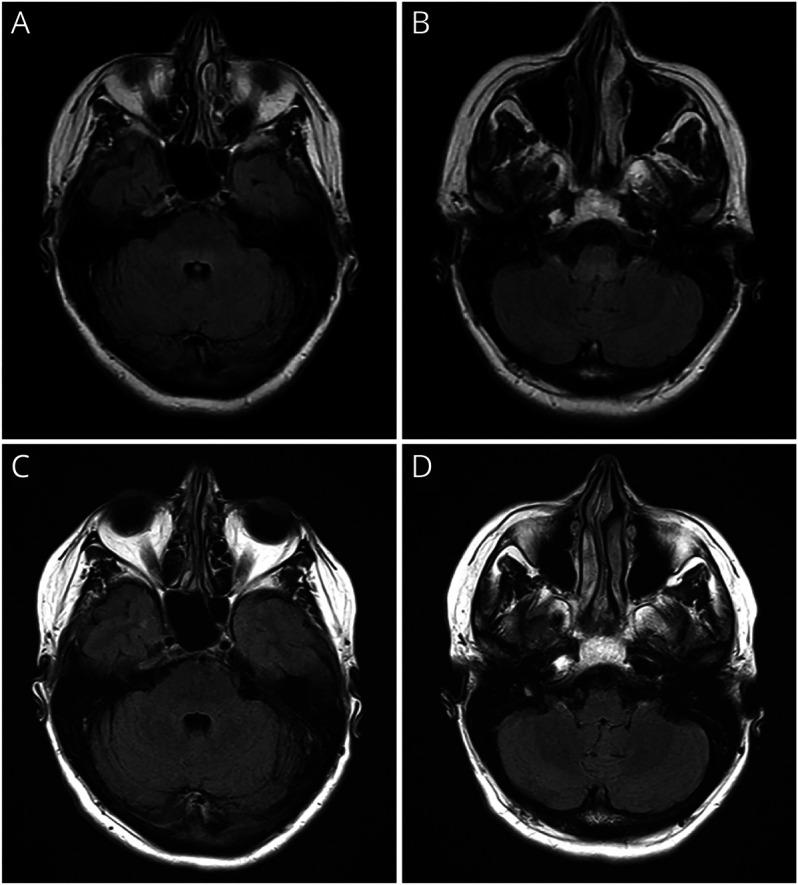
Figure 1. Brain MRI of the Patient Before and After Acute Treatment With IV Methylprednisolone
(A and B) Initial brain MRI showing T2-hyperintense lesions in the dorsal pons and medulla. There was no associated enhancement (images not shown); (C and D) The T2-hyperintense lesions disappear after acute treatment with IV methylprednisolone.
Figure 2
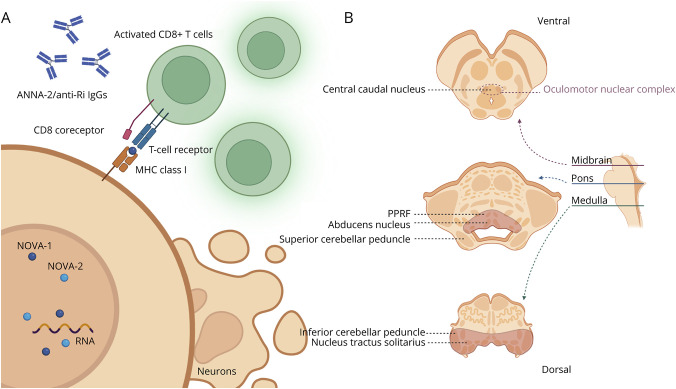
Figure 2. Mechanism and Localization of ANNA-2/anti-Ri Paraneoplastic Neurologic Syndrome in This Patient
(A) ANNA-2/anti-Ri IgGs are markers of a CD8 T-cell–mediated cytotoxicity process. The antigenic targets of ANNA-2/anti-Ri are NOVA-1 and NOVA-2, which are RNA-binding proteins responsible for alternative splicing, locating in the nucleus of neurons, particularly in the brainstem and cerebellum. Theoretically, these antigens are also present in tumor cells (onconeural antigens), and thus B and T cells are activated in the periphery. Because these antigens are intracellular, CD8 T cells can only detect them when presented by MHC class I molecules before initiating cell killing. (B) Localization of the symptoms and signs in the patient are shown. The central caudal nucleus is a midline nucleus within the oculomotor nuclear complex. It controls bilateral levator palpebrae superioris muscles. The PPRF and abducens nucleus are responsible for horizontal gaze. Nucleus tractus solitarius contains the gustatory nucleus, which receives tastes. The specific localization of jaw dystonia and laryngospasms are less clear but is believed to be excitation or disinhibition in the pontine tegmentum. The T2-hyperintense lesions on the MRI are highlighted in red in this diagram. ANNA = antineuronal nuclear antibody; MHC = major histocompatibility complex; NOVA = neuro-oncological ventral antigen; PPRF = paramedian pontine reticular formation.

References

    1. Pittock SJ, Parisi JE, McKeon A, et al. . Paraneoplastic jaw dystonia and laryngospasm with antineuronal nuclear autoantibody type 2 (anti-Ri). Arch Neurol. 2010;67(9):1109-1115. doi:10.1001/archneurol.2010.209 - DOI - PubMed
    1. Tan IL, Mowry EM, Steele SU, et al. . Brainstem encephalitis: etiologies, treatment, and predictors of outcome. J Neurol. 2013;260(9):2312-2319. doi:10.1007/s00415-013-6986-z - DOI - PMC - PubMed
    1. Banks SA, Morris PP, Chen JJ, et al. . Brainstem and cerebellar involvement in MOG-IgG-associated disorder versus aquaporin-4-IgG and MS. J Neurol Neurosurg Psychiatry. 2020:jnnp-2020-325121. doi:10.1136/jnnp-2020-325121 - DOI - PMC - PubMed
    1. Simard C, Vogrig A, Joubert B, et al. . Clinical spectrum and diagnostic pitfalls of neurologic syndromes with Ri antibodies. Neurol Neuroimmunol Neuroinflamm. 2020;7(3):e699. doi:10.1212/nxi.0000000000000699 - DOI - PMC - PubMed
    1. Graus F, Vogrig A, Muñiz-Castrillo S, et al. . Updated diagnostic criteria for paraneoplastic neurologic syndromes. Neurol Neuroimmunol Neuroinflamm. 2021;8(4):e1014. doi:10.1212/nxi.0000000000001014 - DOI - PMC - PubMed

Substances