


Magnitude and associated factors of dyslipidemia among patients with severe mental illness in dire Dawa, Ethiopia: neglected public health concern
- PMID: 37312056
- PMCID: PMC10265782
- DOI: 10.1186/s12872-023-03327-3
Magnitude and associated factors of dyslipidemia among patients with severe mental illness in dire Dawa, Ethiopia: neglected public health concern
Abstract
Background: Lipid metabolism abnormalities are an emerging risk factor for cardiovascular diseases. Due to the nature of the condition and their unhealthy lifestyles, patients with mental illnesses have a doubled risk of morbidity and mortality from dyslipidemia compared to the general population. To our knowledge the magnitude of dyslipidemia in patients with mental illnesses in the eastern Ethiopia has not been reported in the literature to date. Therefore, the aim of the study was to assess and compare the magnitude of dyslipidemia and its predictors among patients with severe mental illnesses and non-mentally ill control patients.
Methods: Nighty six subjects with serious psychiatric disorders and nighty six matched non-psychiatric control subjects who had no history of psychiatric illness were underwent a lipid profile test in Dire Dawa referral hospital, Ethiopia. The mentally ill clients were 18 years of age and older with schizophrenia, major depression, and bipolar disorders. Exposed study subjects were matched to control by age and sex. The data were cleaned and analyzed using SPSS software. A binary logistic regression model was used to determine the factors related to the magnitude of dyslipidemia. Both the crude odds ratio and the adjusted odds ratio with a 95% confidence interval were estimated.
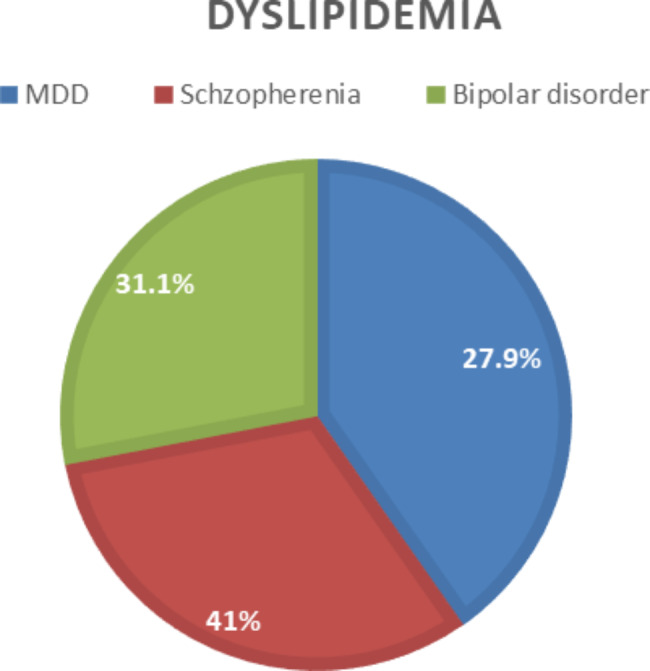
Results: The magnitude of dyslipidemia among mentally ill patients was significantly higher (63.54%) compared to non-exposed controls (31.9%) in the subjects studied. In multiple logistic regression, urban dwellers were six times (AOR = 6.14, 95% CI: 1.2, 16) more likely at risk of developing dyslipidemia compared to rural participants. Similarly, physically inactive participants were nearly two-times (AOR = 1.8, 95% CI: 1.1, 12.9) more likely to develop dyslipidemia compared to physically active study participants. Moreover, study participants who had raised body mass index were 2.1 times (AOR = 2.1, 95% CI: 1.17, 15.3) more likely having dyslipidemia than their counterparts.
Conclusions: This study revealed that the prevalence of dyslipidemia is higher among mentally ill patients compared to non-mentally ill control study participants. Place of residence, physical inactivity, and raised BMI were significantly associated with dyslipidemia. Therefore, intensive screening of patients for dyslipidemia and its components is necessary during follow-up.
Keywords: Atherosclerosis; Dire Dawa; Dyslipidemia; Hypercholesterolemia; Schizophrenia.
© 2023. The Author(s).
Conflict of interest statement
The authors declared, no conflict of interest.
Figures
References
-
- Et.al ana T. Pathophysiology of Dyslipidemia in Modern Medicine and its correlation. J Sci Hea lthcare Res. 2019;4(1).
-
- Gardner-Sood P, Lally J, Smith S, Atakan Z, Ismail K, Greenwood KE, et al. Cardiovascular risk factors and metabolic syndrome in people with established psychotic illnesses: baseline data from the IMPaCT randomized controlled trial. Psychol Med. 2015;45(12):2619–29. doi: 10.1017/S0033291715000562. - DOI - PMC - PubMed
Publication types
MeSH terms
LinkOut - more resources
Full Text Sources
Medical
