


Chiropractic Profession Attrition: A Narrative Review of Studies Over the Past 30 Years
- PMID: 37313265
- PMCID: PMC10258235
- DOI: 10.1016/j.echu.2023.02.001
Chiropractic Profession Attrition: A Narrative Review of Studies Over the Past 30 Years
Abstract
Objective: The purpose of this review was to investigate and discuss the available literature regarding chiropractic profession attrition.
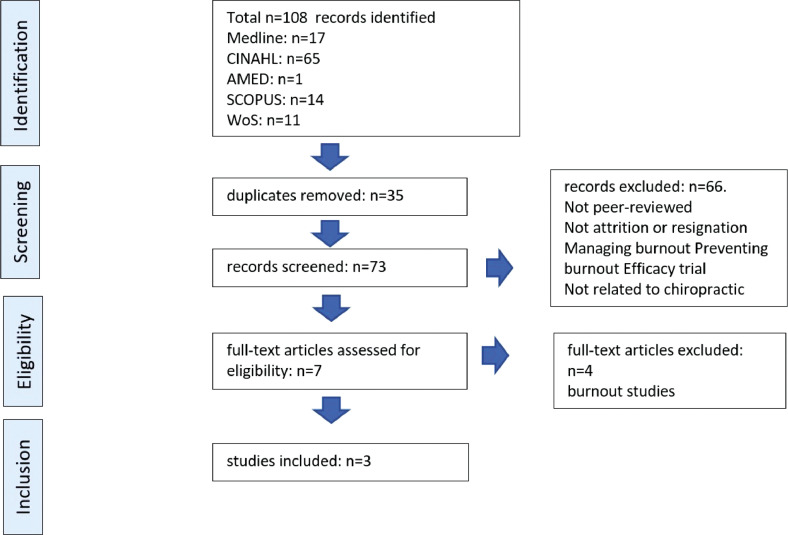
Methods: For this narrative review, searches for peer-reviewed observational and experimental papers published from January 1991 to December 2021 were conducted in the following 5 databases: MEDLINE, CINAHL (Cumulative Index to Nursing and Allied Health Literature), AMED (Allied and Complementary Medicine Database), Scopus, and Web of Science. Keywords included "chiropractic," "attrition," and "burnout, professional." Studies related to student or patient dropouts were excluded.
Results: Three of 108 identified papers met the inclusion criteria. Two studies that measured attrition rates reported between 4.5% and 27.8%. These ranges are limited to 1982 to 1991 graduates of Life College of Chiropractic West and individuals issued a California chiropractic license in 1991. The remaining study that investigated the attitudes of nonpracticing chiropractors proposed multifactorial causes leading to attrition. The 3 included studies used retrospective observational design.
Conclusion: The literature is limited, and factors linked to attrition or career mobility remain inconclusive. A better understanding of chiropractic profession attrition rates is needed to offer insights into the profession's practice environment, education, and professional outcomes. Accurate information on attrition may assist with workforce modeling and help prepare for the projected increase in musculoskeletal health care demand.
Keywords: Burnout, Professional; Career Mobility; Chiropractic.
© 2023 by National University of Health Sciences.
Figures
References
-
- Lantz C, Mellinfont R, Thomson G, Sherwood R, Chen J. Retention of chiropractors in practice following graduation and licensure. J Neuromusculoskelet Syst. 1995;3(3):132–138.
-
- Deyo RA, Mirza SK, Martin BI. Back pain prevalence and visit rates: estimates from U.S. national surveys, 2002. Spine. 2006;31(23):2724–2727. - PubMed
-
- Hart LG, Deyo RA, Cherkin DC. Physician office visits for low back pain: frequency, clinical evaluation, and treatment patterns from a U.S. National Survey. Spine. 1995;20(1):11–19. - PubMed
Publication types
LinkOut - more resources
Full Text Sources
Miscellaneous