


Adsorption of Cd (II) by a novel living and non-living Cupriavidus necator GX_5: optimization, equilibrium and kinetic studies
- PMID: 37316907
- PMCID: PMC10265800
- DOI: 10.1186/s13065-023-00977-4
Adsorption of Cd (II) by a novel living and non-living Cupriavidus necator GX_5: optimization, equilibrium and kinetic studies
Abstract
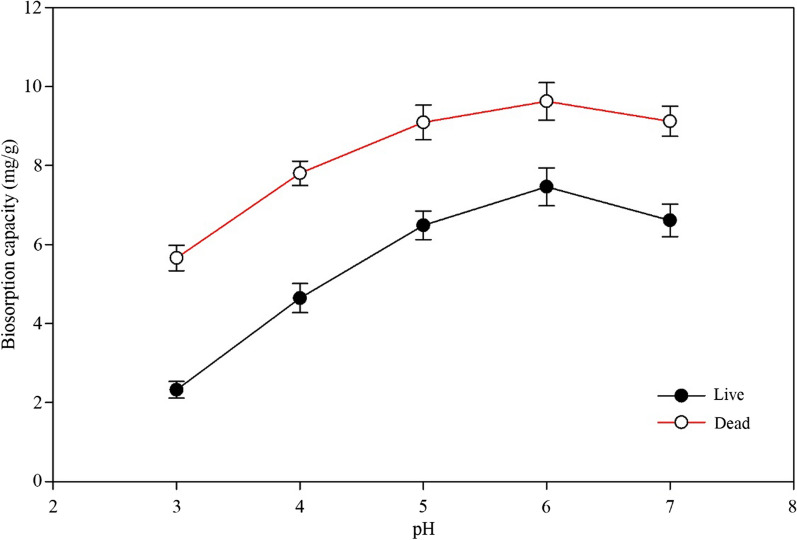
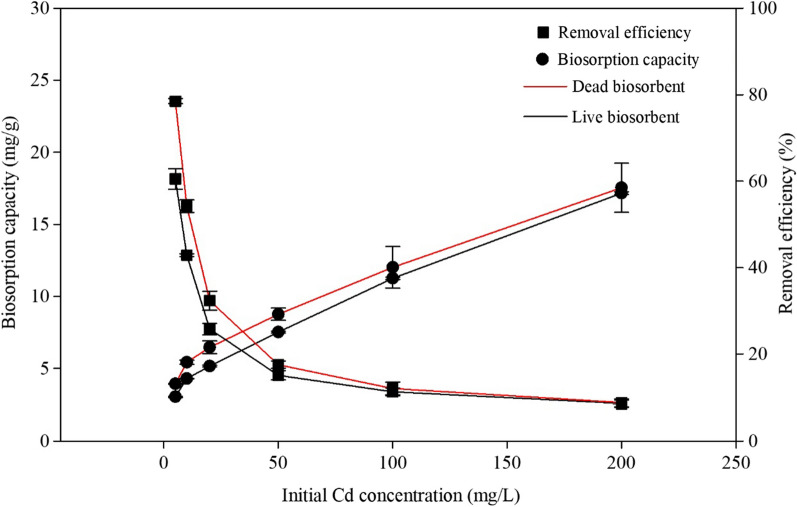
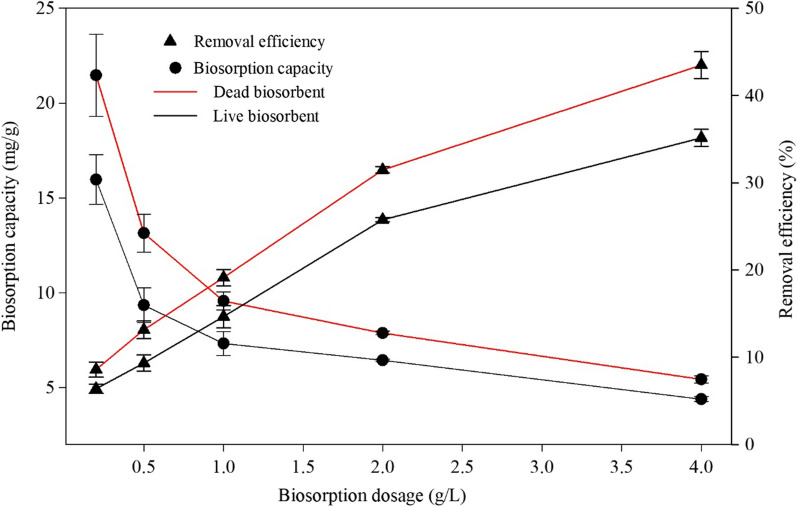
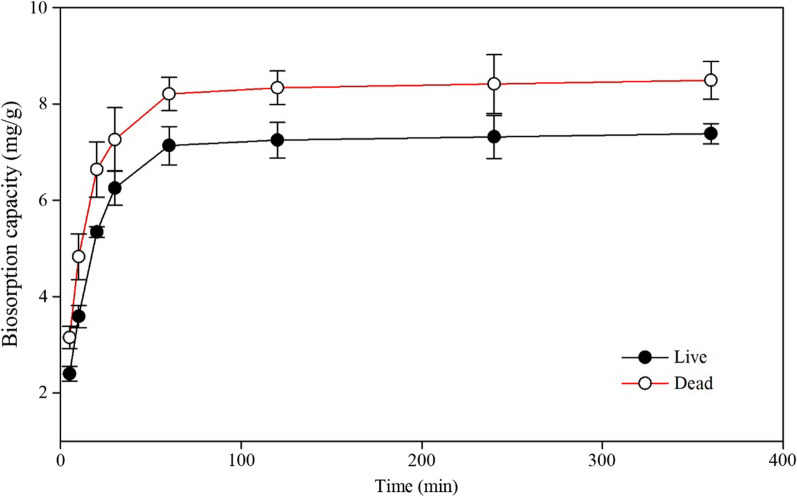
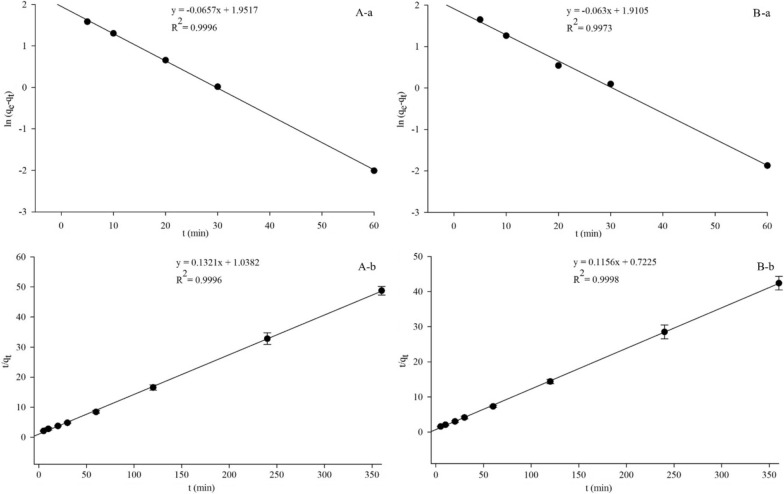
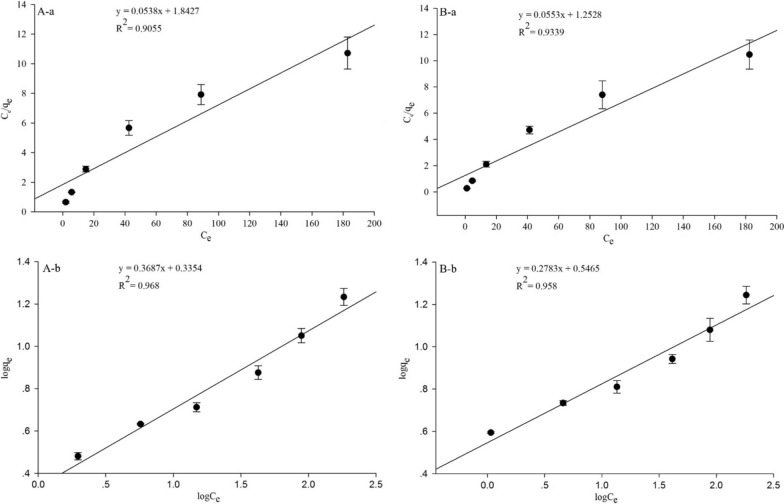
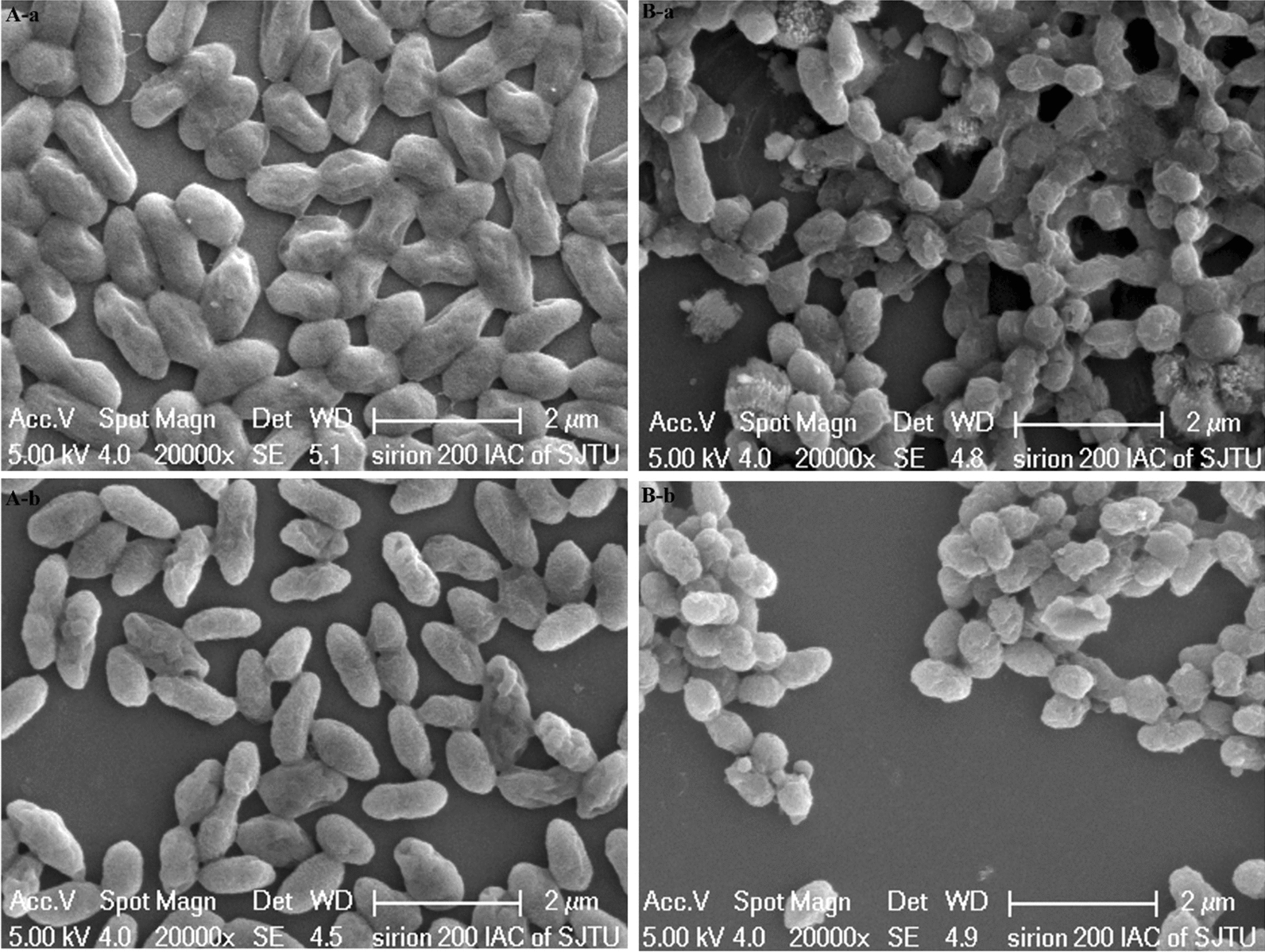
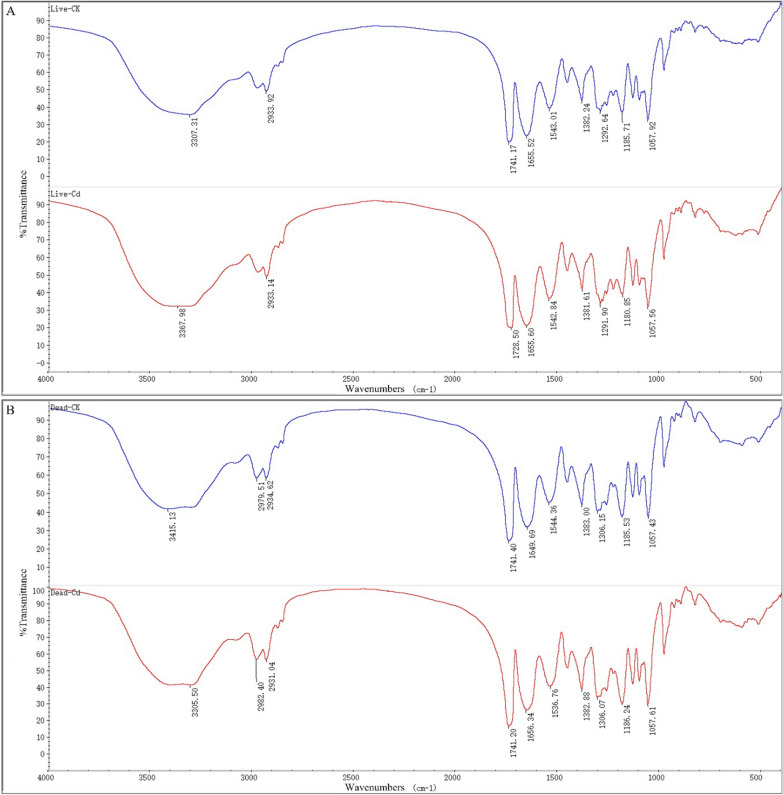
Biosorbents have been extensively studied for heavy metal adsorption due to their advantages of low cost and high efficiency. In the study, the living and non-living biomass of Cupriavidus necator GX_5 previously isolated were evaluated for their adsorption capacity and/or removal efficiency for Cd (II) through batch experiments, SEM and FT-IR investigations. The maximum removal efficiency rates for the live and dead biomass were 60.51% and 78.53%, respectively, at an optimum pH of 6, a dosage of 1 g/L and an initial Cd (II) concentration of 5 mg/L. The pseudo-second-order kinetic model was more suitable for fitting the experimental data, indicating that the rate-limiting step might be chemisorption. The Freundlich isotherm model fit better than the Langmuir isotherm model, implying that the adsorption process of both biosorbents was heterogeneous. FT-IR observation reflected that various functional groups were involved in Cd (II) adsorption: -OH, -NH, C=O, C-O and C-C groups for the living biomass and -OH, -NH, C-H, C = O, C-N and N-H groups for the dead biomass. Our results imply that non-living biosorbents have a higher capacity and stronger strength for absorbing Cd (II) than living biomass. Therefore, we suggest that dead GX_5 is a promising adsorbent and can be used in Cd (II)-contaminated environments.
Keywords: Adsorption; Biosorbent; Cadmium; Cupriavidus necator GX_5.
© 2023. The Author(s).
Conflict of interest statement
The authors declare no competing interests.
Figures
References
-
- Ali H, Khan E. What are heavy metals? long-standing controversy over the scientific use of the term ‘heavy metals’–proposal of a comprehensive definition. Toxicol Environ Chem. 2018;100:6–19. doi: 10.1080/02772248.2017.1413652. - DOI
-
- Cui L, Li J, Gao X, Tian B, Zhang J, Wang X, Liu Z. Human health ambient water quality criteria for 13 heavy metals and health risk assessment in Taihu Lake. Front Environ Sci Eng. 2022;16(4):41. doi: 10.1007/s11783-021-1475-6. - DOI
-
- Plöhn M, Escudero-Oñate C, Funk C. Biosorption of Cd (II) by nordic microalgae: tolerance, kinetics and equilibrium studies. Algal Res. 2021;59:102471. doi: 10.1016/j.algal.2021.102471. - DOI
Grants and funding
- 32260033/National Natural Science Foundation of China
- GJJ201619/Science and Technology Research Project of Jiangxi Education Department
- GJJ201618/Science and Technology Research Project of Jiangxi Education Department
- S202110417021/Innovation and Entrepreneurship Training Program for College Students in Jiangxi Province
LinkOut - more resources
Full Text Sources