


Optogenetic stimulation of basal forebrain cholinergic neurons prevents neuroinflammation and neuropsychiatric manifestations in pristane induced lupus mice
- PMID: 37322485
- PMCID: PMC10268425
- DOI: 10.1186/s12993-023-00213-y
Optogenetic stimulation of basal forebrain cholinergic neurons prevents neuroinflammation and neuropsychiatric manifestations in pristane induced lupus mice
Abstract
Background: Neuroinflammation has been identified as one of the primary pathogenic factors of neuropsychiatric systemic lupus erythematosus (NPSLE). However, there are no dedicated treatments available in clinics to alleviate neuroinflammation in NPSLE. It has been proposed that stimulating basal forebrain (BF) cholinergic neurons may provide potent anti-inflammatory effects in several inflammatory diseases, but its potential role in NPSLE remains unexplored. This study aims to investigate whether and how stimulating BF cholinergic neurons has a protective effect on NPSLE.
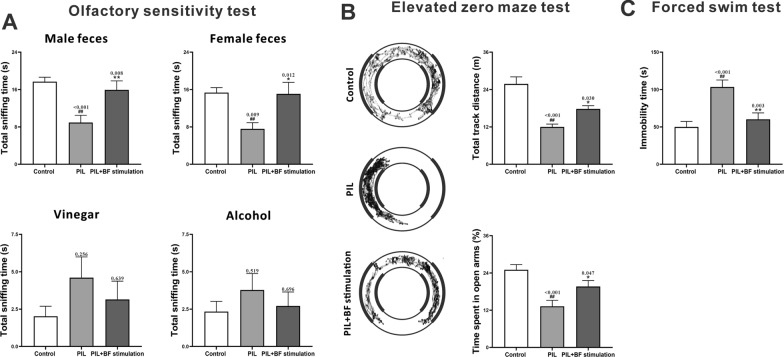
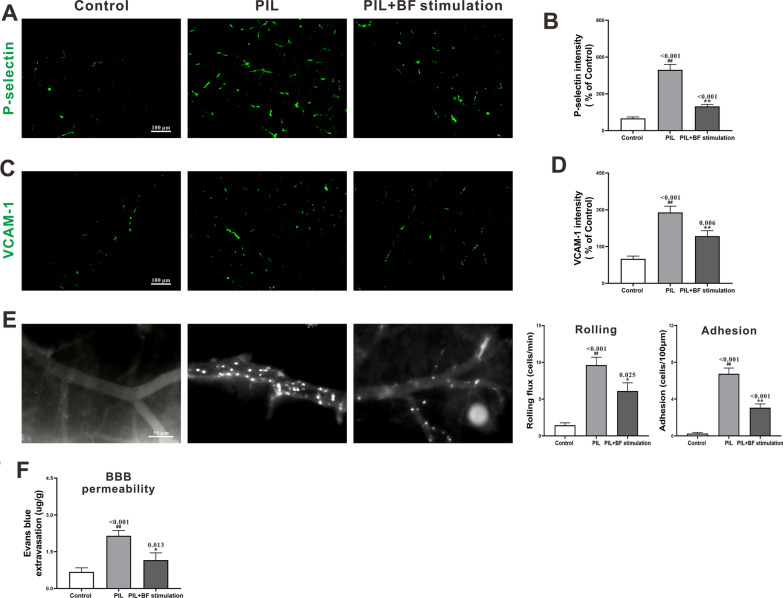
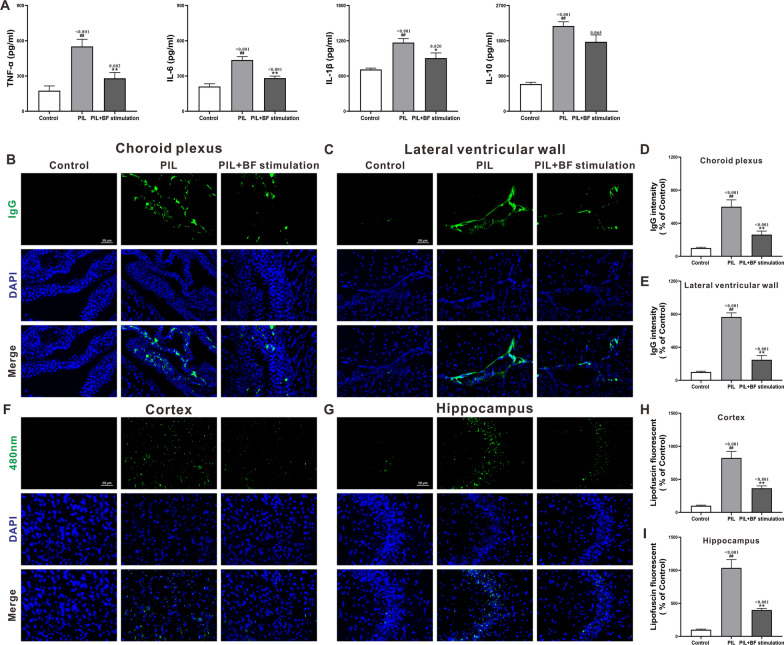
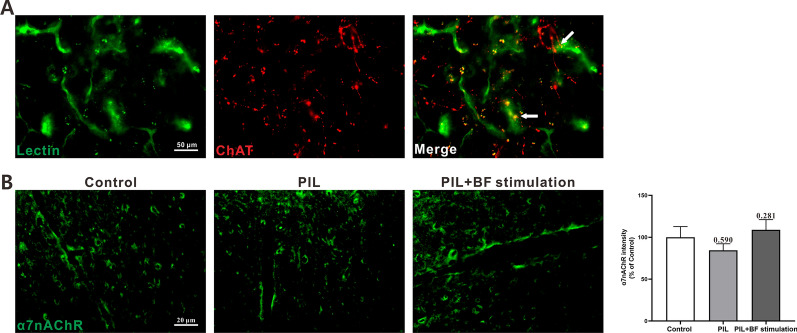
Results: Optogenetic stimulation of BF cholinergic neurons significantly ameliorated olfactory dysfunction and anxiety- and depression-like phenotype in pristane induced lupus (PIL) mice. The increased expression of adhesion molecules (P-selectin and vascular cell adhesion molecule-1 (VCAM-1)), leukocyte recruitment, blood-brain barrier (BBB) leakage were significantly decreased. Notably, the brain histopathological changes, including the elevated levels of pro-inflammatory cytokines (TNF-α, IL-6 and IL-1β), IgG deposition in the choroid plexus and lateral ventricle wall and lipofuscin accumulation in the cortical and hippocampal neurons, were also significantly attenuated. Furthermore, we confirmed the colocalization between the BF cholinergic projections and the cerebral vessels, and the expression of α7-nicotinic acetylcholine receptor (α7nAChR) on the cerebral vessels.
Conclusion: Our data indicate that stimulation of BF cholinergic neurons could play a neuroprotective role in the brain through its cholinergic anti-inflammatory effects on cerebral vessels. Therefore, this may be a promising preventive target for NPSLE.
Keywords: Basal forebrain; Behavioral deficits; Cholinergic anti-inflammatory effect; Neuroinflammation; Neuropsychiatric lupus; Optogenetics; α7nAChR.
© 2023. The Author(s).
Conflict of interest statement
The authors declare no competing interests.
Not applicable.
Figures

References
-
- Morales JY, Young-Stubbs CM, Shimoura CG, Kem WR, Uteshev VV, Mathis KW. Systemic administration of α7-nicotinic acetylcholine receptor ligands does not improve renal injury or behavior in mice with advanced systemic lupus erythematosus. Front Med. 2021;8:642960. doi: 10.3389/fmed.2021.642960. - DOI - PMC - PubMed
MeSH terms
Substances
Grants and funding
- 2021M703606/the fellowship of China Postdoctoral Science Foundation
- 19-109-4-15/the Project for Construction of Key Platform, Shenyang, China
- XLYC2002062/the Xingliao Talent Plan of Liaoning, China
- XLYC2002094/the Xingliao Talent Plan of Liaoning, China
- 2021YFC2501303/the Chinese National Key Technology R&D Program
LinkOut - more resources
Full Text Sources
Miscellaneous
