


The role of music in promoting health and wellbeing: a systematic review and meta-analysis
- PMID: 37322515
- PMCID: PMC10393487
- DOI: 10.1093/eurpub/ckad063
The role of music in promoting health and wellbeing: a systematic review and meta-analysis
Abstract
Background: The higher disease burden and related costs due to an increasing aging population have placed tremendous pressure on the healthcare systems worldwide. Given that music, both listened and actively performed, promotes and maintains good health and wellbeing among the population, we sought to perform a systematic review that would assess its biopsychosocial effects on a population over 40 years of age.
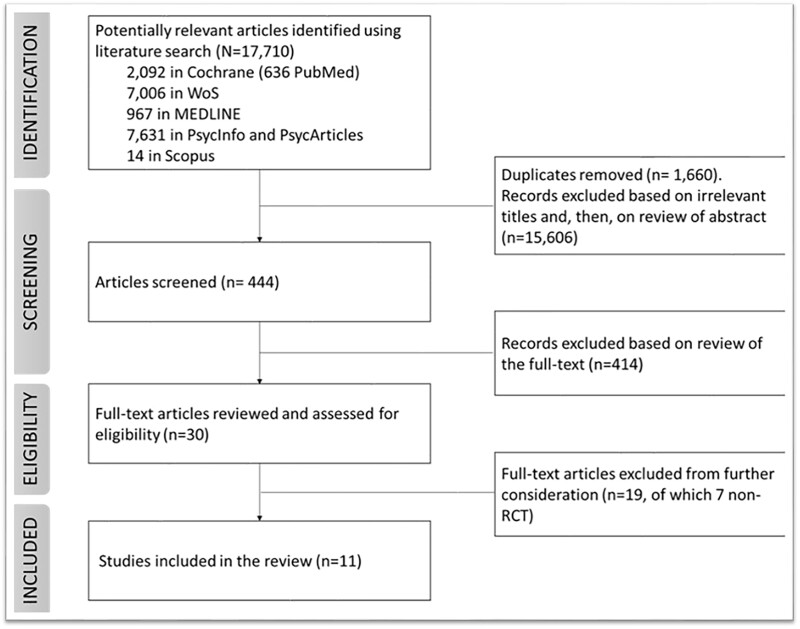
Methods: A comprehensive search of peer-reviewed articles up to April 2021 was conducted on six electronic databases (i.e. Cochrane, MEDLINE, PubMed, PsycINFO, Web of Science and Scopus). Our study population only included healthy adults of 40 years and older. A total of 11 randomized controlled trials (RCTs) matched the inclusion criteria and were therefore analyzed.
Results: Despite the heterogeneity of the methodologies used in the selected studies, our findings suggest that active musical participation can lead to beneficial effects on both cognitive and psychosocial functioning, whereas the positive impact of listening to music seems to be predominantly restricted to the cognitive domain.
Conclusions: Although our results are consistent with both active and passive music activities favouring health and wellbeing in individuals 40 years old and over, future prospective RCTs, employing more uniformed and sensitive measurements, should allow us to better gauge the role of music participation in healthy aging and longevity, especially in countries with a high population density of elderly people.
© The Author(s) 2023. Published by Oxford University Press on behalf of the European Public Health Association.
Figures
References
-
- Fancourt D, Finn S. What is the evidence on the role of the arts in improving health and well-being? A scoping review. Copenhagen: WHO Regional Office for Europe. (Health Evidence Network (HEN) synthesis report 67) 2019. - PubMed
-
- Maclean LM, Brown LJ, Astell AJ. The effect of rhythmic musical training on healthy older adults’ gait and cognitive function. Gerontologist 2014;54:624–33. - PubMed
Publication types
MeSH terms
LinkOut - more resources
Full Text Sources
Miscellaneous
