Dyadic parent-college student digital interaction styles
- PMID: 37326557
- PMCID: PMC10525016
- DOI: 10.1037/fam0001117
Dyadic parent-college student digital interaction styles
Abstract
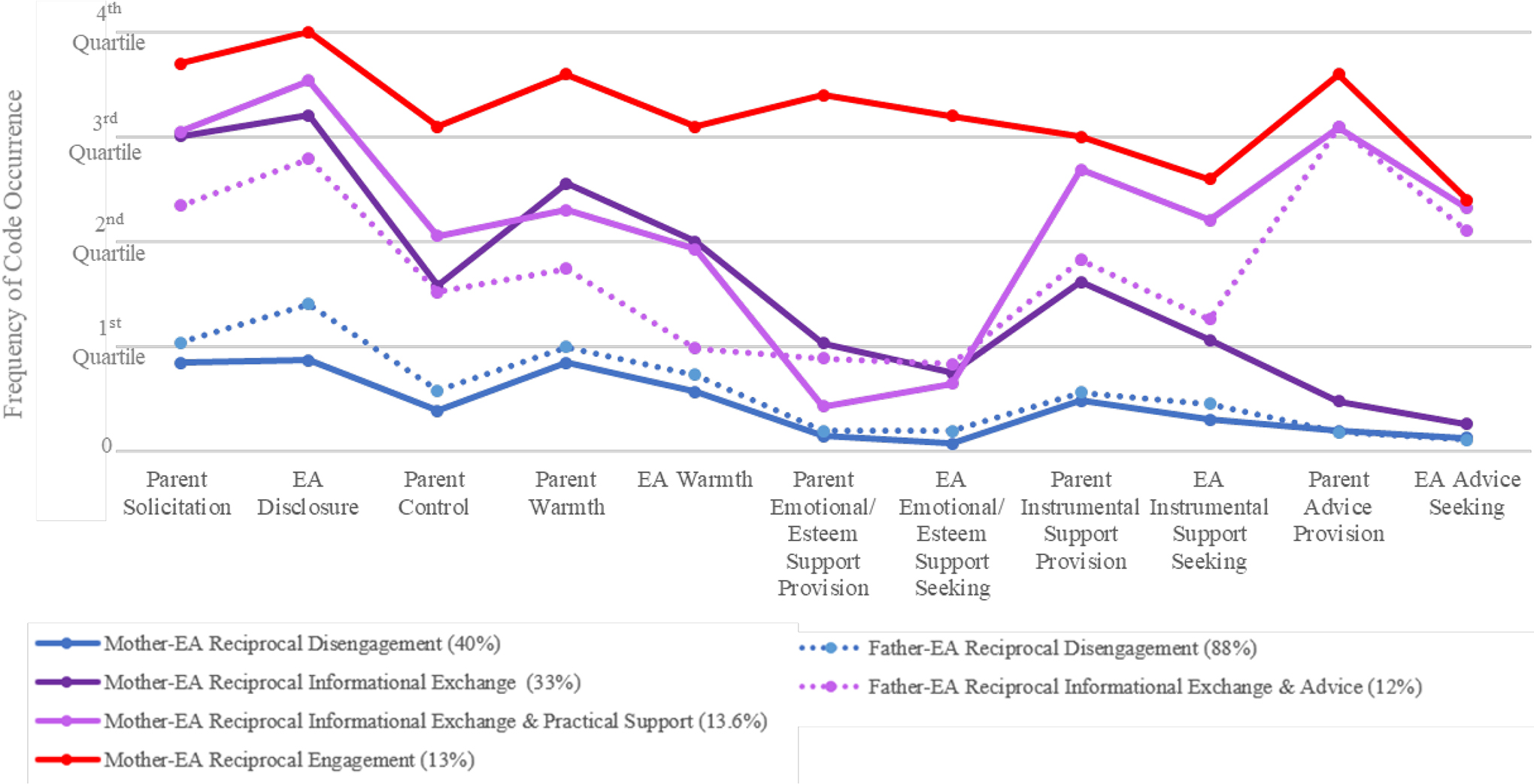
Parents and their emerging adult children are highly connected via mobile phones in the digital age. This digital connection has potential implications for the development of autonomy and sustained parent-child relatedness across the course of emerging adulthood. The present study uses the qualitatively coded content of nearly 30,000 U.S. parent-college student text messages, exchanged by 238 college students and their mothers and fathers over the course of 2 weeks, to identify distinct dyadic parent-emerging adult digital interaction styles across dimensions of responsiveness and monitoring. Results reveal that digital interaction styles are largely consistent across age, gender, and parent education as well as reflective (i.e., texting patterns of parents and emerging adults mirror one another), with little evidence of overparenting profiles. Results also show that those college students who are reciprocally disengaged in text messaging with their parents perceive their parents as less digitally supportive. However, no styles were associated with perceived parental pressure to digitally engage. Findings suggest that the mobile phone is likely a valuable tool to maintain connection with few risks for undermining the privacy and autonomy of emerging adults. (PsycInfo Database Record (c) 2023 APA, all rights reserved).
Figures
References
-
- Anderson M (2015). Technology device ownership: 2015. Pew Research Center. http://www.pewinternet.org/2015/10/29/technology-device-ownership-2015
-
- Arnett JJ, & Schwab J (2013). Parents and their grown kids: harmony, support, and (occasional) conflict. Clark Poll of Parents of Emerging Adults. www2.clarku.edu/clark-poll-emerging-adults/pdfs/clark-university-poll-pa...
-
- Asparouhov T, & Muthén B (2014). Auxiliary variables in mixture modeling: three-step approaches using mplus. Structural Equation Modeling: A Multidisciplinary Journal, 21(3), 329–341. 10.1080/10705511.2014.915181 - DOI
-
- Barry CMN, Padilla-Walker LM, Madsen SD, & Nelson LJ (2008). The impact of maternal relationship quality on emerging adults’ prosocial tendencies: indirect effects via regulation of prosocial values. Journal of Youth and Adolescence, 37(5), 581–591. 10.1007/s10964-007-9238-7 - DOI
-
- Baumrind D (1966). Effects of authoritative parental control on child behavior. Child Development, 37(4), 887. 10.2307/1126611 - DOI
MeSH terms
Grants and funding
LinkOut - more resources
Full Text Sources