


Design, synthesis, molecular docking and biological evaluation of new carbazole derivatives as anticancer, and antioxidant agents
- PMID: 37328860
- PMCID: PMC10276425
- DOI: 10.1186/s13065-023-00961-y
Design, synthesis, molecular docking and biological evaluation of new carbazole derivatives as anticancer, and antioxidant agents
Abstract
Background: The carbazole skeleton is an important structural motif occurring naturally or synthesized chemically and has antihistaminic, antioxidant, antitumor, antimicrobial, and anti-inflammatory activities.
Objectives: This study aimed to design and synthesize a novel series of carbazole derivatives and evaluate their antiproliferative and antioxidant activities.
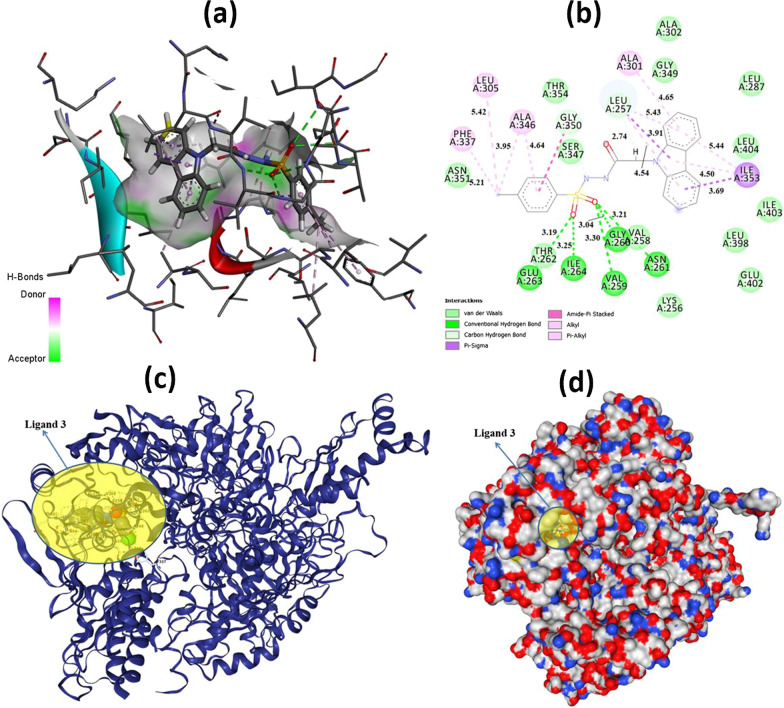
Methods: The synthesized compounds were characterized utilizing HRMS, 1H-, and 13CAPT-NMR, and assessed for their anticancer, antifibrotic, and antioxidant effects utilizing reference biomedical procedures. In addition, the AutoDock Vina application was used to perform in-silico docking computations.
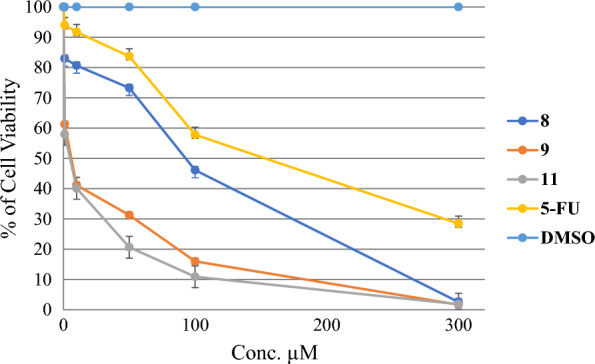
Results: A series of carbazole derivatives were synthesized and characterized in the current study. Compounds 10 and 11 were found to have a stronger antiproliferative effect than compounds 2-5 against HepG2, HeLa, and MCF7 cancer cell lines with IC50 values of 7.68, 10.09, and 6.44 µM, respectively. Moreover, compound 9 showed potent antiproliferative activity against HeLa cancer cell lines with an IC50 value of 7.59 µM. However, except for compound 5, all of the synthesized compounds showed moderate antiproliferative activities against CaCo-2 with IC50 values in the range of 43.7-187.23 µM. All of these values were compared with the positive control anticancer drug 5-Fluorouracil (5-FU). In addition, compound 9 showed the most potent anti-fibrotic compound, and the cellular viability of LX-2 was found 57.96% at 1 µM concentration in comparison with the positive control 5-FU. Moreover, 4 and 9 compounds showed potent antioxidant activities with IC50 values of 1.05 ± 0.77 and 5.15 ± 1.01 µM, respectively.
Conclusion: Most of the synthesized carbazole derivatives showed promising antiproliferative, antioxidant, and antifibrotic biological effects, and further in-vivo investigations are needed to approve or disapprove these results.
Keywords: Anticancer; Antifibrotic; Antioxidant; Carbazole; Doxorubicin; LX-2; Molecular docking.
© 2023. The Author(s).
Conflict of interest statement
The authors declare that they have no competing interests.
Figures


References
-
- Huang L, Zhe-Ling F, Yi-Tao W, Li-Gen L. Anticancer carbazole alkaloids and coumarins from Clausena plants: a review. Chin J Nat Med. 2017;15(12):881–8. - PubMed
-
- Yin J, Ma Y, Li G, Peng M, Lin W. A versatile small-molecule fluorescence scaffold: carbazole derivatives for bioimaging. Coord Chem Rev. 2020;412:213257. doi: 10.1016/j.ccr.2020.213257. - DOI
-
- Dumur F. Recent advances on carbazole-based oxime esters as photoinitiators of polymerization. Eur Polymer J. 2022;175:11130. doi: 10.1016/j.eurpolymj.2022.111330. - DOI
-
- Bondock S, Nasr T, Alqahtanti S. Synthesis and in vitro antitumor evaluation of some carbazole-based thiazole, thiophene, and 1,3,4-thiadiazole derivatives. Chemistryselect. 2020;5(39):12087–97. doi: 10.1002/slct.202002912. - DOI
Grants and funding
LinkOut - more resources
Full Text Sources