


Heat preparedness and exertional heat illness in Paralympic athletes: A Tokyo 2020 survey
- PMID: 37332304
- PMCID: PMC10274519
- DOI: 10.1080/23328940.2022.2147364
Heat preparedness and exertional heat illness in Paralympic athletes: A Tokyo 2020 survey
Abstract
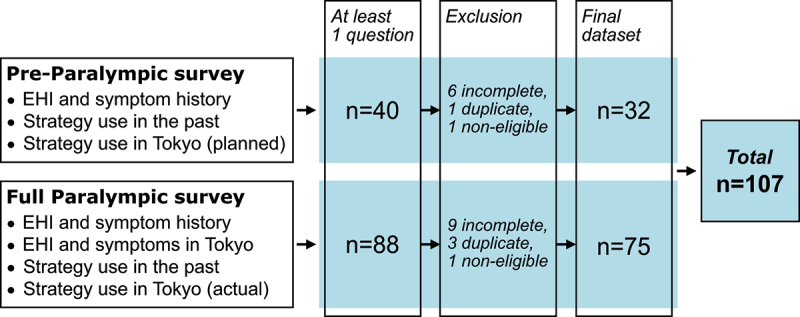
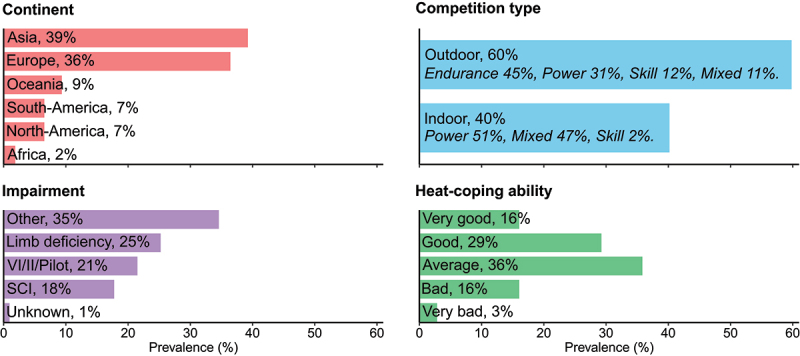
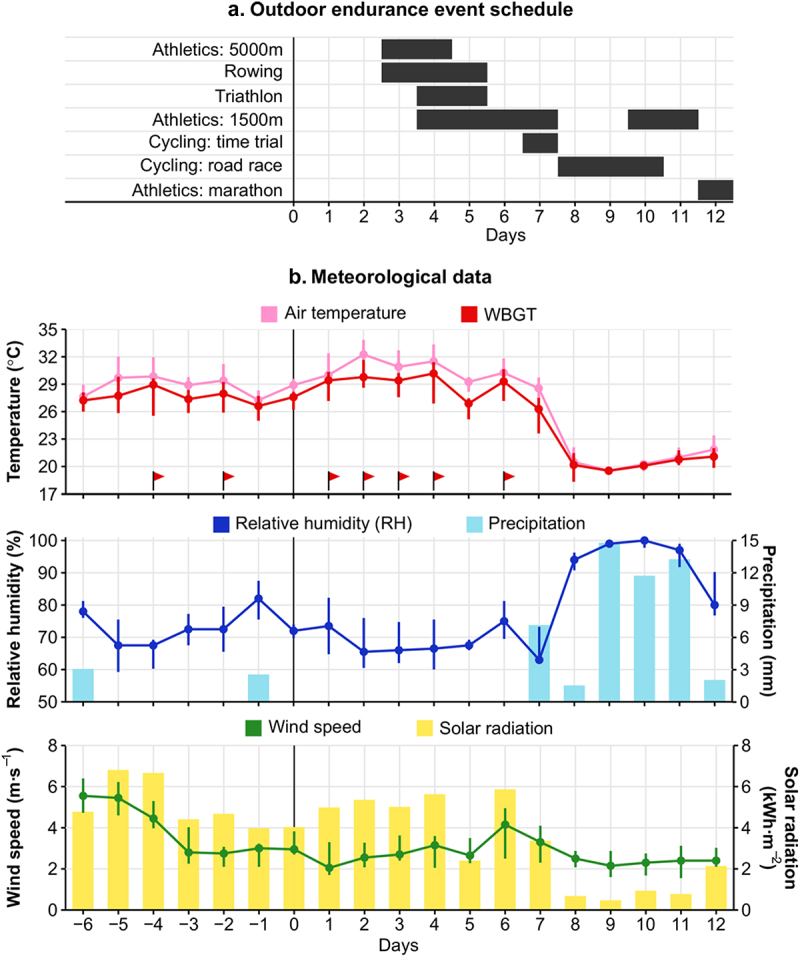
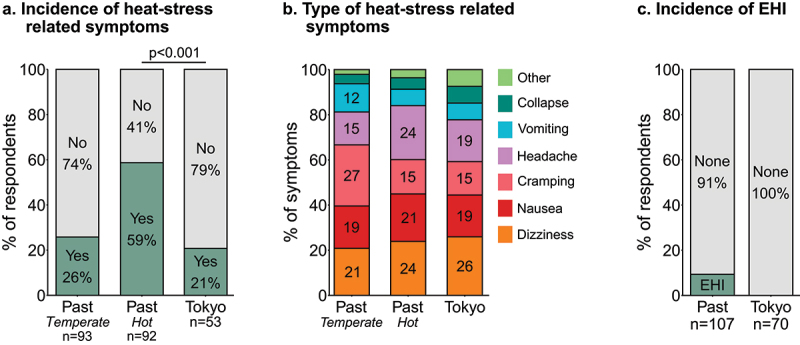
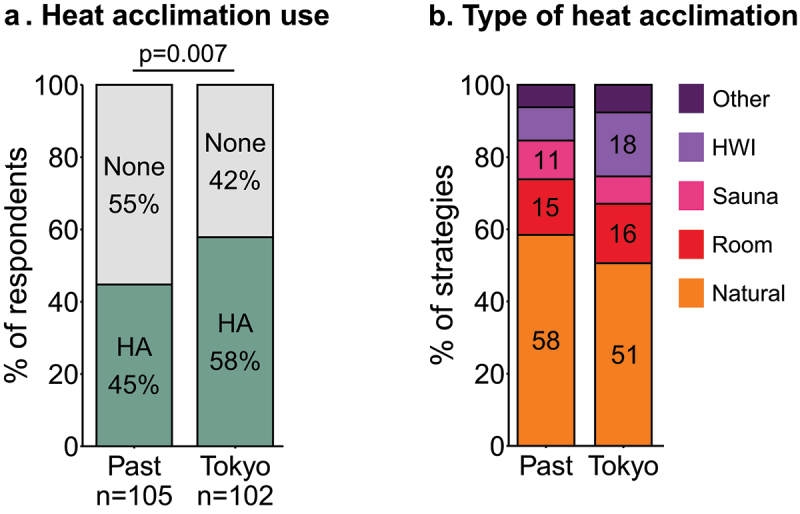
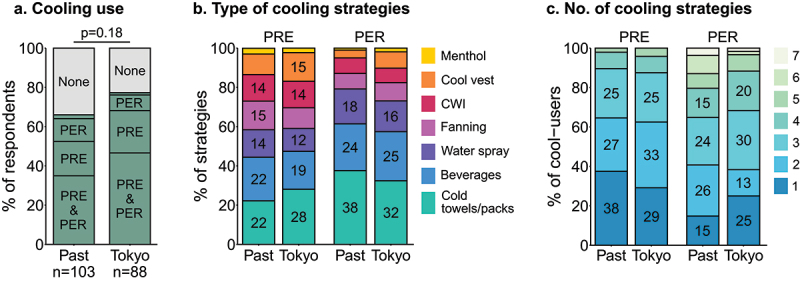
Paralympic athletes may be at increased risk for exertional heat illness (EHI) due to reduced thermoregulatory ability as a consequence of their impairment. This study investigated the occurrence of heat-stress related symptoms and EHI, and the use of heat mitigation strategies in Paralympic athletes, both in relation to the Tokyo 2020 Paralympic Games and previous events. Paralympic athletes competing in Tokyo 2020 were invited to complete an online survey five weeks prior to the Paralympics and up to eight weeks after the Games. 107 athletes (30 [24-38] years, 52% female, 20 nationalities, 21 sports) completed the survey. 57% of respondents had previously experienced heat-stress related symptoms, while 9% had been medically diagnosed with EHI. In Tokyo, 21% experienced at least one heat-stress related symptom, while none reported an EHI. The most common symptom and EHI were, respectively, dizziness and dehydration. In preparation for Tokyo, 58% of respondents used a heat acclimation strategy, most commonly heat acclimatization, which was more than in preparation for previous events (45%; P = 0.007). Cooling strategies were used by 77% of athletes in Tokyo, compared to 66% during past events (P = 0.18). Cold towels and packs were used most commonly. Respondents reported no medically-diagnosed EHIs during the Tokyo 2020 Paralympic Games, despite the hot and humid conditions in the first seven days of competition. Heat acclimation and cooling strategies were used by the majority of athletes, with heat acclimation being adopted more often than for previous competitions.
Keywords: Heat acclimation; adapted sports; cooling; heat mitigation; impairment; para-athletes.
© 2022 The Author(s). Published by Informa UK Limited, trading as Taylor & Francis Group.
Conflict of interest statement
No potential conflict of interest was reported by the author(s).
Figures
References
-
- Lei T-H, Wang F.. Looking ahead of 2021 Tokyo Summer Olympic Games: how Does Humid Heat Affect Endurance Performance? Insight into physiological mechanism and heat-related illness prevention strategies. J Therm Biol. 2021;99:102975. - PubMed
-
- Périard JD, Eijsvogels TMH, Daanen HAM. Exercise under heat stress: thermoregulation, hydration, performance implications, and mitigation strategies. Physiol Rev. 2021;101:1873–1979. - PubMed
-
- Price MJ, Trbovich M. Thermoregulation following spinal cord injury. In: Romanovsky A, editor. Handbook of Clinical Neurology Thermoregulation: from Basic Neuroscience to Clinical Neurology, Part II. Amsterdam, The Netherlands: Elsevier; 2018. p. 799–820. - PubMed
LinkOut - more resources
Full Text Sources
Other Literature Sources
Miscellaneous
