


Impact of central venous pressure during the first 24 h and its time-course on the lactate levels and clinical outcomes of patients who underwent coronary artery bypass grafting
- PMID: 37332578
- PMCID: PMC10269904
- DOI: 10.3389/fcvm.2023.1036285
Impact of central venous pressure during the first 24 h and its time-course on the lactate levels and clinical outcomes of patients who underwent coronary artery bypass grafting
Erratum in
-
Corrigendum: Impact of central venous pressure during the first 24 h and its time-course on the lactate levels and clinical outcomes of patients who underwent coronary artery bypass grafting.Front Cardiovasc Med. 2023 Oct 9;10:1298638. doi: 10.3389/fcvm.2023.1298638. eCollection 2023. Front Cardiovasc Med. 2023. PMID: 37876771 Free PMC article.
Abstract
Purpose: Previous studies have revealed that elevated mean central venous pressure (CVP) was associated with poor prognosis in specific patient groups. But no study explored the impact of mean CVP on prognosis of patients who underwent coronary artery bypass grafting surgery (CABG). The purpose of this study was to investigate the impacts of elevated CVP and its time-course on clinical outcomes of patients who underwent CABG and potential mechanisms.
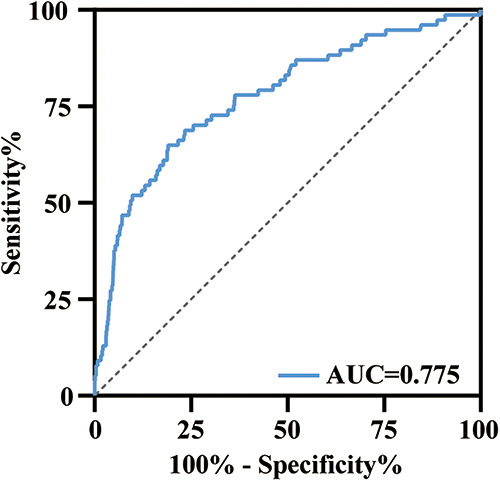
Methods: A retrospective cohort study was performed based on the Medical Information Mart for Intensive Care IV (MIMIC-IV) database. We first identified the CVP during specific period with the most predictive value. Patients were categorized into the low-CVP and high-CVP group on the basis of the cut-off value. A propensity score matching was used to adjust covariates. The primary outcome was a 28-day mortality. The secondary outcomes were 1-year mortality and in-hospital mortality, the length of intensive care unit (ICU) stay and hospitalization, acute kidney injury incidence, use of vasopressors, duration of ventilation and oxygen index, and lactate levels and clearance. Patients in the high-CVP group were categorized into the "second day CVP ≤ 13.46 mmHg" group and the "second day CVP > 13.46 mmHg" group, respectively, and the clinical outcomes were the same as before.
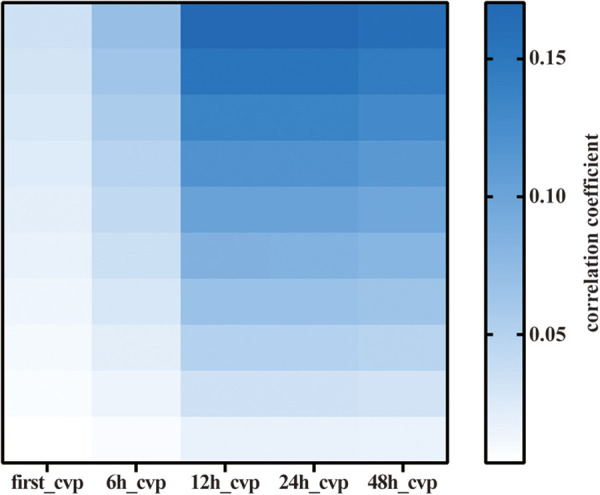
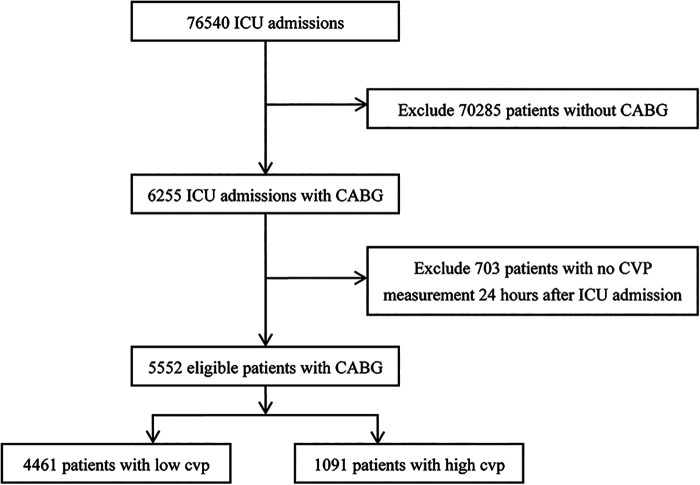
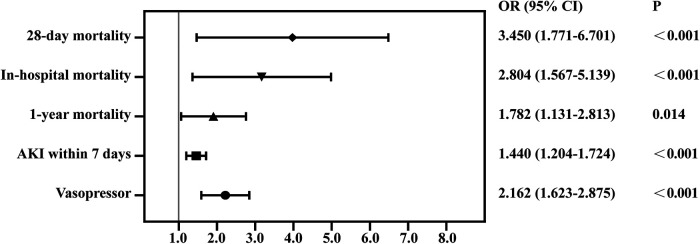
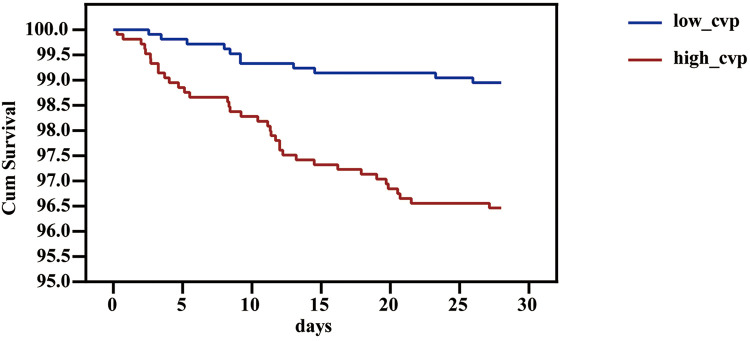
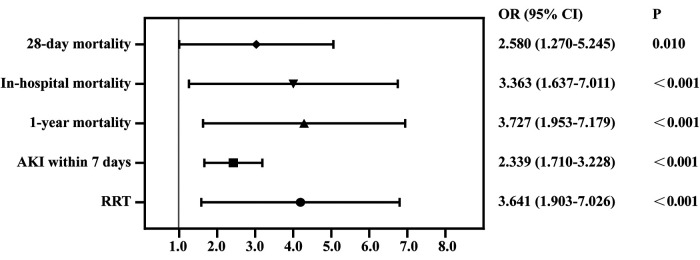
Results: A total of 6,255 patients who underwent CABG were picked from the MIMIC-IV database, of which 5,641 CABG patients were monitored by CVP measurement during the first 2 days after ICU admission and 206,016 CVP records were extracted from the database. The mean CVP during the first 24 h was the most correlative and statistically significant for the 28-day mortality. The risk of the 28-day mortality was increased in the high-CVP group [OR 3.45 (95% CI: 1.77-6.70; p < 0.001)]. Patients with elevated CVP levels had worse secondary outcomes. The maximum of lactate levels and lactate clearance were also poor in the high-CVP group. For patients in the high-CVP group during the first 24 h, whose mean CVP during the second day lowered to less than the cut-off value, had better clinical outcomes.
Conclusions: An elevated mean CVP during the first 24 h was correlated with poor outcomes in patients who underwent CABG. The potential mechanisms may be influencing the lactate levels and lactate clearance through the impact on afterload of tissue perfusion. Patients whose mean CVP during the second day dropped to less than the cut-off value had favorable prognosis.
Keywords: 28-day mortality; central venous pressure; coronary artery bypass grafting; lactate; lactate clearance.
© 2023 Zhao, Zhang, Wang and Liu.
Conflict of interest statement
The authors declare that the research was conducted in the absence of any commercial or financial relationships that could be construed as a potential conflict of interest.
Figures
References
-
- Bacchi G, Buscaroli A, Fusari M, Neri L, Cappuccilli ML, Carretta E, et al. The influence of intraoperative central venous pressure on delayed graft function in renal transplantation: a single-center experience. Transplant Proc. (2010) 42(9):3387–91. 10.1016/j.transproceed.2010.08.042 - DOI - PubMed
LinkOut - more resources
Full Text Sources
