


ehealth technology in cardiac exercise therapeutics for pediatric patients with congenital and acquired heart conditions: a summary of evidence and future directions
- PMID: 37332590
- PMCID: PMC10272804
- DOI: 10.3389/fcvm.2023.1155861
ehealth technology in cardiac exercise therapeutics for pediatric patients with congenital and acquired heart conditions: a summary of evidence and future directions
Abstract
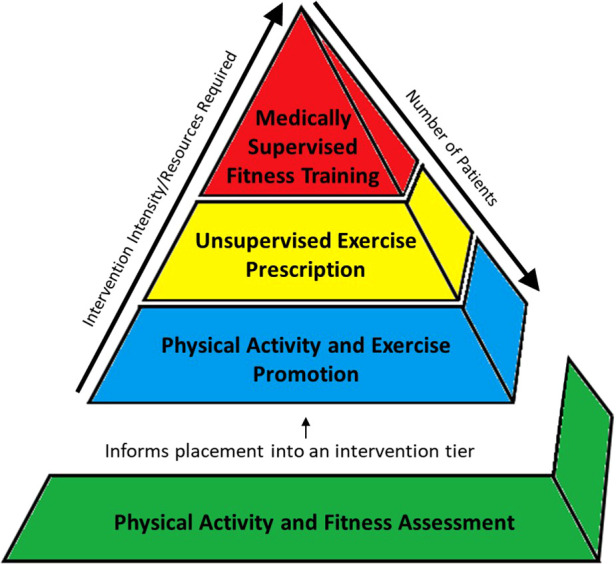
Many children and adolescents with congenital and acquired heart disease (CHD) are physically inactive and participate in an insufficient amount of moderate-to-vigorous intensity exercise. Although physical activity (PA) and exercise interventions are effective at improving short- and long-term physiological and psychosocial outcomes in youth with CHD, several barriers including resource limitations, financial costs, and knowledge inhibit widespread implementation and dissemination of these beneficial programs. New and developing eHealth, mHealth, and remote monitoring technologies offer a potentially transformative and cost-effective solution to increase access to PA and exercise programs for youth with CHD, yet little has been written on this topic. In this review, a cardiac exercise therapeutics (CET) model is presented as a systematic approach to PA and exercise, with assessment and testing guiding three sequential PA and exercise intervention approaches of progressive intensity and resource requirements: (1) PA and exercise promotion within a clinical setting; (2) unsupervised exercise prescription; and (3) medically supervised fitness training intervention (i.e., cardiac rehabilitation). Using the CET model, the goal of this review is to summarize the current evidence describing the application of novel technologies within CET in populations of children and adolescents with CHD and introduce potential future applications of these technologies with an emphasis on improving equity and access to patients in low-resource settings and underserved communities.
Keywords: cardiac rehabilitation; exercise prescription; pediatric cardiology; technology; telehealth; wearable devices.
© 2023 White, Layton, Curran, Gauthier, Orr, Ward, Vernon, Martinez, Rice, Hansen, Prusi and Hansen.
Conflict of interest statement
The authors declare that the research was conducted in the absence of any commercial or financial relationships that could be construed as a potential conflict of interest.
Figures
References
-
- Takken T, Giardini A, Reybrouck T, Gewillig M, Hövels-Gürich H, Longmuir P, et al. Recommendations for physical activity, recreation sport, and exercise training in paediatric patients with congenital heart disease: a report from the exercise, basic & translational research section of the European association of cardiovascular prevention and rehabilitation, the European congenital heart and lung exercise group, and the association for European paediatric cardiology. Euro J Prev Cardiol. (2012) 19(5):1034–65. 10.1177/1741826711420000 - DOI - PubMed
-
- Longmuir PE, Brothers JA, de Ferranti SD, Hayman LL, Van Hare GF, Matherne GP, et al. Promotion of physical activity for children and adults with congenital heart disease: a scientific statement from the American heart association. Circulation. (2013) 127(21):2147–59. 10.1161/CIR.0b013e318293688f - DOI - PubMed
Publication types
LinkOut - more resources
Full Text Sources
