


Global research trends in benign paroxysmal positional vertigo: a bibliometric analysis
- PMID: 37333008
- PMCID: PMC10272773
- DOI: 10.3389/fneur.2023.1204038
Global research trends in benign paroxysmal positional vertigo: a bibliometric analysis
Abstract
Background: Benign paroxysmal positional vertigo is the most common disease in which vertigo is the main clinical manifestation, and it has become a global medical problem, affecting a wide range of areas and seriously affecting the quality of human life.
Objective: This article presents an analysis of the current characteristics of BPPV-related research and summarizes the current hot topics and trends, with the goal of inspiring future research into the prevention and treatment of BPPV, thereby improving the differential diagnosis and prevention of peripheral vertigo.
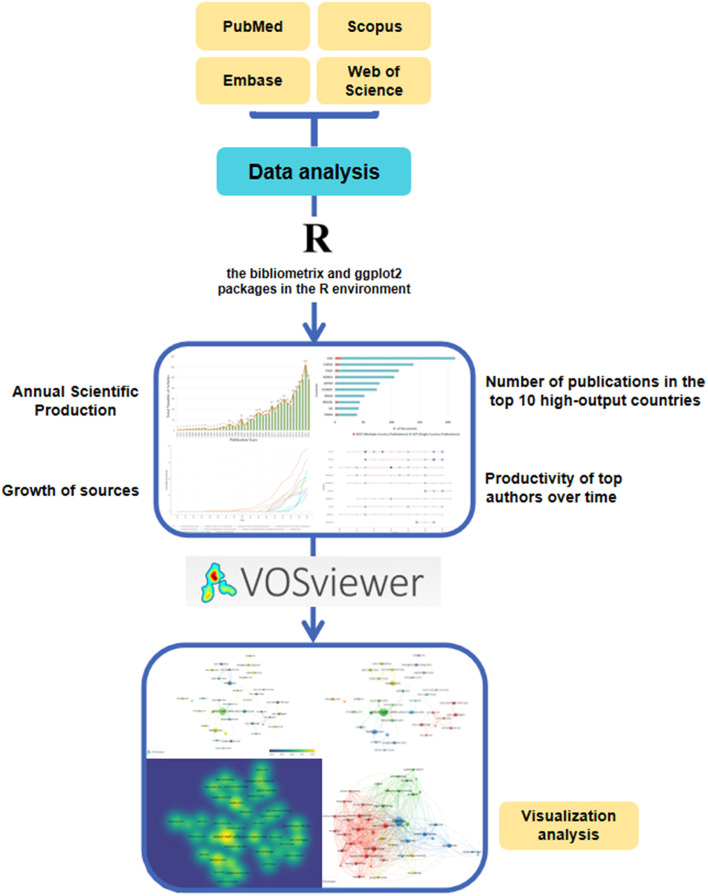
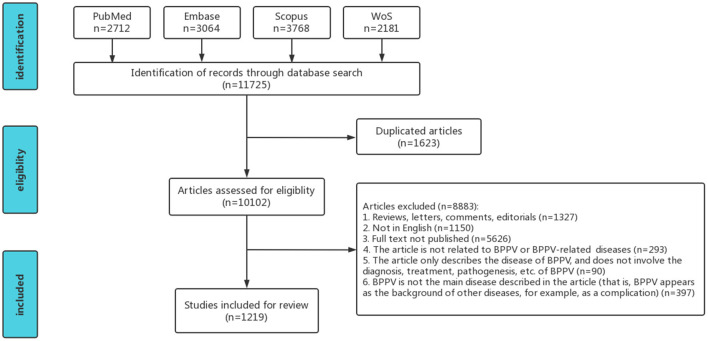
Methods: A bibliometric approach was used to collect 1,219 eligible studies on BPPV from four databases-PubMed, Embase, Scopus, and Web of Science-published between 1974 and 2022. The characteristics and status of the accumulated scientific output were processed using R and VOSviewer so that we could visualize any trends or hotspots.
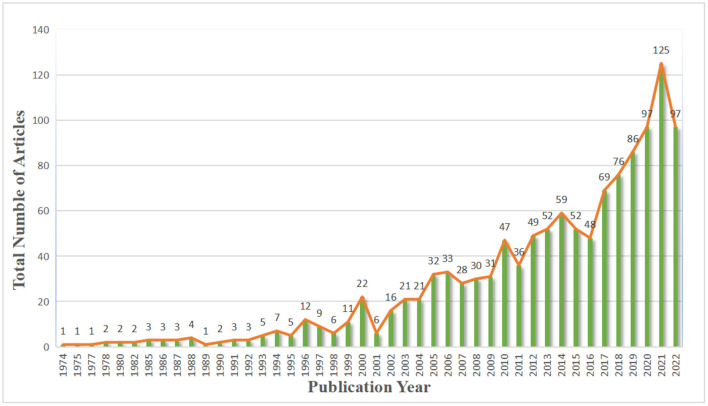
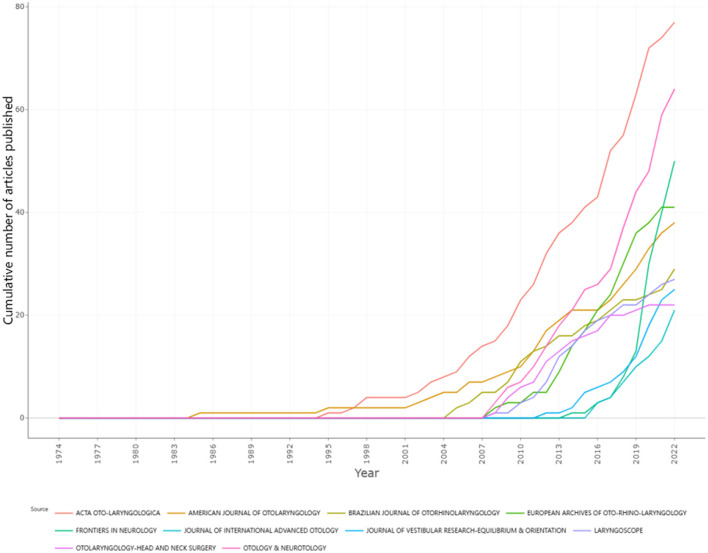
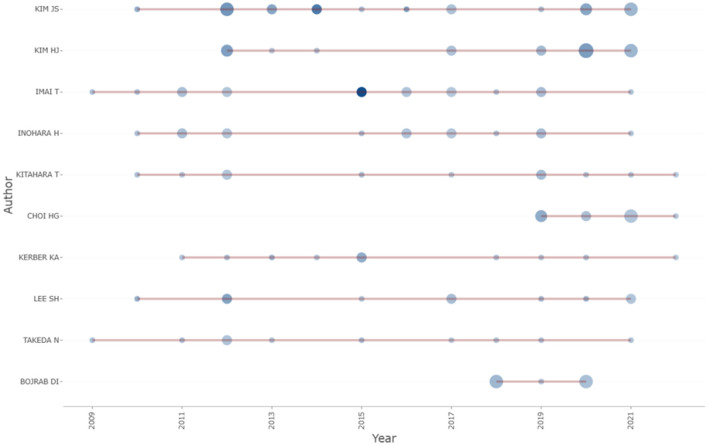
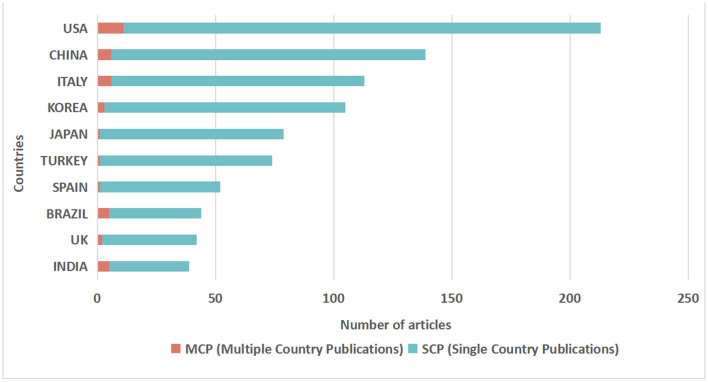
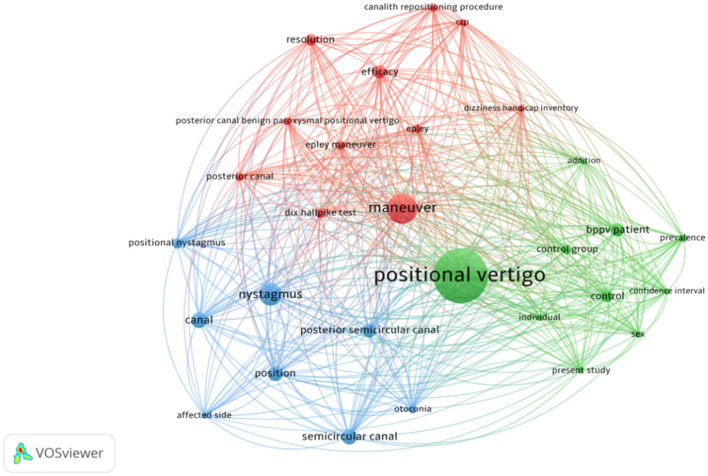
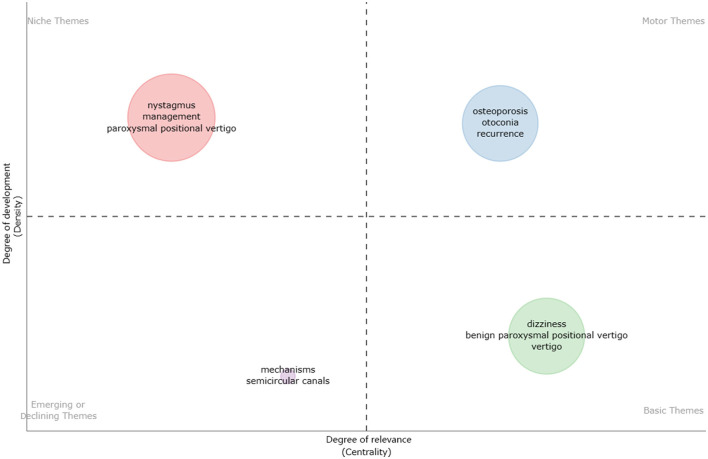
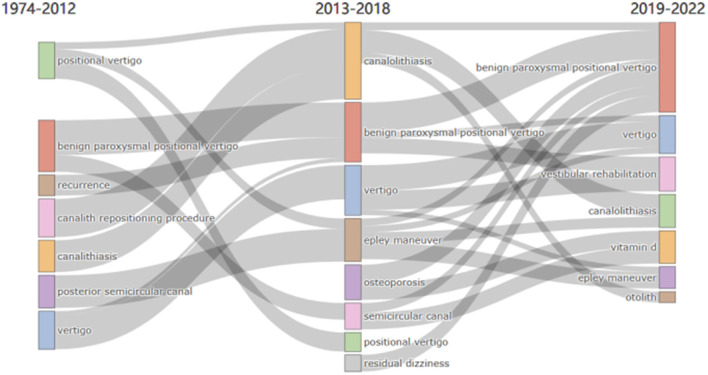
Results: The results showed a significant increase in the annual number of publications, with an average annual growth rate of 21.58%. A possible reason for the especially pronounced peak in 2021 was an increase in the prevalence of BPPV as a result of COVID-19. The new coronavirus became a focus of research in 2021. A total of 3,876 authors (of whom 1,097 were first authors) published articles in 307 different journals; 15.7% of the articles were published in Acta Oto-Larygologica, Otology and Neurotology, and Frontiers in Neurology. Acta Oto-Laryngologica was well ahead of the other journals in terms of growth rate and number of articles published. American scholars generated the largest number of articles overall, and the USA was involved in the greatest number of international collaborations, followed by Italy and China. The themes of the research centered around three topics, namely the treatment of BPPV, its influencing factors, and diagnosis.
Conclusions: There has been a major increase in BPPV-related research over the last 50 years, leading to an increase in related articles and rapid development of the field. Key directions for future research include the improvement of individualized treatment for residual symptoms after initial treatment of BPPV among the elderly; effective control of comorbidities such as osteoporosis; and secondary inner ear disease, such as Ménière's disease.
Keywords: BPPV; bibliometrics; hot topics; trends; vertigo.
Copyright © 2023 Hu, Lu, Wang, Quan, Ren, Rong, Pan, Lu, Chen, Tian and Lei.
Conflict of interest statement
The authors declare that the research was conducted in the absence of any commercial or financial relationships that could be construed as a potential conflict of interest.
Figures
References
LinkOut - more resources
Full Text Sources
