


Reconfigurations in brain networks upon awakening from slow wave sleep: Interventions and implications in neural communication
- PMID: 37334002
- PMCID: PMC10270716
- DOI: 10.1162/netn_a_00272
Reconfigurations in brain networks upon awakening from slow wave sleep: Interventions and implications in neural communication
Erratum in
-
Erratum: Reconfigurations in brain networks upon awakening from slow wave sleep: Interventions and implications in neural communication.Netw Neurosci. 2024 Apr 1;8(1):i-ii. doi: 10.1162/netn_x_00359. eCollection 2024. Netw Neurosci. 2024. PMID: 38562288 Free PMC article.
Abstract
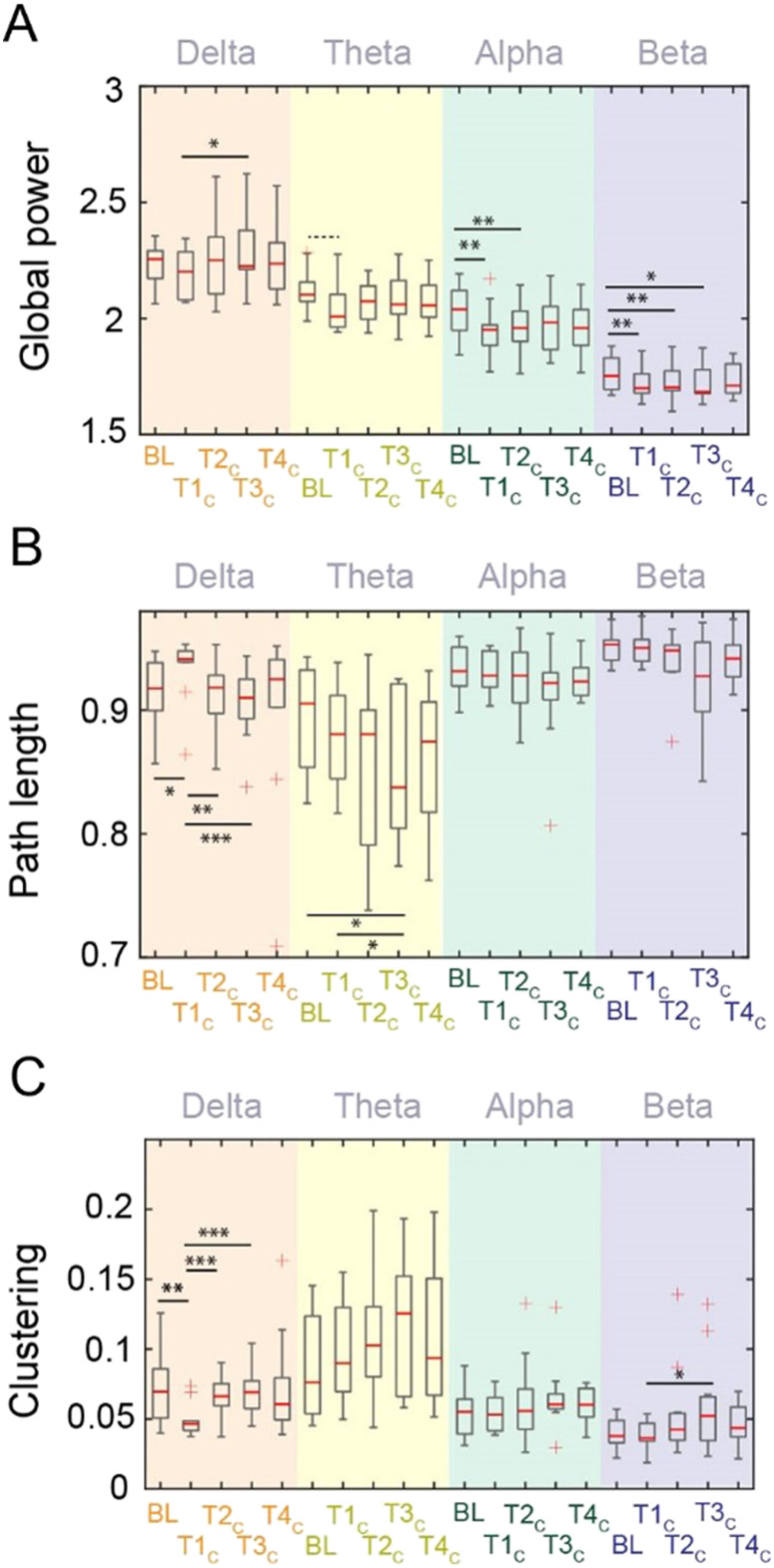
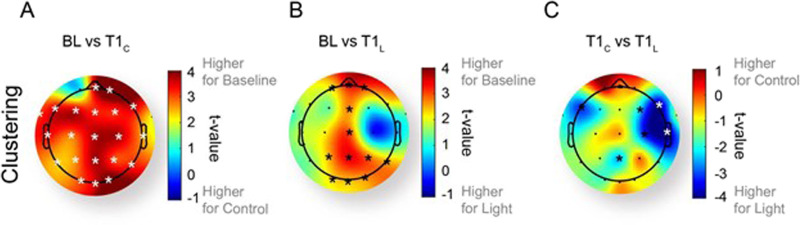
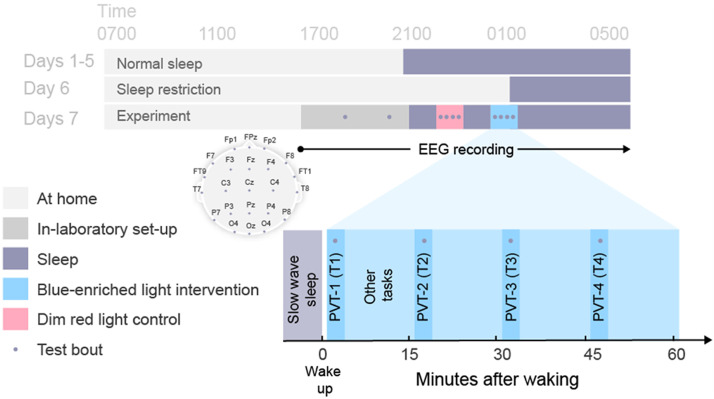
Sleep inertia is the brief period of impaired alertness and performance experienced immediately after waking. Little is known about the neural mechanisms underlying this phenomenon. A better understanding of the neural processes during sleep inertia may offer insight into the awakening process. We observed brain activity every 15 min for 1 hr following abrupt awakening from slow wave sleep during the biological night. Using 32-channel electroencephalography, a network science approach, and a within-subject design, we evaluated power, clustering coefficient, and path length across frequency bands under both a control and a polychromatic short-wavelength-enriched light intervention condition. We found that under control conditions, the awakening brain is typified by an immediate reduction in global theta, alpha, and beta power. Simultaneously, we observed a decrease in the clustering coefficient and an increase in path length within the delta band. Exposure to light immediately after awakening ameliorated changes in clustering. Our results suggest that long-range network communication within the brain is crucial to the awakening process and that the brain may prioritize these long-range connections during this transitional state. Our study highlights a novel neurophysiological signature of the awakening brain and provides a potential mechanism by which light improves performance after waking.
Keywords: Graph theoretical framework; Network communication; Short-wavelength-enriched light; Sleep inertia.
© 2022 Massachusetts Institute of Technology.
Figures

References
LinkOut - more resources
Full Text Sources