


Amelioration of CCl4-induced oxidative stress and hepatotoxicity by Ganoderma lucidum in long evans rats
- PMID: 37336915
- PMCID: PMC10279652
- DOI: 10.1038/s41598-023-35228-y
Amelioration of CCl4-induced oxidative stress and hepatotoxicity by Ganoderma lucidum in long evans rats
Abstract
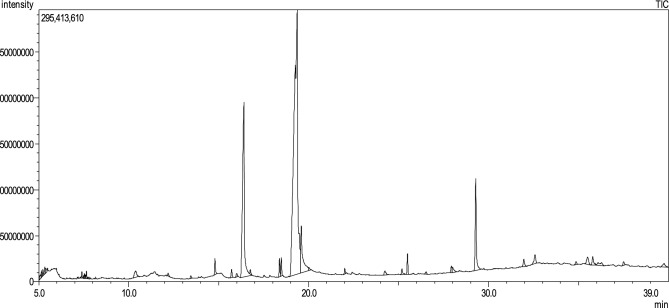
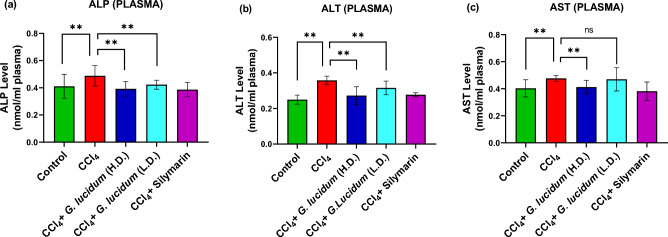
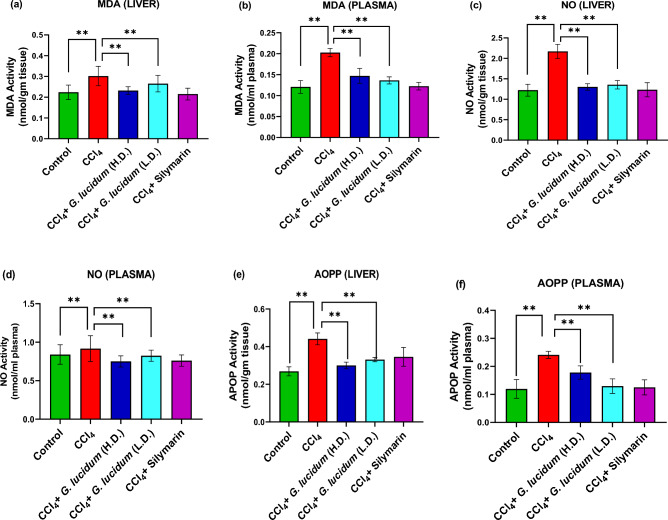
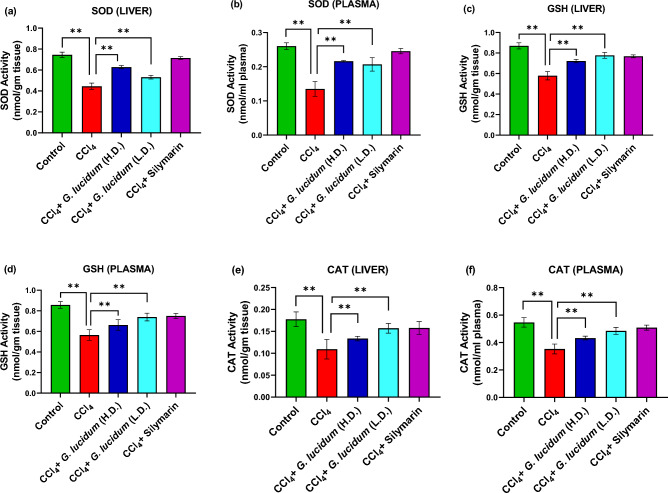
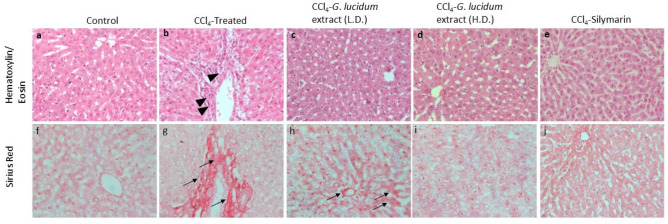
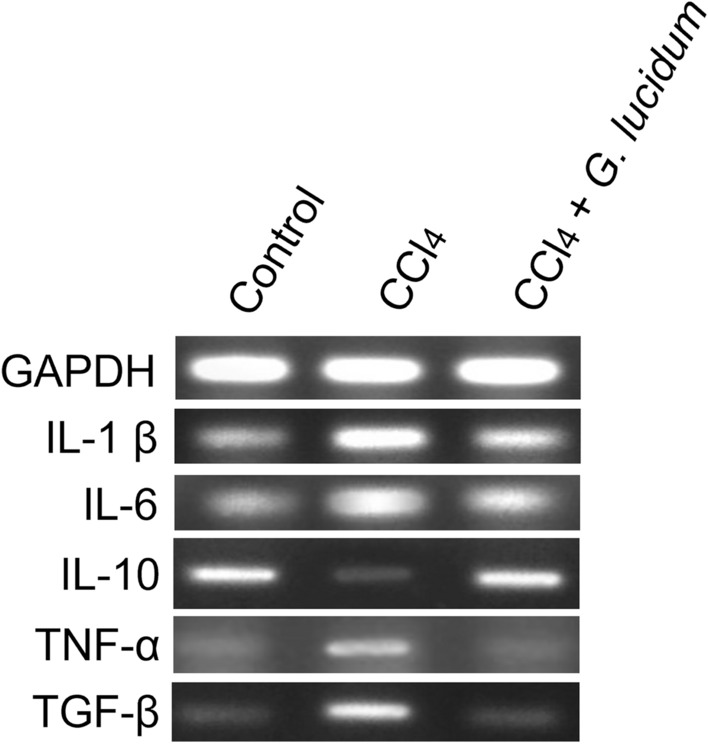
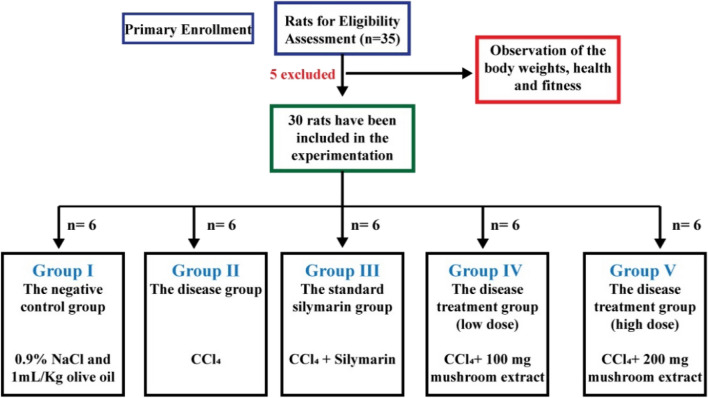
Liver disease is a serious health problem affecting people worldwide at an alarming rate. The present study aimed to investigate the protective effects of Ganoderma lucidum against CCl4-induced liver toxicity in rats. The experimental Long Evans rats were divided into five groups, of which four groups were treated with carbon tetrachloride (CCl4). Among the CCl4 treated groups, one of the groups was treated with silymarin and two of them with ethanolic extract of G. lucidum at 100 and 200 mg/Kg body weight. The oxidative stress parameters and endogenous antioxidant enzyme concentrations were assessed by biochemical tests. Liver enzymes ALT, AST, and ALP were determined spectrophotometrically. Histopathological examinations were carried out to assess hepatic tissue damage and fibrosis. Reverse transcription PCR (RT-PCR) was performed to determine the expression of IL-1β, IL-6, IL-10, TNF-α, and TGF-β genes. Gas Chromatography-Mass Spectroscopy (GC-MS) analysis revealed that G. lucidum is rich in several phytochemicals including 6-Octadecanoic acid (55.81%), l-( +)-Ascorbic acid 2,6-dihexadecanoate (18.72%), Cis-11-Eicosenamide (5.76%), and Octadecanoic acid (5.26%). Treatment with the G. lucidum extract reduced the elevated ALT, AST, ALP levels, and cellular oxidative stress markers and increased the endogenous antioxidant levels. Histopathology observations revealed that the inflammation, infiltration of immune cells, and aberration of collagen fibers in the hepatocytes were altered by the G. lucidum treatment. The increased expression of inflammatory cytokines TNF-α, TGF-β, IL-1 β, and IL-6 were markedly suppressed by G. lucidum extract treatment. G. lucidum also prevented the suppression of protective IL-10 expression by CCl4. This study strongly suggests that G. lucidum extract possesses significant hepatoprotective activity as evidenced by reduced oxidative stress and inflammation mediated by suppression in inflammatory cytokine expression and increased protective IL-10 cytokine expression.
© 2023. The Author(s).
Conflict of interest statement
The authors declare no competing interests.
Figures
References
-
- Halliwell B, Gutteridge JM. Free Radicals in Biology and Medicine. Oxford University Press; 2015.
-
- Zulaikhah S. The role of antioxidant to prevent free radicals in the body. Sains Med. 2017;8:39.
-
- Kebede M, Emire S. Application of antioxidants in food processing industry: options to improve the extraction yields and market value of natural products. Adv. Food Technol. Nutr. 2019;5:38–49. doi: 10.17140/AFTNSOJ-5-155. - DOI
-
- Ruskovska T, Maksimova V, Milenkovic D. Polyphenols in human nutrition: from the in vitro antioxidant capacity to the beneficial effects on cardiometabolic health and related inter-individual variability—An overview and perspective. Br. J. Nutr. 2020;123:241–254. doi: 10.1017/S0007114519002733. - DOI - PubMed
Publication types
MeSH terms
Substances
LinkOut - more resources
Full Text Sources
Medical
Miscellaneous
