


Unravelling patient pathways in the context of antibacterial resistance in East Africa
- PMID: 37337134
- PMCID: PMC10278291
- DOI: 10.1186/s12879-023-08392-9
Unravelling patient pathways in the context of antibacterial resistance in East Africa
Abstract
Background: A key factor driving the development and maintenance of antibacterial resistance (ABR) is individuals' use of antibiotics (ABs) to treat illness. To better understand motivations and context for antibiotic use we use the concept of a patient treatment-seeking pathway: a treatment journey encompassing where patients go when they are unwell, what motivates their choices, and how they obtain antibiotics. This paper investigates patterns and determinants of patient treatment-seeking pathways, and how they intersect with AB use in East Africa, a region where ABR-attributable deaths are exceptionally high.
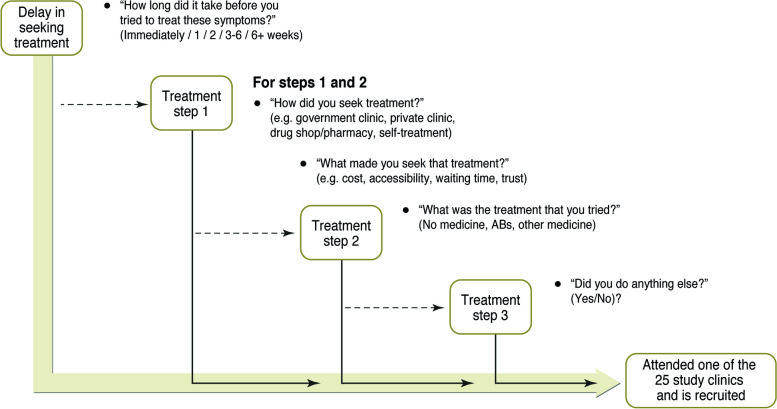
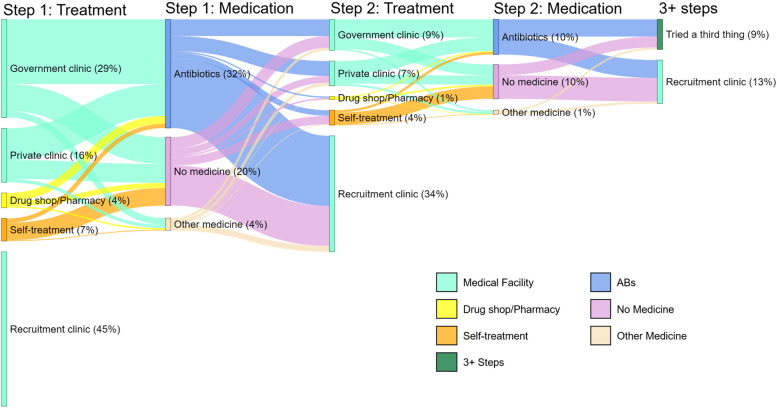
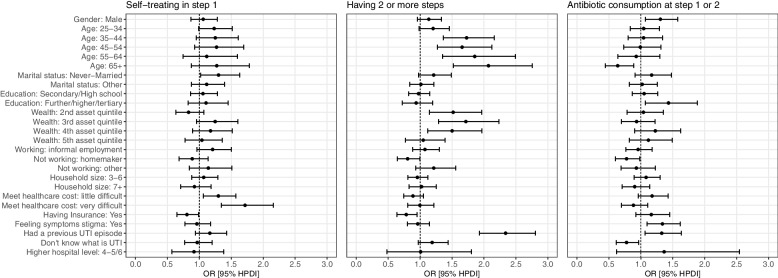
Methods: The Holistic Approach to Unravelling Antibacterial Resistance (HATUA) Consortium collected quantitative data from 6,827 adult outpatients presenting with urinary tract infection (UTI) symptoms in Kenya, Tanzania, and Uganda between February 2019- September 2020, and conducted qualitative in-depth patient interviews with a subset (n = 116). We described patterns of treatment-seeking visually using Sankey plots and explored explanations and motivations using mixed-methods. Using Bayesian hierarchical regression modelling, we investigated the associations between socio-demographic, economic, healthcare, and attitudinal factors and three factors related to ABR: self-treatment as a first step, having a multi-step treatment pathway, and consuming ABs.
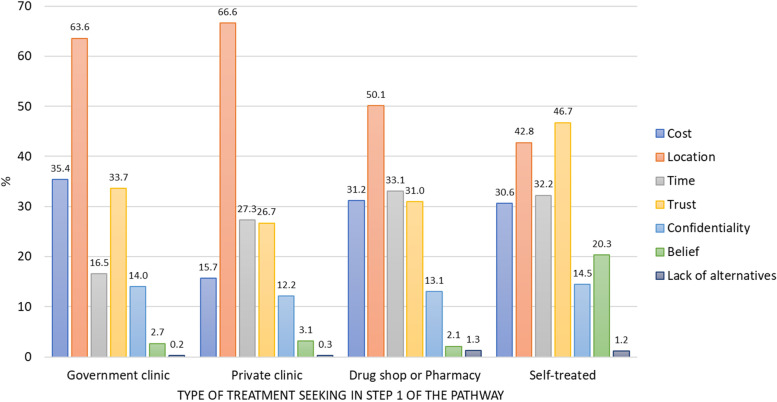
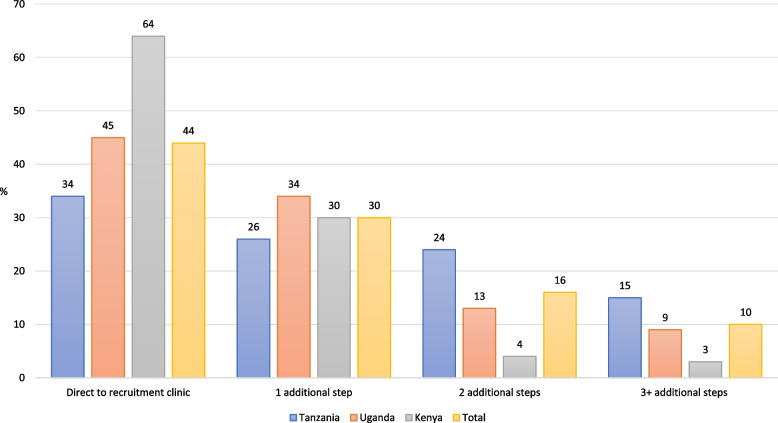
Results: Although most patients (86%) sought help from medical facilities in the first instance, many (56%) described multi-step, repetitive treatment-seeking pathways, which further increased the likelihood of consuming ABs. Higher socio-economic status patients were more likely to consume ABs and have multi-step pathways. Reasons for choosing providers (e.g., cost, location, time) were conditioned by wider structural factors such as hybrid healthcare systems and AB availability.
Conclusion: There is likely to be a reinforcing cycle between complex, repetitive treatment pathways, AB consumption and ABR. A focus on individual antibiotic use as the key intervention point in this cycle ignores the contextual challenges patients face when treatment seeking, which include inadequate access to diagnostics, perceived inefficient public healthcare and ease of purchasing antibiotics without prescription. Pluralistic healthcare landscapes may promote more complex treatment seeking and therefore inappropriate AB use. We recommend further attention to healthcare system factors, focussing on medical facilities (e.g., accessible diagnostics, patient-doctor interactions, information flows), and community AB access points (e.g., drug sellers).
Keywords: Africa; Antibacterial Resistance; Antibiotics; Healthcare system; Mixed methods; Patient pathways; Treatment seeking; Urinary tract Infection.
© 2023. The Author(s).
Conflict of interest statement
The authors declare no competing interests.
Figures
References
MeSH terms
Substances
Grants and funding
LinkOut - more resources
Full Text Sources
Medical
