


Public health impact of the spread of Anopheles stephensi in the WHO Eastern Mediterranean Region countries in Horn of Africa and Yemen: need for integrated vector surveillance and control
- PMID: 37337209
- PMCID: PMC10278259
- DOI: 10.1186/s12936-023-04545-y
Public health impact of the spread of Anopheles stephensi in the WHO Eastern Mediterranean Region countries in Horn of Africa and Yemen: need for integrated vector surveillance and control
Abstract
Background: Anopheles stephensi is an efficient vector of both Plasmodium falciparum and Plasmodium vivax in South Asia and the Middle East. The spread of An. stephensi to countries within the Horn of Africa threatens progress in malaria control in this region as well as the rest of sub-Saharan Africa.
Methods: The available malaria data and the timeline for the detection of An. stephensi was reviewed to analyse the role of An. stephensi in malaria transmission in Horn of Africa of the Eastern Mediterranean Region (EMR) in Djibouti, Somalia, Sudan and Yemen.
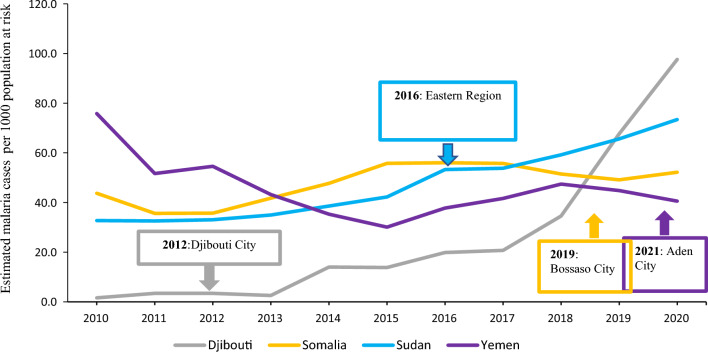
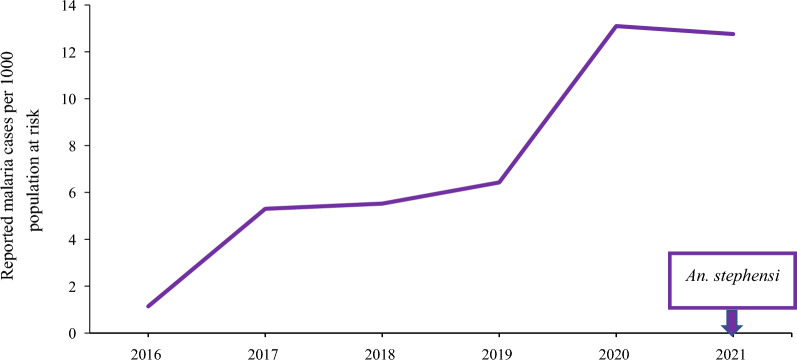
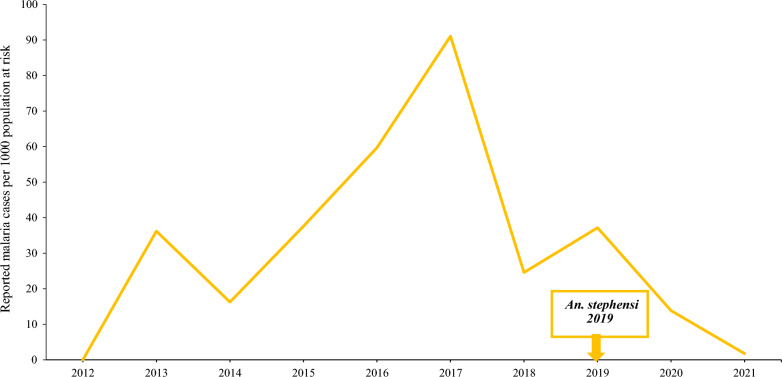
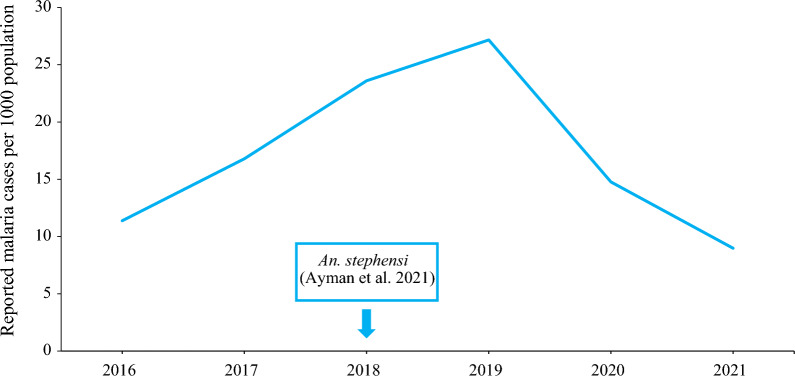
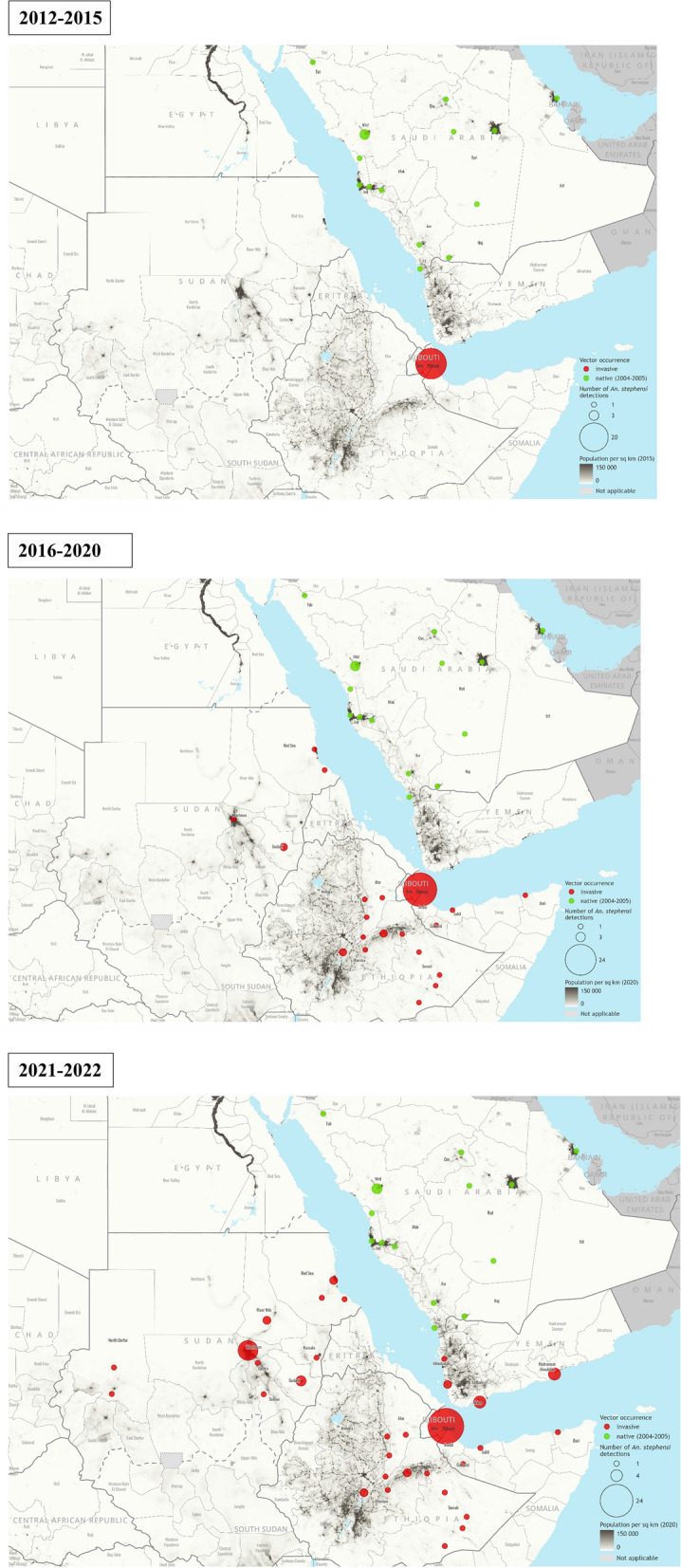
Results: Malaria incidence in Horn of Africa of EMR and Yemen, increased from 41.6 in 2015 to 61.5 cases per 1000 in 2020. The four countries from this region, Djibouti, Somalia, Sudan and Yemen had reported the detection of An. stephensi as of 2021. In Djibouti City, following its detection in 2012, the estimated incidence increased from 2.5 cases per 1000 in 2013 to 97.6 cases per 1000 in 2020. However, its contribution to malaria transmission in other major cities and in other countries, is unclear because of other factors, quality of the urban malaria data, human mobility, uncertainty about the actual arrival time of An. stephensi and poor entomological surveillance.
Conclusions: While An. stephensi may explain a resurgence of malaria in Djibouti, further investigations are needed to understand its interpretation trends in urban malaria across the greater region. More investment for multisectoral approach and integrated surveillance and control should target all vectors particularly malaria and dengue vectors to guide interventions in urban areas.
Keywords: Anopheles stephensi; Breeding sites; Eastern Mediterranean Region; Invasive vector; Malaria; Vector surveillance.
© 2023. World Health Organization.
Conflict of interest statement
None declare.
Figures
References
-
- WHO. World malaria report 2022. Geneva, World Health Organization, 2022. https://apps.who.int/iris/handle/10665/365169
-
- WHO. Global Malaria Programme. Global technical strategy for malaria, 2016–2030. Geneva, World Health Organization, 2015. https://www.who.int/publications/i/item/9789240031357
-
- Himeidan YE, Rayah EE. Role of some environmental factors on the breeding activity of Anopheles arabiensis in New Halfa town, eastern Sudan. East Mediterr Health J. 2008;14:252–259. - PubMed
Publication types
MeSH terms
Grants and funding
LinkOut - more resources
Full Text Sources
Medical
