


Sex, sepsis and the brain: defining the role of sexual dimorphism on neurocognitive outcomes after infection
- PMID: 37337946
- PMCID: PMC10285043
- DOI: 10.1042/CS20220555
Sex, sepsis and the brain: defining the role of sexual dimorphism on neurocognitive outcomes after infection
Abstract
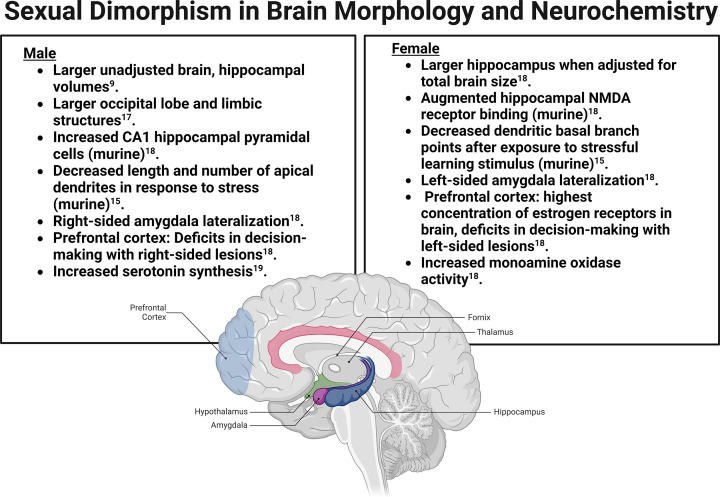
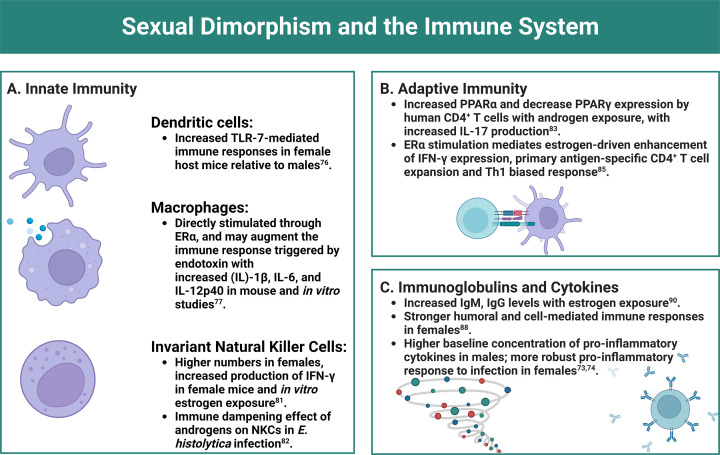
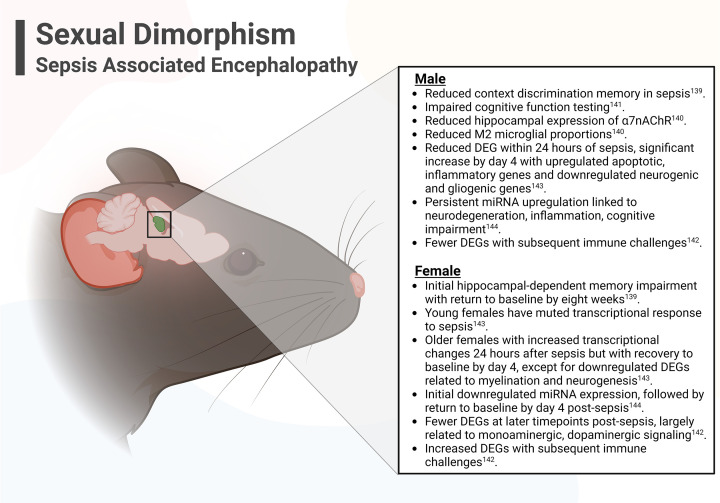
Sexual dimorphisms exist in multiple domains, from learning and memory to neurocognitive disease, and even in the immune system. Male sex has been associated with increased susceptibility to infection, as well as increased risk of adverse outcomes. Sepsis remains a major source of morbidity and mortality globally, and over half of septic patients admitted to intensive care are believed to suffer some degree of sepsis-associated encephalopathy (SAE). In the short term, SAE is associated with an increased risk of in-hospital mortality, and in the long term, has the potential for significant impairment of cognition, memory, and acceleration of neurocognitive disease. Despite increasing information regarding sexual dimorphism in neurologic and immunologic systems, research into these dimorphisms in sepsis-associated encephalopathy remains critically understudied. In this narrative review, we discuss how sex has been associated with brain morphology, chemistry, and disease, sexual dimorphism in immunity, and existing research into the effects of sex on SAE.
Keywords: dementia; neurocognition; neurocognitive disease; sepsis; sepsis-associated encephalopathy; sexual dimorphism.
© 2023 The Author(s).
Conflict of interest statement
The authors declare that there are no competing interests associated with the manuscript.
Figures
References
Publication types
MeSH terms
Grants and funding
LinkOut - more resources
Full Text Sources
Medical
