


Pentoxifylline for treatment of sepsis and necrotising enterocolitis in neonates
- PMID: 37338074
- PMCID: PMC10282162
- DOI: 10.1002/14651858.CD004205.pub4
Pentoxifylline for treatment of sepsis and necrotising enterocolitis in neonates
Abstract
Background: Mortality and morbidity due to neonatal sepsis and necrotising enterocolitis (NEC) remain high despite the use of potent antimicrobial agents. Agents that modulate inflammation may improve outcomes. Pentoxifylline (PTX), a phosphodiesterase inhibitor, is one such agent. This is an update of a review first published in 2003 and updated in 2011 and 2015.
Objectives: To assess the effectiveness and safety of intravenous PTX as an adjunct to antibiotic therapy on mortality and morbidity in neonates with suspected or confirmed sepsis and neonates with NEC.
Search methods: We searched CENTRAL, MEDLINE, Embase, CINAHL, and trial registries in July 2022. We also searched the reference lists of identified clinical trials and handsearched conference abstracts. SELECTION CRITERIA: We included randomised controlled trials (RCTs) or quasi-RCTs assessing the efficacy of PTX with antibiotics (any dose or duration) for treatment of suspected or confirmed sepsis or NEC in neonates. We included three comparisons: (1) PTX with antibiotics compared to placebo or no intervention with antibiotics; (2) PTX with antibiotics compared to PTX with antibiotics and adjunct treatments such as immunoglobulin M-enriched intravenous immunoglobulin (IgM-enriched IVIG); (3) PTX with antibiotics compared to adjunct treatments such as IgM-enriched IVIG with antibiotics.
Data collection and analysis: We reported typical risk ratio (RR) and risk difference (RD) with 95% confidence intervals (CI) for dichotomous outcomes, and mean difference (MD) for continuous outcomes derived from a fixed-effect model of meta-analysis. We calculated the number needed to treat for an additional beneficial outcome (NNTB) if there was a statistically significant reduction in RD.
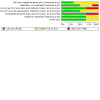
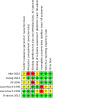
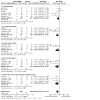
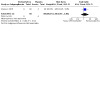
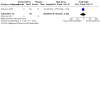
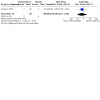
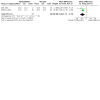
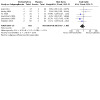
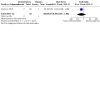
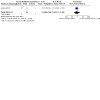
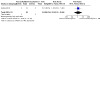
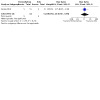
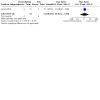
Main results: We identified no new studies for this update. We included six RCTs (416 neonates). All of the included studies examined neonates with sepsis; we identified no studies on neonates with NEC. Four of the six trials had high risk of bias for at least one risk of bias domain. Comparison 1: PTX with antibiotics compared to placebo with antibiotics, or antibiotics alone, in neonates with sepsis may reduce all-cause mortality during hospital stay (typical RR 0.57, 95% CI 0.35 to 0.93; typical RD -0.08, 95% CI -0.14 to -0.01; NNTB 13, 95% CI 7 to 100; 6 studies, 416 participants, low-certainty evidence) and may decrease length of hospital stay (LOS) (MD -7.74, 95% CI -11.72 to -3.76; 2 studies, 157 participants, low-certainty evidence). The evidence is very uncertain that PTX with antibiotics compared to placebo or no intervention results in any change in chronic lung disease (CLD) (RR 1.50, 95% CI 0.45 to 5.05; 1 study, 120 participants, very low-certainty evidence), severe intraventricular haemorrhage (sIVH) (RR 0.75, 95% CI 0.28 to 2.03; 1 study, 120 participants, very low-certainty evidence), periventricular leukomalacia (PVL) (RR 0.50, 95% CI 0.10 to 2.63; 1 study, 120 participants, very low-certainty evidence), NEC (RR 0.56, 95% CI 0.29 to 1.06; 6 studies, 405 participants, very low-certainty evidence), or retinopathy of prematurity (ROP) (RR 0.40, 95% CI 0.08 to 1.98; 1 study, 120 participants, very low-certainty evidence) in neonates with sepsis. Comparison 2: the evidence is very uncertain that PTX with antibiotics compared to PTX with antibiotics and IgM-enriched IVIG has any effect on mortality (RR 0.71, 95% CI 0.24 to 2.10; 102 participants, 1 study, very low-certainty evidence) or development of NEC in neonates with sepsis (RR 1.33, 95% CI 0.31 to 5.66; 1 study, 102 participants, very low-certainty evidence). The outcomes of CLD, sIVH, PVL, LOS, and ROP were not reported. Comparison 3: the evidence is very uncertain that PTX with antibiotics compared to IgM-enriched IVIG with antibiotics has any effect on mortality (RR 1.25, 95% CI 0.36 to 4.39; 102 participants, 1 study, very low-certainty evidence) or development of NEC (RR 1.33, 95% CI 0.31 to 5.66; 102 participants, 1 study, very low-certainty evidence) in neonates with sepsis. The outcomes of CLD, sIVH, PVL, LOS, and ROP were not reported. All of the included studies evaluated adverse effects due to PTX, but none were reported in the intervention group in any of the comparisons.
Authors' conclusions: Low-certainty evidence suggests that adjunct PTX therapy in neonatal sepsis may decrease mortality and length of hospital stay without any adverse effects. The evidence is very uncertain if PTX with antibiotics compared to PTX with antibiotics and IgM-enriched IVIG, or PTX with antibiotics compared to IgM-enriched IVIG with antibiotics, has any effect on mortality or development of NEC. We encourage researchers to undertake well-designed multicentre trials to confirm or refute the effectiveness and safety of pentoxifylline in reducing mortality and morbidity in neonates with sepsis or NEC.
Copyright © 2023 The Cochrane Collaboration. Published by John Wiley & Sons, Ltd.
Conflict of interest statement
Mohan Pammi is an Associate Editor with the Cochrane Neonatal Group, but has taken no part in the editorial processes for this review, and otherwise declares no conflict of interest.
Khalid Haque declares that he has no conflict of interest.
Figures
Update of
-
Pentoxifylline for treatment of sepsis and necrotizing enterocolitis in neonates.Cochrane Database Syst Rev. 2015 Mar 9;(3):CD004205. doi: 10.1002/14651858.CD004205.pub3. Cochrane Database Syst Rev. 2015. Update in: Cochrane Database Syst Rev. 2023 Jun 20;6:CD004205. doi: 10.1002/14651858.CD004205.pub4. PMID: 25751631 Updated.
References
References to studies included in this review
Adel 2010 {published data only}
-
- Adel M, Awad HA, Abdel-Naim AB, Al-Aziz MM. Effects of pentoxifylline on coagulation profile and disseminated intravascular coagulation incidence in Egyptian septic neonates. Journal of Clinical Pharmacy and Therapeutics 2010;35(3):257-65. [PMID: ] - PubMed
Akdag 2014 {published data only}
-
- Akdag A, Dilmen U, Haque K, Dilli D, Erdeve O, Goekmen T. Role of pentoxifylline and/or IgM-enriched intravenous immunoglobulin in the management of neonatal sepsis. American Journal of Perinatology 2014;31(10):905-12. [PMID: ] - PubMed
Ali 2006 {published data only}
-
- Ali W, Ahmed P, Bhat MA, Mushtaq AB, Mushtaq S. Pentoxifylline in treatment of sepsis of premature infants. JK Practitioner. A Journal of Current Clinical Medicine Surgery 2006;13(4):204-7.
Lauterbach 1996 {published data only}
Lauterbach 1999 {published data only}
-
- Lauterbach R, Pawlik D, Danuta K, Wieslaw K, Ewah K, Marek Z. Effect of immunomodulating agent, pentoxifylline, in the treatment of sepsis in prematurely delivered infants: a placebo controlled, double-blind trial. Critical Care Medicine 1999;27(4):807-14. [DOI: 10.1097/00003246-199904000-00042] [PMID: ] - DOI - PubMed
Shabaan 2015 {published and unpublished data}
References to studies excluded from this review
Hamilcikan 2017a {published data only (unpublished sought but not used)}
Hamilcikan 2017b {published data only (unpublished sought but not used)}
-
- Hamilcikan S, Can E, Buke O, Polat C, Ozcan E. Pentoxifylline and pentaglobin adjuvant therapies for neonatal nosocomial sepsis in neonates less than 1500g weight. Journal of the Pakistan Medical Association 2017;67(10):1482-6. [PMID: ] - PubMed
Lauterbach 1994 {published data only}
-
- Lauterbach R, Pawlik D, Tomaszcyk B, Cholewa B. Pentoxifylline treatment of sepsis of premature infants: preliminary clinical observations. European Journal of Pediatrics 1994;153(9):672-4. [PMID: ] - PubMed
Selim 2004 {published data only}
-
- Selim K, Hüseyin C, Ibrahim KH, Hasan BU, Kazim U, Hüseyin K. Effect of pentoxifylline on tumor necrosis factor-alpha and interleukin-6 levels in neonatal sepsis. Medical Journal of Malaysia 2004;59(3):391-4. [PMID: ] - PubMed
References to studies awaiting assessment
Sareno 2013 {published data only (unpublished sought but not used)}
-
- Sareno JC, Mantaring JB. Pentoxifylline therapy among preterm neonates < 1,500 g in reducing mortality from neonatal sepsis: a double-blind, randomized placebo-controlled trial. Critical Care 2013;17(Suppl 4):P14. [DOI: 10.1186/cc12914] - DOI
References to ongoing studies
ACTRN12606000257561 {published data only}
-
- ACTRN12606000257561. Safety and efficacy of pentoxifylline as a treatment for preventing the progression of necrotising enterocolitis in preterm neonates – a randomised, placebo controlled pilot trial. anzctr.org.au/Trial/Registration/TrialReview.aspx?id=1403&isReview=true (first received 27 June 2006).
ACTRN12616000405415 {published data only}
-
- ACTRN12616000405415. Intravenous pentoxifylline as adjunct therapy to improve long-term disability in preterm infants [Can Pentoxifylline improve long-term outcomes in preterm infants with late-onset sepsis or necrotising enterocolitis? A pragmatic, randomised, placebo-controlled trial]. anzctr.org.au/Trial/Registration/TrialReview.aspx?ACTRN=12616000405415 (first received 30 March 2022).
Additional references
Adams‐Chapman 2006
-
- Adams-Chapman I, Stoll BJ. Neonatal infection and long-term neurodevelopmental outcome in the preterm infant. Current Opinion in Infectious Diseases 2006;19(3):290-7. [PMID: ] - PubMed
Bacher 1997
-
- Bacher A, Mayer N, Klimscha W, Oismüller C, Steltzer H, Hammerle A. Effects of pentoxifylline on haemodynamics and oxygenation in septic and non-septic patients. Critical Care Medicine 1997;25(5):795-800. [PMID: ] - PubMed
Bayley 2005
-
- Bayley N. Bayley Scales of Infant and Toddler Development. 3rd edition. San Antonio, TX: Harcourt Assessment, 2005.
Bell 1978
Bienvenu 1995
-
- Bienvenu J, Doche C, Gutowski MC, Lenoble M, Lepape A, Perdrix JP. Production of pro-inflammatory cytokines and cytokines involved in the TH1/TH2 balance is modulated by pentoxifylline. Journal of Cardiovascular Pharmacology 1995;25 Suppl 2:S80-4. [PMID: ] - PubMed
Boldt 1996
-
- Boldt J, Müller M, Heyn S, Welters I, Hempelmann G. Influence of long term continuous intravenous administration of pentoxifylline on endothelial related coagulation in critically ill patients. Critical Care Medicine 1996;24(6):940-6. [PMID: ] - PubMed
Caplan 1990a
-
- Caplan MS, Hsueh W. Necrotizing enterocolitis: role of platelet activating factor, endotoxin, and tumor necrosis factor. Journal of Pediatrics 1990;117(1 Pt 2):S47-51. [PMID: ] - PubMed
Caplan 1990b
-
- Caplan MS, Sun XM, Hseuh W, Hageman JR. Role of platelet activating factor and tumor necrosis factor-alpha in neonatal necrotizing enterocolitis. Journal of Pediatrics 1990;116(6):960-4. [PMID: ] - PubMed
Covidence [Computer program]
-
- Covidence. Version accessed before July 2022. Melbourne, Australia: Veritas Health Innovation. Available at covidence.org.
Edelson 1999
-
- Edelson MB, Bagwell CE, Rozycki HJ. Circulating pro- and counterinflammatory cytokine levels and severity in necrotizing enterocolitis. Pediatrics 1999;103(4 Pt 1):766-71. [PMID: ] - PubMed
EndNote [Computer program]
-
- EndNote. Version EndNote X9. Philadelphia, PA: Clarivate, 2013 (accessed before July 2023).
GRADEpro GDT [Computer program]
-
- GRADEpro GDT. Version accessed 23 December 2022. Hamilton (ON): McMaster University (developed by Evidence Prime). Available at gradepro.org.
Halpern 2006
-
- Halpern MD, Clark JA, Saunders TA, Doelle SM, Hosseini DM, Stagner AM, et al. Reduction of experimental necrotizing enterocolitis with anti-TNF-alpha. American Journal of Physiology. Gastrointestinal and Liver Physiology 2006;290(4):G757-64. [PMID: ] - PubMed
Harris 2005
-
- Harris MC, D'Angio CT, Gallagher PR, Kaufman D, Evans J, Kilpatrick L. Cytokine elaboration in critically ill infants with bacterial sepsis, necrotizing enterocolitis, or sepsis syndrome: correlation with clinical parameters of inflammation and mortality. Journal of Pediatrics 2005;147(4):462-8. [PMID: ] - PubMed
Harris 2010
-
- Harris E, Schulzke SM, Patole SK. Pentoxifylline in preterm neonates. Pediatric Drugs 2010;12(5):301-11. [PMID: ] - PubMed
Higgins 2011
-
- Higgins JP, Altman DG, Sterne JA: on behalf of the Cochrane Statistical Methods Group and the Cochrane Bias Methods Group. Chapter 8: Assessing risk of bias in included studies. In: Higgins JP, Green S, editor(s). Cochrane Handbook for Systematic Reviews of Interventions Version 5.1.0 (updated March 2011). The Cochrane Collaboration, 2011. Available from training.cochrane.org/handbook/archive/v5.1/.
Higgins 2019
-
- Higgins JP, Thomas J, Chandler J, Cumpston M, Li T, Page MJ, et al (editors). Cochrane Handbook for Systematic Reviews of Interventions version 6.0 (updated July 2019). Available from training.cochrane.org/handbook/archive/v6. - PMC - PubMed
ICROP 1984
-
- The Committee for the Classification of Retinopathy of Prematurity. An international classification of retinopathy of prematurity. Archives of Ophthalmology 1984;102(8):1130-4. [PMID: ] - PubMed
Jacobs 2013
Jobe 2001
-
- Jobe AH, Bancalari E. Bronchopulmonary dysplasia. American Journal of Respiratory and Critical Care Medicine 2001;163(7):1723-9. [PMID: ] - PubMed
Kaufman 2004
Krysztopik 1996
-
- Krysztopik RJ, Bentley FR, Spain DA, Wilson MA, Garrison RN. Free radical scavenging by lazaroids improves renal blood flow during sepsis. Surgery 1996;120(4):657-62. [PMID: ] - PubMed
Lawn 2006
-
- Lawn JE, Wilczynska-Ketende K, Cousens SN. Estimating the causes of 4 million neonatal deaths in the year 2000. International Journal of Epidemiology 2006;35(3):706-18. [PMID: ] - PubMed
Levy 1998
Liberati 2009
Lin 2006
-
- Lin PW, Stoll BJ. Necrotizing enterocolitis. Lancet 2006;368(9543):1271-83. [PMID: ] - PubMed
Michetti 2003
-
- Michetti C, Coimbra R, Hoyt DB, Loomis W, Junger W, Wolf P. Pentoxifylline reduces acute lung injury in chronic endotoxemia. Journal of Surgical Research 2003;115(1):92-9. [PMID: ] - PubMed
Ng 2003
NIH 1979
-
- National Institutes of Health Report of Workshop on Bronchopulmonary Dysplasia. Report of Workshop on Bronchopulmonary Dysplasia. In: NIH Publication No. 80-1660. Washington, DC: National Institutes of Health, 1979. NIH, 1979.
Papile 1978
-
- Papile LA, Burstein J, Burstein R, Koffler H. Incidence and evolution of subependymal and intraventricular hemorrhage: a study of infants with birth weights less than 1,500 gm. Journal of Pediatrics 1978;92(4):529-34. [PMID: ] - PubMed
Peng 2022
-
- Peng P, Xia Y. Influency of pentoxifylline treatment for neonatal sepsis: a meta-analysis of randomised controlled trials. Hongkong Journal of Emergency Medicine 2022;29:121-8.
Review Manager 2020 [Computer program]
-
- Review Manager (RevMan). Version 5.4. Copenhagen: The Cochrane Collaboration, 2020.
Schünemann 2013
-
- Schünemann H, Brożek J, Guyatt G, Oxman A, editor(s). Handbook for grading the quality of evidence and the strength of recommendations using the GRADE approach (updated October 2013). GRADE Working Group, 2013. Available from gdt.guidelinedevelopment.org/app/handbook/handbook.html.
Speer 1999
-
- Speer CP. Inflammatory mechanisms in neonatal chronic lung disease. European Journal of Pediatrics 1999;158 Suppl 1:S18-22. [PMID: ] - PubMed
Stoll 2002
-
- Stoll BJ, Hansen N, Fanaroff AA, Wright LL, Carlo WA, Ehrenkranz RA, et al. Late-onset sepsis in very low birth weight neonates: the experience of the NICHD Neonatal Research Network. Pediatrics 2002;110(2 Pt 1):285-91. [PMID: ] - PubMed
Stoll 2004a
-
- Stoll BJ. Infections of the neonatal infant. In: Behrman RE, Kliegman RM, Jenson HB, editors(s). Nelson Textbook of Pediatrics. 17th edition. Philadelphia: Saunders, 2004:623-40.
Stoll 2004b
-
- Stoll BJ, Hansen NI, Adams-Chapman I, Fanaroff AA, Hintz SR, Vohr B, et al. Neurodevelopmental and growth impairment among extremely low-birth-weight infants with neonatal infection. JAMA 2004;292(19):2357-65. [PMID: ] - PubMed
Stoll 2005
-
- Stoll BJ, Hansen NI, Higgins RD, Fanaroff AA, Duara S, Goldberg R, et al. Very low birth weight preterm infants with early onset neonatal sepsis: the predominance of gram-negative infections continues in the National Institute of Child Health and Human Development Neonatal Research Network, 2002-2003. Pediatric Infectious Disease Journal 2005;24(7):635-9. [PMID: ] - PubMed
Travadi 2006
-
- Travadi J, Patole S, Charles A, Dvorak B, Doherty D, Simmer K. Pentoxifylline reduces the incidence and severity of necrotizing enterocolitis in a neonatal rat model. Pediatric Research 2006;60(2):185-9. [PMID: ] - PubMed
Vilcek 1991
-
- Vilcek J, Lee TH. Tumor necrosis factor. New insights into the molecular mechanisms of its multiple actions. Journal of Biological Chemistry 1991;266(12):7313-6. [PMID: ] - PubMed
Volpe 1995
-
- Volpe JJ. Neurology of the Newborn. 3rd edition. Philadelphia, London: WB Saunders, 1995.
Walsh 1986
Wang 1996
-
- Wang P, Wood TJ, Ba ZF, Chaudry IH. Pentoxifylline maintains vascular endothelial cell function during hyperdynamic sepsis. Surgery 1996;120(2):367-73. [PMID: ] - PubMed
Yang 1999
-
- Yang S, Zhou M, Koo DJ, Chaudry IH, Wang P. Pentoxifylline prevents the transition from hyperdynamic to hypodynamic response during sepsis. American Journal of Physiology 1999;277(3 Pt 2):H1036-44. [PMID: ] - PubMed
Zaidi 2005
-
- Zaidi AK, Huskins WC, Thaver D, Bhutta ZA, Abbas Z, Goldman DA. Hospital-acquired neonatal infections in developing countries. Lancet 2005;365(9465):1175-88. [PMID: ] - PubMed
Zeni 1996
-
- Zeni F, Pain P, Vindimian M, Gay JP, Gery P, Bertrand M, et al. Effects of pentoxifylline on circulating cytokine concentrations and haemodynamics in patients with septic shock: results from a double blind, randomized, placebo controlled study. Critical Care Medicine 1996;24(2):207-14. [PMID: ] - PubMed
References to other published versions of this review
Haque 2003
Haque 2011
Publication types
MeSH terms
Substances
LinkOut - more resources
Full Text Sources
Medical
Miscellaneous
