


Trends in the incidence of pulmonary nodules in chest computed tomography: 10-year results from two Dutch hospitals
- PMID: 37338552
- PMCID: PMC10598118
- DOI: 10.1007/s00330-023-09826-3
Trends in the incidence of pulmonary nodules in chest computed tomography: 10-year results from two Dutch hospitals
Abstract
Objective: To study trends in the incidence of reported pulmonary nodules and stage I lung cancer in chest CT.
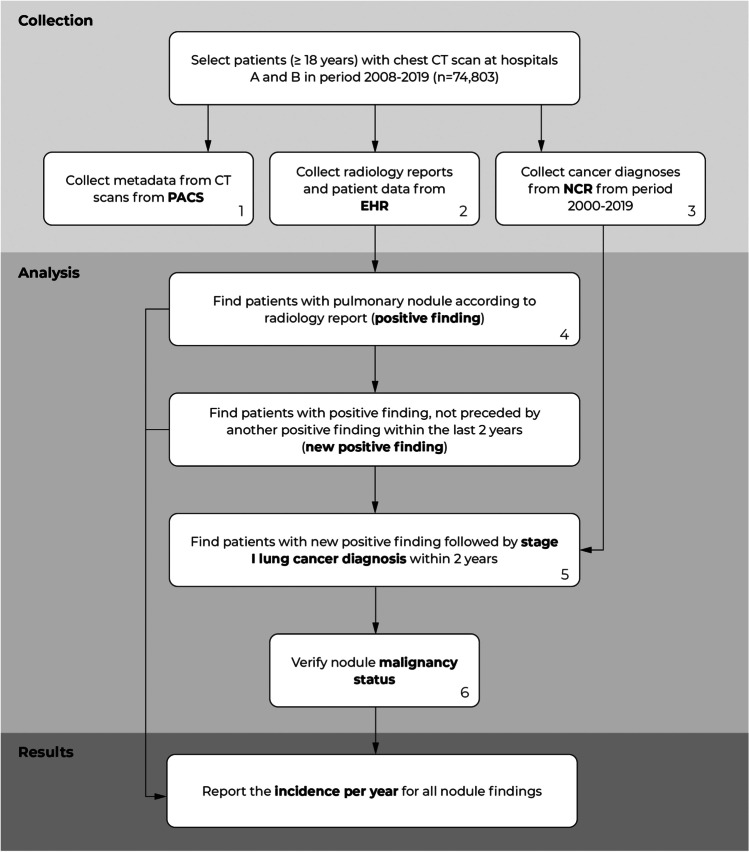
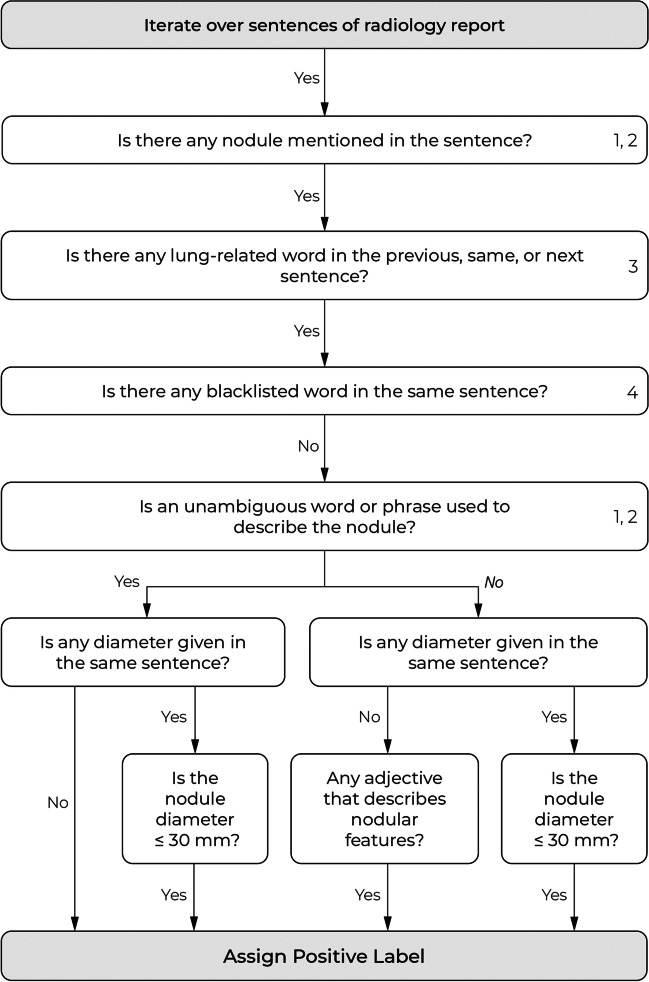
Methods: We analyzed the trends in the incidence of detected pulmonary nodules and stage I lung cancer in chest CT scans in the period between 2008 and 2019. Imaging metadata and radiology reports from all chest CT studies were collected from two large Dutch hospitals. A natural language processing algorithm was developed to identify studies with any reported pulmonary nodule.
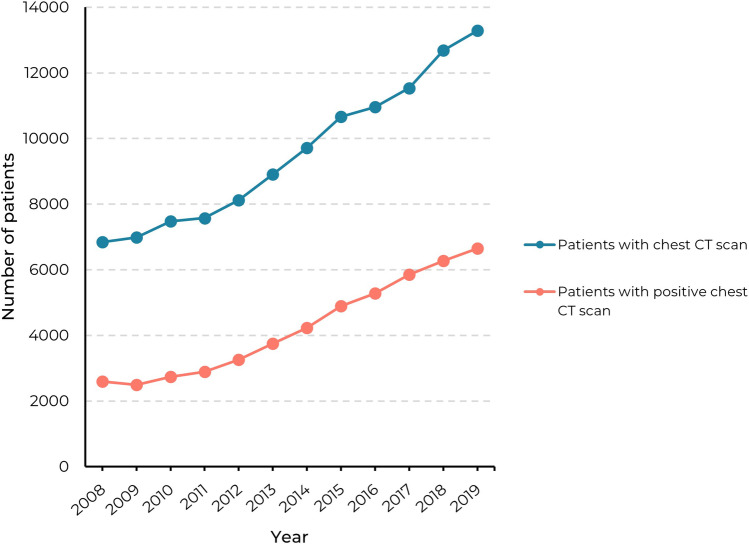
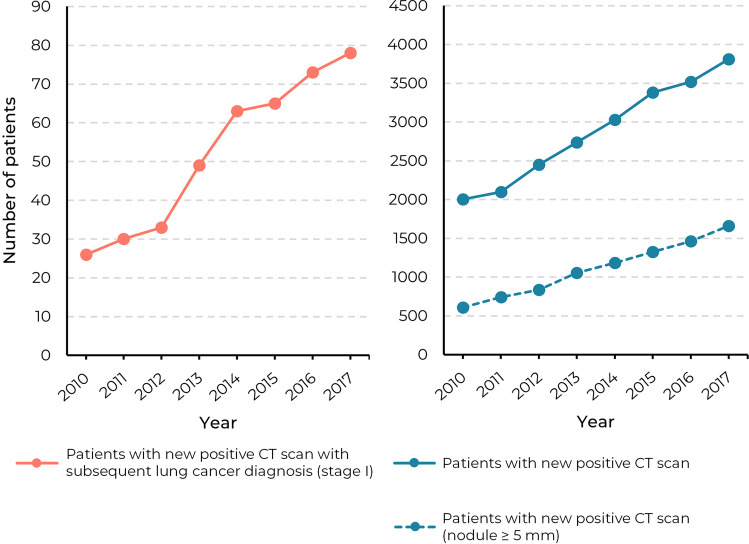
Results: Between 2008 and 2019, a total of 74,803 patients underwent 166,688 chest CT examinations at both hospitals combined. During this period, the annual number of chest CT scans increased from 9955 scans in 6845 patients in 2008 to 20,476 scans in 13,286 patients in 2019. The proportion of patients in whom nodules (old or new) were reported increased from 38% (2595/6845) in 2008 to 50% (6654/13,286) in 2019. The proportion of patients in whom significant new nodules (≥ 5 mm) were reported increased from 9% (608/6954) in 2010 to 17% (1660/9883) in 2017. The number of patients with new nodules and corresponding stage I lung cancer diagnosis tripled and their proportion doubled, from 0.4% (26/6954) in 2010 to 0.8% (78/9883) in 2017.
Conclusion: The identification of incidental pulmonary nodules in chest CT has steadily increased over the past decade and has been accompanied by more stage I lung cancer diagnoses.
Clinical relevance statement: These findings stress the importance of identifying and efficiently managing incidental pulmonary nodules in routine clinical practice.
Key points: • The number of patients who underwent chest CT examinations substantially increased over the past decade, as did the number of patients in whom pulmonary nodules were identified. • The increased use of chest CT and more frequently identified pulmonary nodules were associated with more stage I lung cancer diagnoses.
Keywords: Incidence; Multiple pulmonary nodules; Natural language processing; Tomography, X-ray computed.
© 2023. The Author(s).
Conflict of interest statement
C. Jacobs is a member of the European Radiology Scientific Editorial Board. He has not taken part in the review or selection process of this article.
The authors of this manuscript declare no relationships with any companies whose products or services may be related to the subject matter of the article.
Figures

References
MeSH terms
Grants and funding
LinkOut - more resources
Full Text Sources
Medical
Miscellaneous
