


Xylazine effects on opioid-induced brain hypoxia
- PMID: 37340247
- PMCID: PMC10775769
- DOI: 10.1007/s00213-023-06390-y
Xylazine effects on opioid-induced brain hypoxia
Abstract
Rationale: Xylazine has emerged in recent years as an adulterant in an increasing number of opioid-positive overdose deaths in the United States. Although its exact role in opioid-induced overdose deaths is largely unknown, xylazine is known to depress vital functions and cause hypotension, bradycardia, hypothermia, and respiratory depression.
Objectives: In this study, we examined the brain-specific hypothermic and hypoxic effects of xylazine and its mixtures with fentanyl and heroin in freely moving rats.
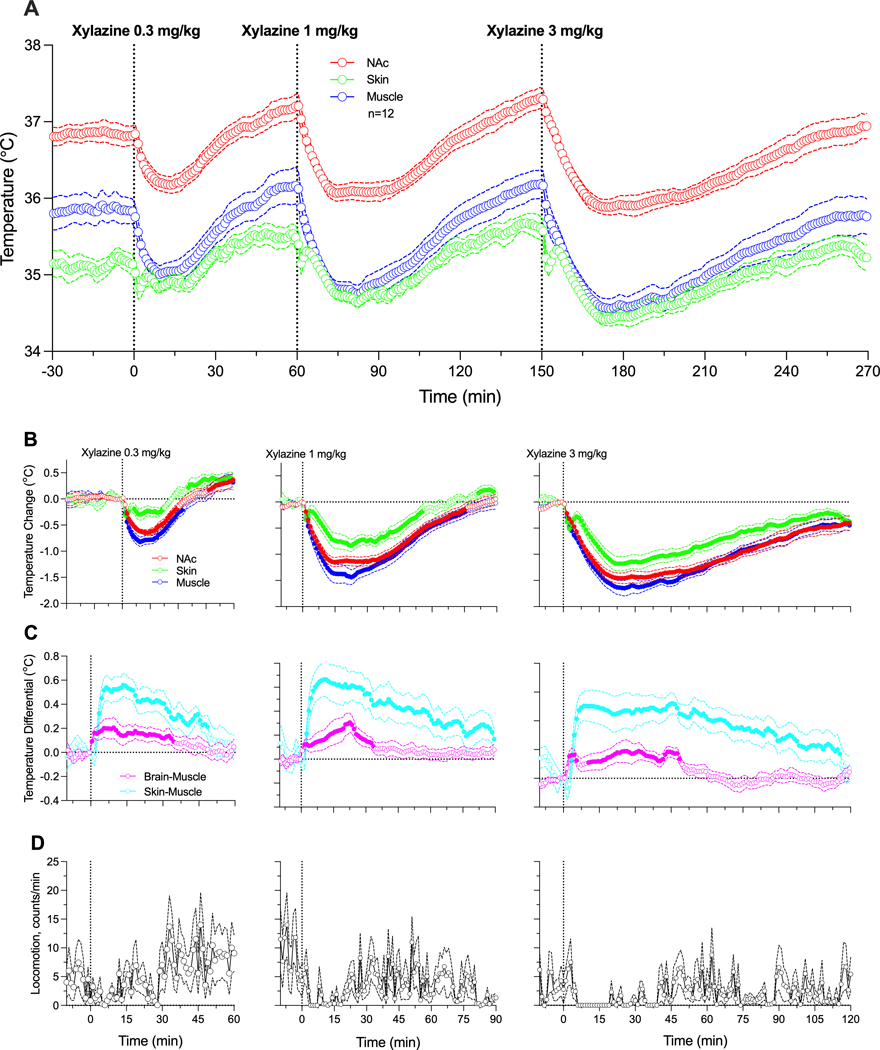
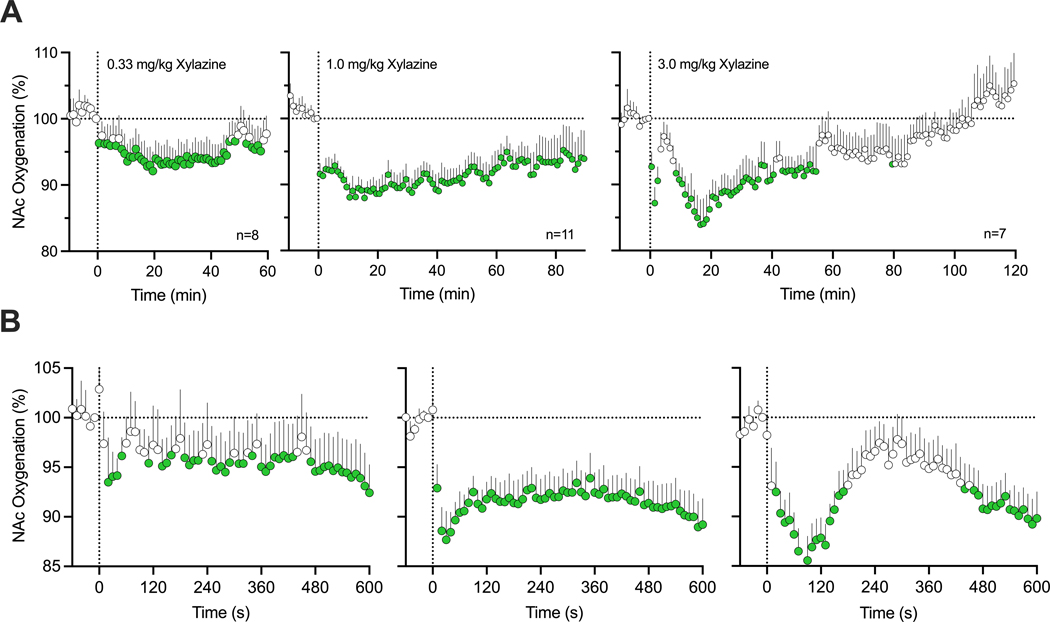
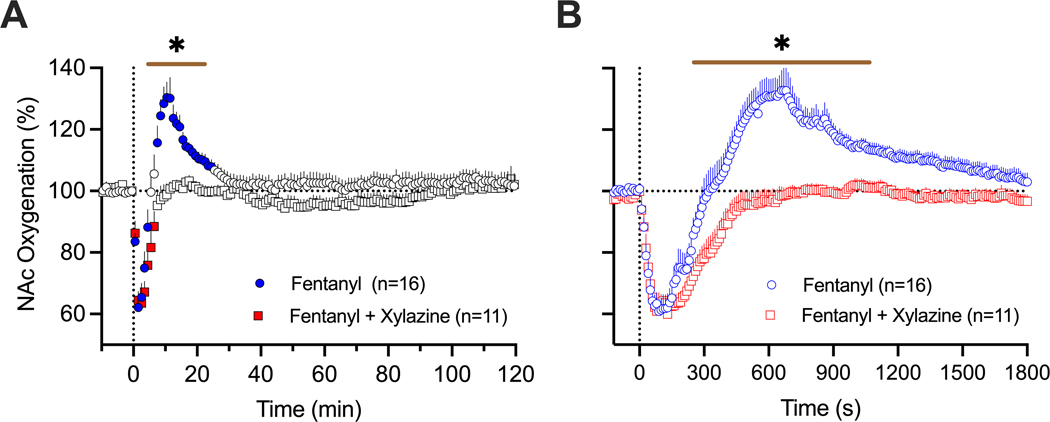
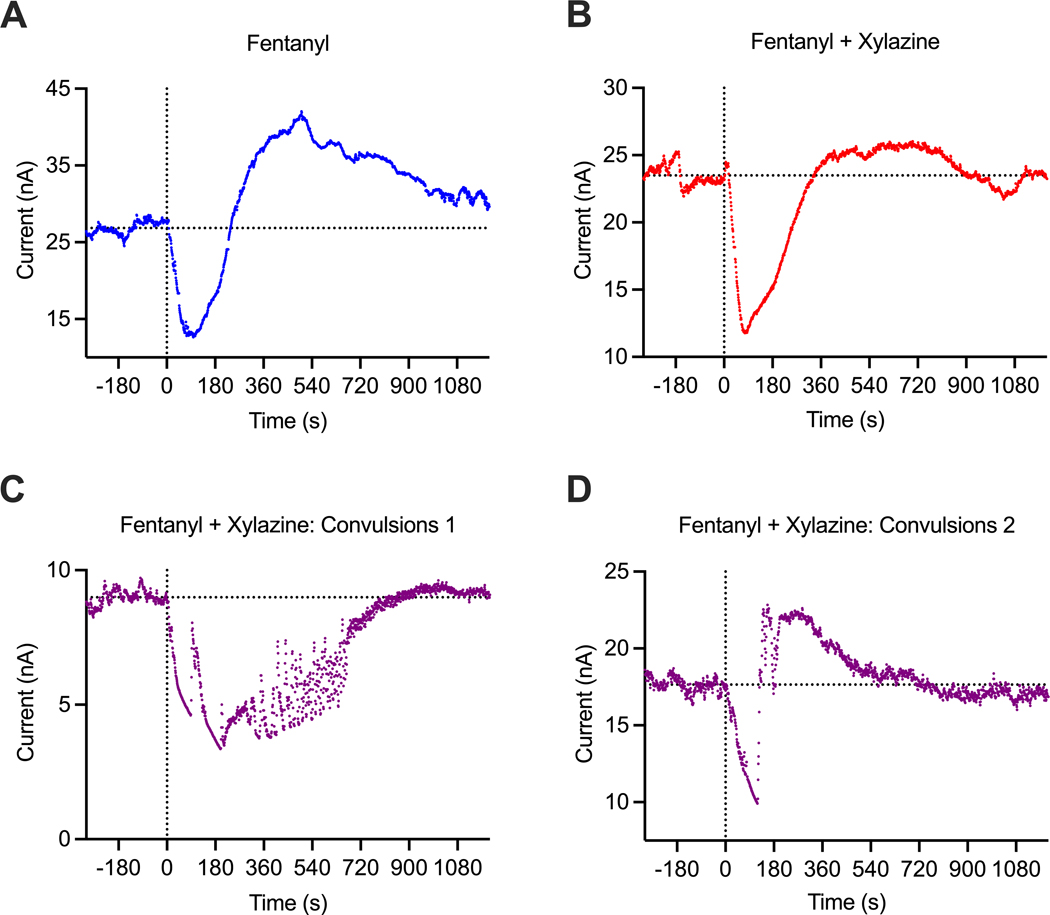
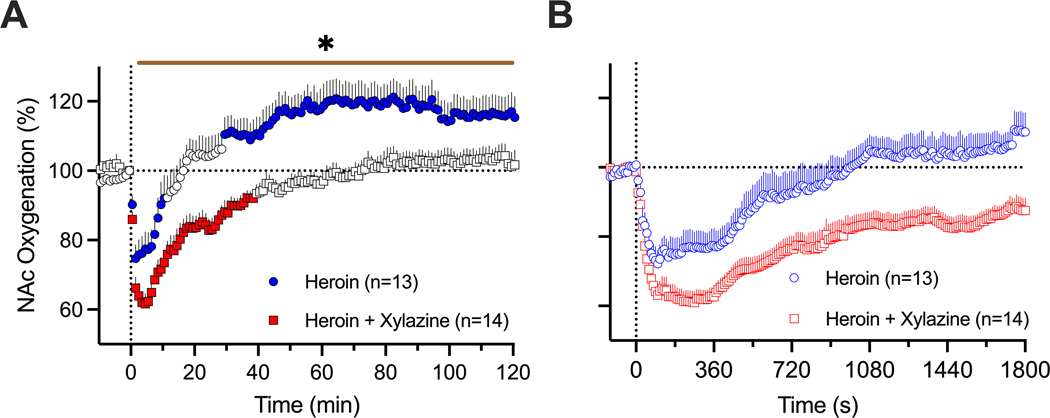
Results: In the temperature experiment, we found that intravenous xylazine at low, human-relevant doses (0.33, 1.0, 3.0 mg/kg) dose-dependently decreases locomotor activity and induces modest but prolonged brain and body hypothermia. In the electrochemical experiment, we found that xylazine at the same doses dose-dependently decreases nucleus accumbens oxygenation. In contrast to relatively weak and prolonged decreases induced by xylazine, intravenous fentanyl (20 μg/kg) and heroin (600 μg/kg) induce stronger biphasic brain oxygen responses, with the initial rapid and strong decrease, resulting from respiratory depression, followed by a slower, more prolonged increase reflecting a post-hypoxic compensatory phase, with fentanyl acting much quicker than heroin. The xylazine-fentanyl mixture eliminated the hyperoxic phase of oxygen response and prolonged brain hypoxia, suggesting xylazine-induced attenuation of the brain's compensatory mechanisms to counteract brain hypoxia. The xylazine-heroin mixture strongly potentiated the initial oxygen decrease, and the pattern lacked the hyperoxic portion of the biphasic oxygen response, suggesting more robust and prolonged brain hypoxia.
Conclusions: These findings suggest that xylazine exacerbates the life-threatening effects of opioids, proposing worsened brain hypoxia as the mechanism contributing to xylazine-positive opioid-overdose deaths.
Keywords: Brain hyperoxia; Brain hypoxia; Cerebral vasoconstriction; Fentanyl; Heroin; Hypothermia; Peripheral vasodilation.
© 2023. This is a U.S. Government work and not under copyright protection in the US; foreign copyright protection may apply.
Conflict of interest statement
Figures
References
-
- Bolger FB, Bennett R, Lowry JP. An in vitro characterization comparing carbon paste and Pt microelectrodes for real-time detection of brain tissue oxygen. Analyst. 2011; 136(19):4028–35. - PubMed
-
- Brown JH, Pleuvry BJ. Antagonism of the respiratory effects of alfentanil and fentanyl by naloxone in the conscious rabbit. Br J Anaesth. 1981; 53(10):1033–7. - PubMed
MeSH terms
Substances
Grants and funding
LinkOut - more resources
Full Text Sources
Medical
