


Investigation of KIR/HLA relationship and other clinical variables after T-cell-replete haploidentical bone marrow transplantation in patients with acute myeloid leukemia (AML)
- PMID: 37340345
- PMCID: PMC10283280
- DOI: 10.1186/s12865-023-00548-1
Investigation of KIR/HLA relationship and other clinical variables after T-cell-replete haploidentical bone marrow transplantation in patients with acute myeloid leukemia (AML)
Abstract
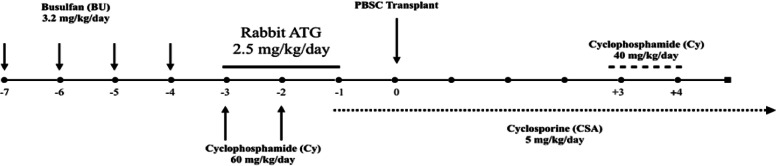
Background: KIR/HLA mismatch in hematopoietic stem cell transplantation (HSCT), particularly in patients with acute myeloid leukemia (AML), was related to decreased recurrence rates, improved engraftment, and a reduction in graft-versus-host disease, according to recent research (GVHD). Uncertainty exists about the impact of KIR/HLA mismatch on haploidentical-HSCTs treated with post-transplant cyclophosphamide (PTCy). We attempted to analyze the effects of KIR/HLA mismatch on clinical outcomes on transplant outcomes using the cohort of 54 AML patients who received a haplo-HSCT with PTCy.
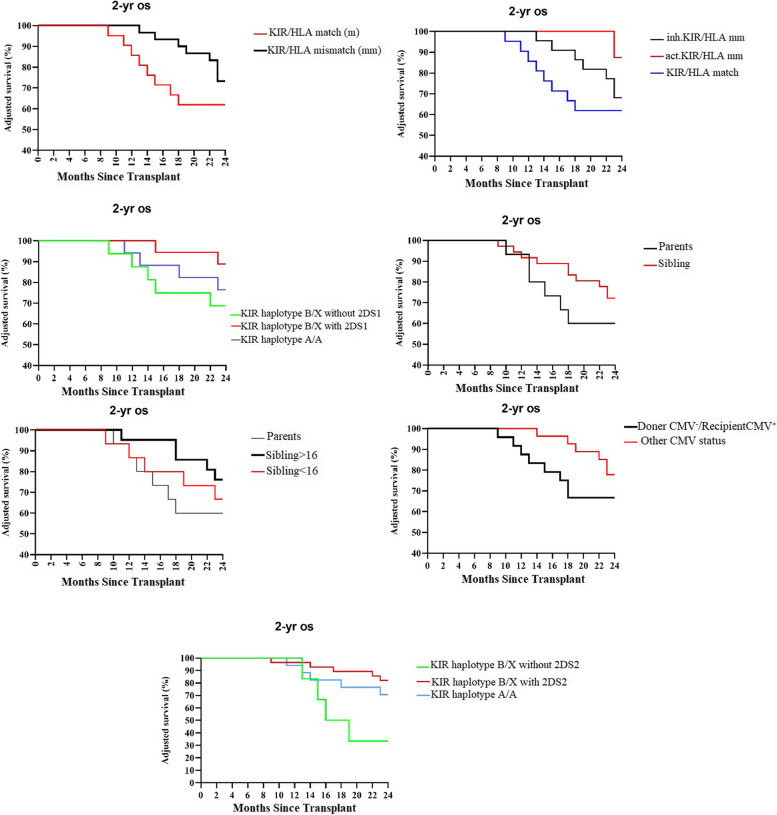
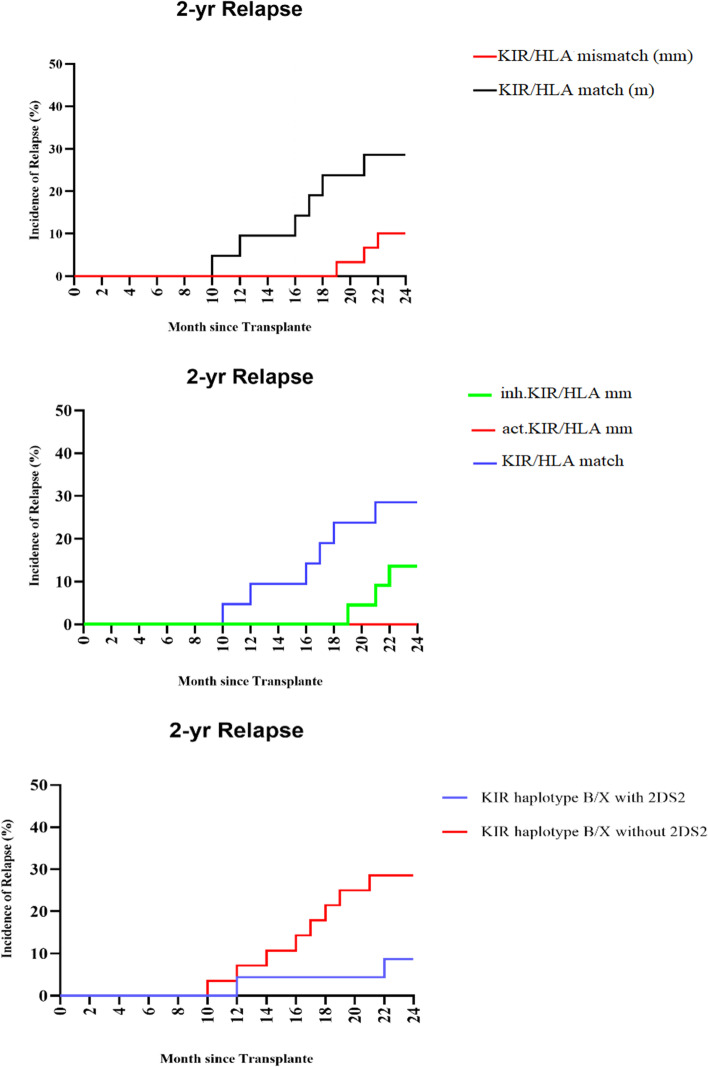
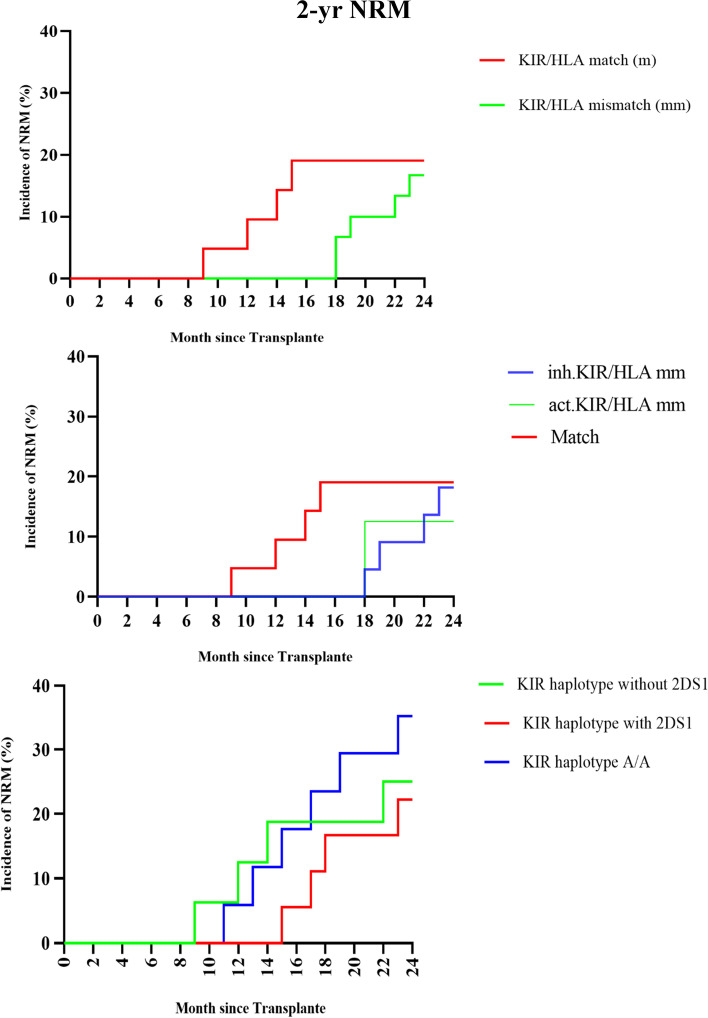
Results: In contrast to KIR/HLA match, our findings showed that donor KIR/HLA mismatch was substantially associated with superior OS (HR, 2.92; (P = 0.04)). Moreover, donor KIR/HLA mismatch (KIR2DS1D/C2+ R and KIR2DS2D/C1+ R mismatch versus KIR2DL1D/C2- R mm, KIR2DL2/3D/C1- R mm and KIR3DL1D/Bw4- mm) was correlated with the improvements in OS (HR, 0.74; P = 0.085) and activating. KIR/HLA mismatch versus KIR/HLA match was significantly correlated with improvements in OS (HR, .46; P = 0.03) and inhibitory. KIR/HLA mismatch versus KIR/HLA match was enhancement in the OS (HR, .93; P = 0.06). Despite a higher rate of aGvHD (grade I-IV) in the patients with KIR/HLA mismatch compared to KIR/HLA matched (57% vs. 33% (p = 0.04). However, the KIR/HLA mismatch group saw a decreased relapse rate (3.2% vs. 23%, p = 0.04).
Conclusion: This analysis shows the significance of KIR/HLA Incompatibility, other clinical variables like CMV, the relationship between donor/recipient and donor age, and the relationship between donor/recipient and donor age in the haplo-donor selection process. It also suggests that KIR and HLA mismatching between donor and recipient could be routinely performed for haplo-donor selection and may improve clinical outcomes after haplo-HSCTs with PTCy.
Keywords: Acute myeloid leukemia; HSCT; Haploidentical Transplant; KIR/HLA match; KIR/HLA mismatch; Post-transplant cyclophosphamide.
© 2023. The Author(s).
Conflict of interest statement
The authors have no relevant conflicts of interest.
Figures
References
-
- Passweg J, Baldomero H, Bader P, Bonini C, Duarte R, Dufour C, et al. Use of haploidentical stem cell transplantation continues to increase: the 2015 European Society for Blood and Marrow Transplant activity survey report. Bone Marrow Transplant. 2017;52(6):811–817. doi: 10.1038/bmt.2017.34. - DOI - PMC - PubMed
Publication types
MeSH terms
Substances
LinkOut - more resources
Full Text Sources
Medical
Research Materials
Miscellaneous
