Effectiveness and Safety of Lacosamide, A Third-generation Anti-seizure Medication, for Poststroke Seizure and Epilepsy: A Literature Review
- PMID: 37340744
- PMCID: PMC10556369
- DOI: 10.2174/1570159X21666230616114255
Effectiveness and Safety of Lacosamide, A Third-generation Anti-seizure Medication, for Poststroke Seizure and Epilepsy: A Literature Review
Abstract
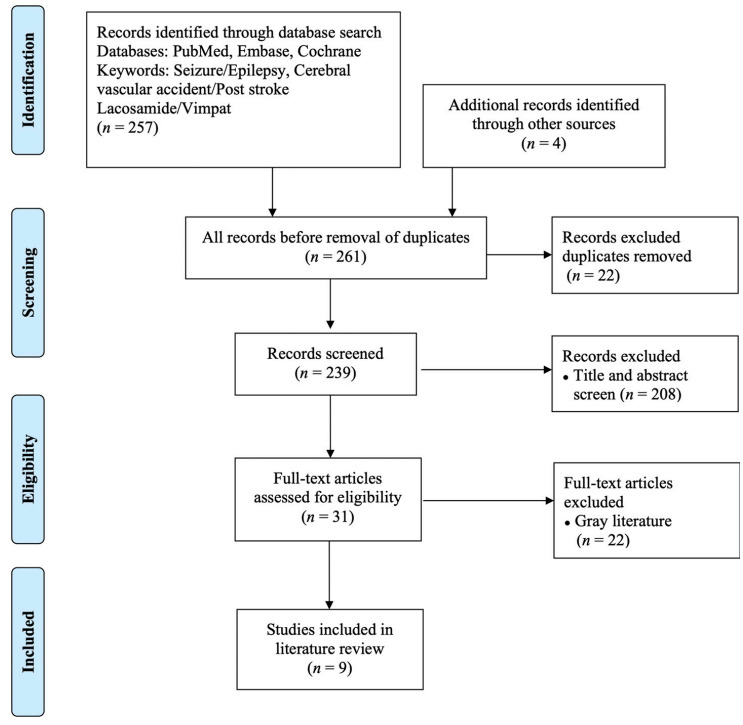
Advances in stroke treatment have resulted in a dramatic reduction in stroke mortality. Nevertheless, poststroke seizures and epilepsy are issues of clinical importance affecting survivors. Additionally, stroke is the most common cause of epilepsy in older adults. Although numerous antiseizure medications exist, studies are needed to provide robust evidence of the efficacy and tolerability of these medicines for treating poststroke seizures and epilepsy. Crucially, the newer generations of antiseizure medications require testing. Lacosamide, a third-generation antiseizure medication approved for treating localization-related epilepsy, has a novel mechanism of selectively enhancing the slow inactivation of sodium channels. This literature review evaluated whether lacosamide is effective and safe for the treatment of poststroke seizures and epilepsy. This review critically analyzed studies published in major academic databases (Pubmed, Embase, and Cochrane Library) from inception through June 2022 regarding the interaction of lacosamide with poststroke seizures and epilepsy. We included clinical prospective, retrospective, and case studies on patients with poststroke seizure and epilepsy, lacosamide as a treatment for seizures, neuroprotection in animal models of seizures, and the safety of lacosamide when coadministering anticoagulants. Clinical studies revealed lacosamide to be an effective antiseizure medication with high efficacy and tolerability in patients with poststroke seizures and epilepsy. In animal models, lacosamide proved effective at seizure reduction and neuroprotection. Pharmacokinetic studies demonstrated the safety of lacosamide when coadministering conventional and new anticoagulants. The literature suggests that Lacosamide is a promising candidate antiseizure medication for patients with poststroke seizures and epilepsy.
Keywords: Lacosamide; anti-seizure medication; effectiveness; epilepsy; poststroke; safety; seizure.
Copyright© Bentham Science Publishers; For any queries, please email at epub@benthamscience.net.
Conflict of interest statement
The authors declare no conflict of interest, financial or otherwise.