


Maximal cardiopulmonary exercise testing in laryngectomised patients using different heat and moisture exchangers - feasibility and exercise responses
- PMID: 37340780
- PMCID: PMC10849895
- DOI: 10.1017/S0022215123001068
Maximal cardiopulmonary exercise testing in laryngectomised patients using different heat and moisture exchangers - feasibility and exercise responses
Abstract
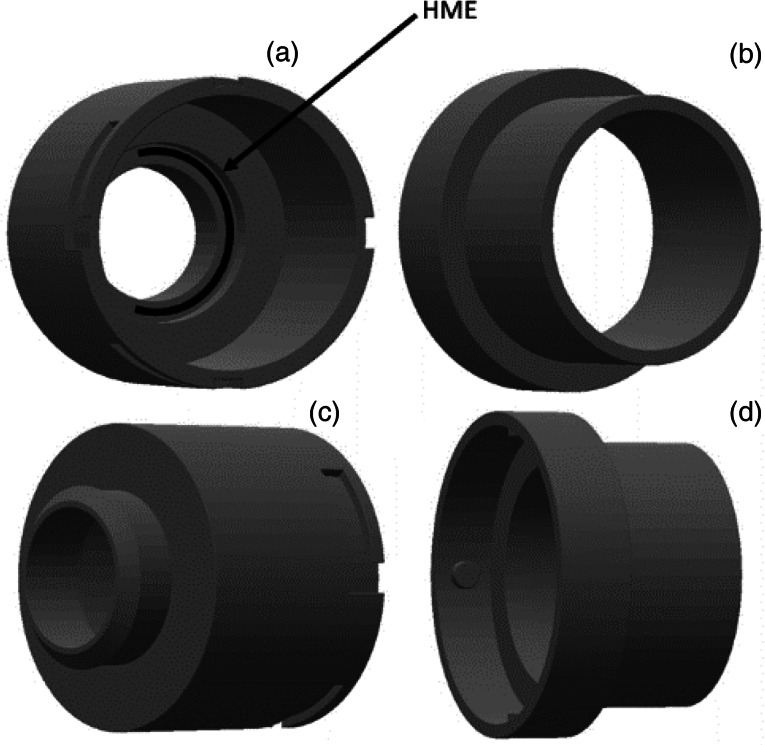
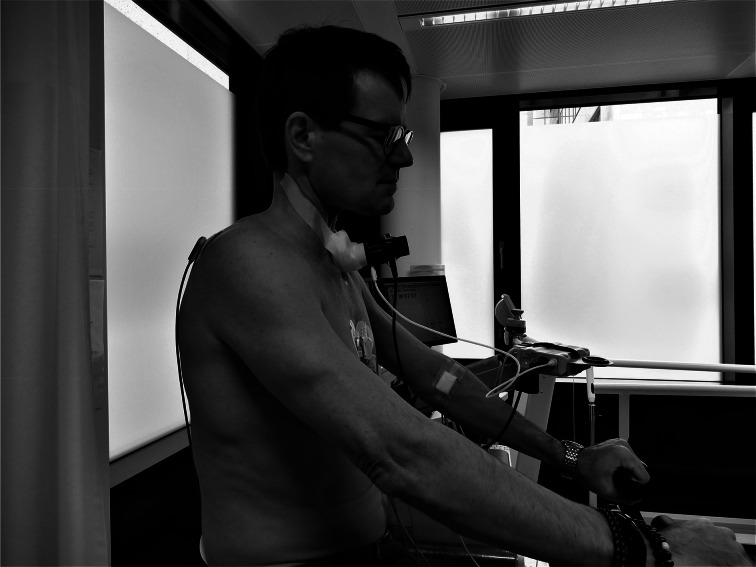
Objective: After laryngectomy, the breathing resistance of heat and moisture exchangers may limit exercise capacity. Breathing gas analysis during cardiopulmonary exercise testing is not possible using regular masks. This study tested the feasibility of cardiopulmonary exercise testing with a heat and moisture exchanger in situ, using an in-house designed connector. Additionally, we explored the effect of different heat and moisture exchanger resistances on exercise capacity in this group.
Methods: Ten participants underwent two cardiopulmonary exercise tests using their daily life heat and moisture exchanger (0.3 hPa or 0.6 hPa) and one specifically developed for activity (0.15 hPa). Heat and moisture exchanger order was randomised and blinded.
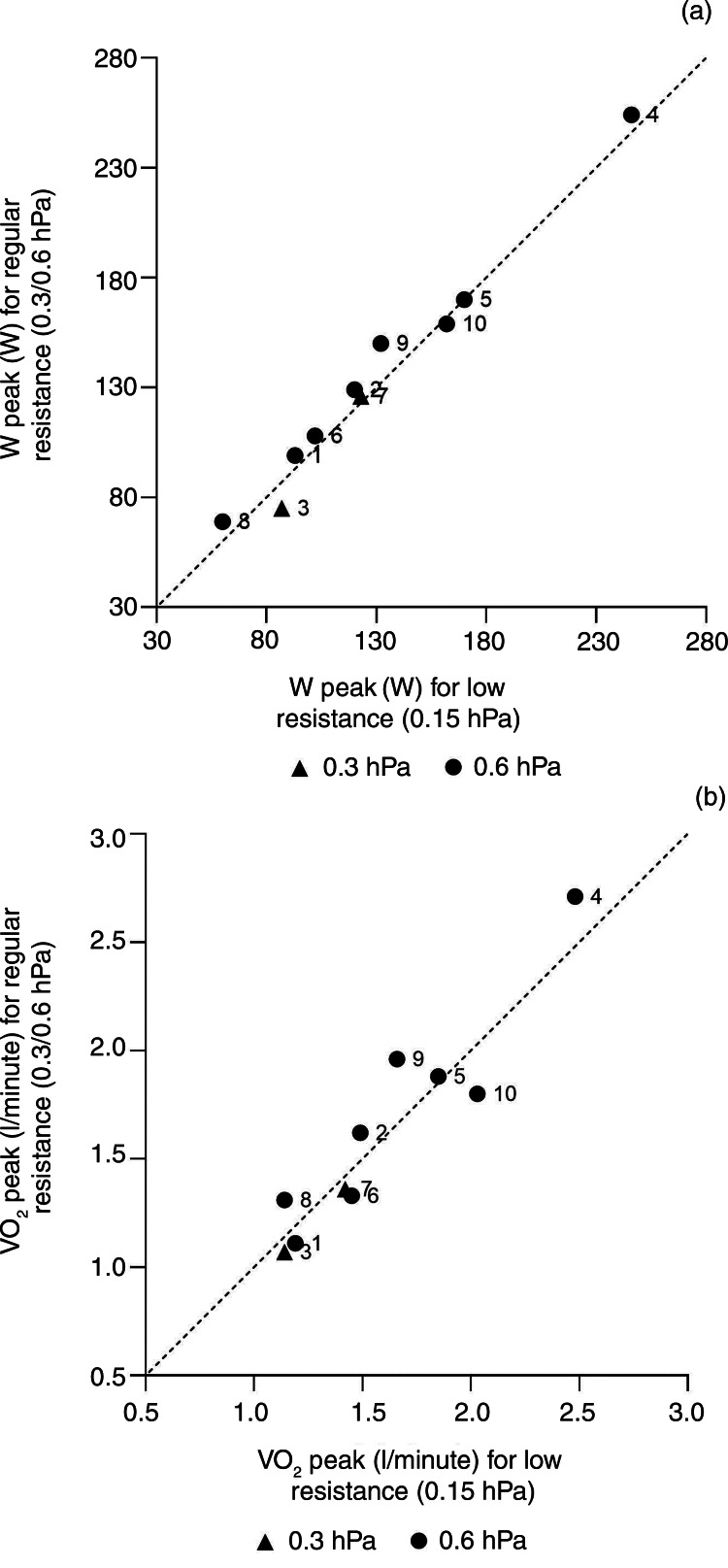
Results: All participants completed both tests. No (serious) adverse events occurred. Only four subjects reached a respiratory exchange ratio of more than 1.1 in at least one test. Maximum exercise levels using heat and moisture exchangers with different resistances did not differ.
Conclusion: Cardiopulmonary exercise testing in laryngectomees with a heat and moisture exchanger is feasible; however, the protocol does not seem appropriate to reach this group's maximal exercise capacity. Lowering heat and moisture exchanger resistance does not increase exercise capacity in this sample.
Keywords: Laryngectomy; exercise training; head and neck cancer.
Conflict of interest statement
None declared
Figures
References
-
- Head and Neck Cancers - National Cancer Institute. In: https://www.cancer.gov/types/head-and-neck/head-neck-fact-sheet [6 October 2021]
-
- American Head & Neck Society. Patient Education from the AHNS. In: https://www.ahns.info/resources/education/patient_education/ [6 October 2021]
-
- Hilgers FJ, Ackerstaff AH, Aaronson NK, Schouwenburg PF, Van Zandwijk N. Physical and psychosocial consequences of total laryngectomy. Clin Otolaryngol Allied Sci 1990;5:421–5 - PubMed
-
- Ackerstaff AH, Hilgers FJ, Aaronson NK, Balm AJ, van Zandwijk N. Improvements in respiratory and psychosocial functioning following total laryngectomy by the use of a heat and moisture exchanger. Ann Otol Rhinol Laryngol 1993;102:878–83 - PubMed
-
- Barbet JP, Chauveau M, Labbé S, Lockhart A. Breathing dry air causes acute epithelial damage and inflammation of the guinea pig trachea. J Appl Physiol (1985) 1988;64:1851–7 - PubMed
MeSH terms
LinkOut - more resources
Full Text Sources
